
Ta’ameya: Egypt’s Original Fava Bean Falafel

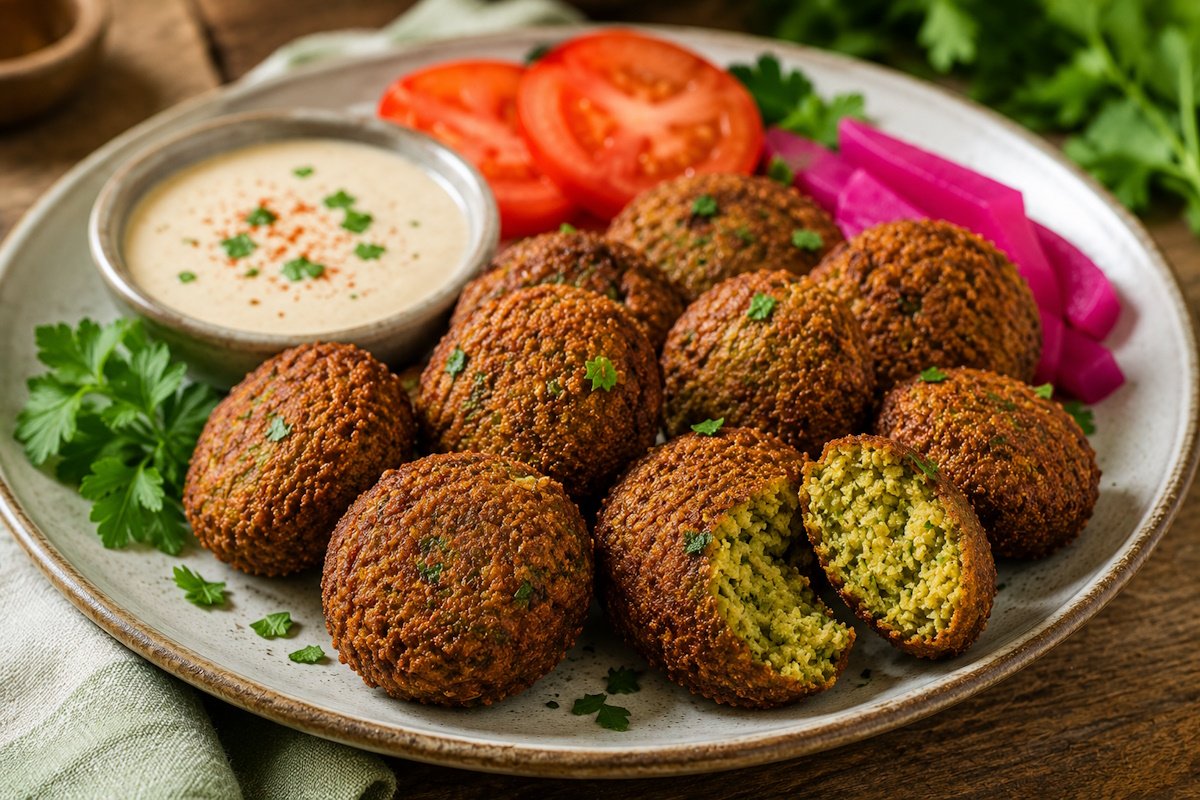
This post goes deep on ta’ameya (also spelled tameya or taameya) — the Egyptian dish widely believed to be the ancestor of what most of the world now calls falafel. Made with dried fava beans instead of chickpeas, coated in a thick crust of sesame seeds and fresh herbs, and fried to a deep green-flecked gold, ta’ameya has a distinct identity of its own, separate from — and arguably older than — the chickpea version that later spread across the Levant.
A Dish Tied to Coptic Fasting Traditions
One of the most widely repeated theories about ta’ameya’s origin connects it to Egypt’s Coptic Christian community, where it’s believed to have developed as a protein-rich, meat-free dish eaten during Lent and other fasting periods, when animal products were traditionally avoided. Fava beans, which have been cultivated in Egypt since ancient times and remain a staple of Egyptian cooking (most famously in ful medames), made a practical, filling substitute for meat.
While the exact timeline is difficult to pin down with certainty, and food historians continue to debate the full picture, what’s well documented is that by the 19th and 20th centuries, ta’ameya had become a fixture of everyday Egyptian eating — sold from street carts, eaten for breakfast wrapped in flatbread, and considered as central to Egyptian food culture as koshari or ful medames.
What Makes Ta’ameya Different From Chickpea Falafel
The bean is the headline difference, but it’s not the only one. Dried, peeled fava beans give ta’ameya a lighter, slightly sweeter, and creamier interior compared to the denser, nuttier bite of chickpea-based falafel. The color is different too — ta’ameya’s interior often has a more vivid green tint, partly from the beans themselves and partly from the generous amount of fresh herbs blended into the mixture, usually a heavy dose of dill, parsley, cilantro, and green onion, more herb-forward than most Levantine falafel recipes.
The exterior is another signature feature. Many Egyptian cooks coat the shaped patties in raw sesame seeds before frying, sometimes with a few coriander seeds mixed in, creating a distinctive crunchy, nutty crust that toasts as it fries. This step isn’t universal, but it’s common enough that it’s become closely associated with the dish’s identity.
Ta’ameya is also traditionally shaped into flatter patties rather than rounder balls, which affects the beans-to-crust ratio and gives you more crisp surface area per bite.
The Recipe
Serves 4–6 (makes about 20 patties)
Ingredients
- 1 ½ cups dried, peeled split fava beans, soaked in water for 18–24 hours
- 1 small onion, roughly chopped
- 4 cloves garlic
- 1 cup fresh dill, roughly chopped
- ½ cup fresh parsley leaves
- ½ cup fresh cilantro leaves
- 3 green onions, roughly chopped
- 1 teaspoon ground coriander
- ½ teaspoon ground cumin
- ½ teaspoon baking soda
- 1 teaspoon salt
- ½ teaspoon black pepper
- ¼ teaspoon cayenne pepper (optional)
- ½ cup raw sesame seeds, for coating
- 1 tablespoon coriander seeds, for coating (optional)
- Vegetable oil, for frying
Instructions
- Soak the fava beans. Cover the dried split fava beans generously with water and soak for 18–24 hours in the refrigerator, changing the water once if possible. Drain thoroughly and pat dry.
- Blend the mixture. In a food processor, combine the soaked fava beans, onion, garlic, dill, parsley, cilantro, and green onions. Pulse until finely chopped and well combined, with a slightly coarse, textured consistency rather than a smooth puree.
- Season and rest. Transfer to a bowl and stir in ground coriander, cumin, salt, pepper, and cayenne if using. Cover and refrigerate for at least 30 minutes, which helps the mixture firm up and makes shaping easier.
- Add the leavening. Just before frying, mix in the baking soda. As with chickpea falafel, adding it too early can loosen the mixture too much.
- Shape and coat. Form the mixture into small flat patties, about 2 inches wide and slightly thicker than a coin. If using, mix sesame seeds with coriander seeds on a plate, and press each patty into the mixture so both sides are well coated.
- Fry. Heat 2–3 inches of vegetable oil in a deep pot to 350°F (175°C). Fry the patties in batches for 3–4 minutes per side, until deeply golden and the sesame coating is toasted. Avoid overcrowding the pot.
- Drain and serve. Remove with a slotted spoon and drain on paper towels. Serve hot.
A Note on the Herbs
Don’t be shy with the herbs here — ta’ameya’s green color and distinct flavor come from using a genuinely generous amount of fresh dill and cilantro, more than you might expect relative to the beans. If the mixture doesn’t look noticeably green before frying, it’s worth adding more.
Serving Suggestions
In Egypt, ta’ameya is a classic breakfast food, commonly served stuffed into fresh baladi bread with tahini sauce, tomatoes, pickled vegetables, and a sprinkle of dukkah. It’s equally at home as part of a larger spread alongside ful medames, white cheese, and fresh vegetables.
Ta’ameya is a reminder that the dish the world knows as “falafel” didn’t start with chickpeas at all — it started with fava beans, fresh herbs, and a crust of toasted sesame in an Egyptian kitchen.