
Falafel: The Dish Everyone Claims and No One Fully Owns

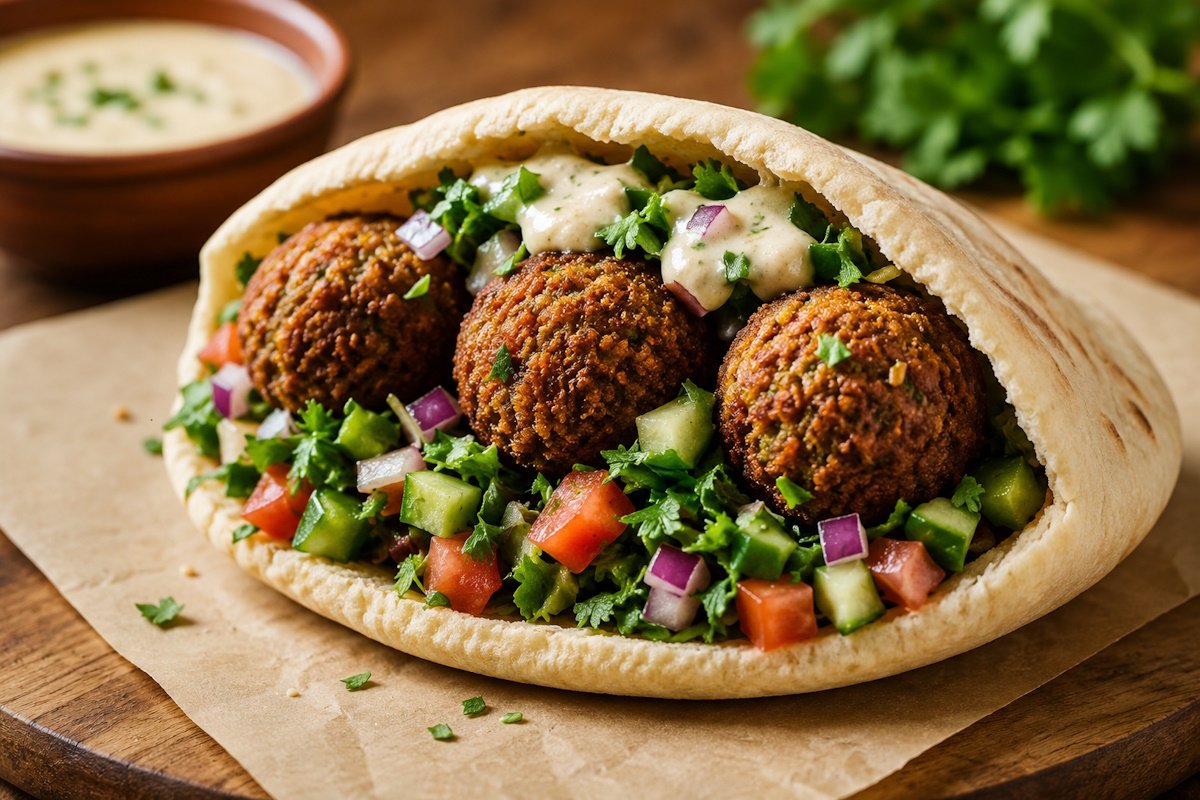
Falafel earns its own deep dive as one of the most recognizable Middle Eastern foods in the world, and also one of the most contested. Few dishes spark as much regional debate over origin as this one, and understanding why says a lot about how food identity works across the Middle East.
A Contested History
The most widely cited theory traces falafel back to Egypt, where a version made with dried fava beans — called ta’ameya — is believed to have originated, possibly among Coptic Christian communities as a meat substitute eaten during Lent, when meat was traditionally avoided. From Egypt, the theory goes, the dish spread throughout the Levant, where it evolved into the chickpea-based version most people outside the region know today as “falafel.”
That said, this history isn’t universally agreed upon, and the dish’s exact origins remain genuinely debated among food historians, with different countries across the region holding their own strong claims to it. What’s clear is that by the 20th century, falafel had become deeply embedded in the everyday food culture of Egypt, Palestine, Lebanon, Syria, Jordan, and Israel alike — each with their own version, their own preferred bean, and their own strong opinions about how it should be made.
Chickpeas or Fava Beans: The Great Divide
The single biggest variable in falafel is the bean. Egyptian ta’ameya uses dried, peeled fava beans, giving the falafel a lighter green interior and a slightly different, softer texture. Levantine-style falafel — the version most common in Lebanon, Palestine, Jordan, and Syria — is made with chickpeas, sometimes blended with a small amount of fava beans, producing a denser, nuttier falafel with the now-famous deep golden crust. Some Levantine recipes use a chickpea-fava blend specifically to balance the fava’s creaminess with the chickpea’s firmer bite.
This isn’t a minor stylistic choice — it changes the entire texture and flavor of the finished falafel, and people from each tradition tend to feel strongly that their version is correct.
Why Raw, Uncooked Beans Are Non-Negotiable
If there’s one rule serious falafel cooks agree on almost universally, it’s this: the chickpeas (or fava beans) must be soaked raw, never cooked, before grinding. Using canned or pre-cooked chickpeas is probably the most common mistake home cooks make, and it produces falafel that’s mushy, falls apart in the fryer, and lacks the right texture entirely. Raw, soaked beans grind into a coarse, slightly grainy paste that holds together far better and fries into a distinctly crisp, sturdy exterior with a tender, fluffy interior — a texture that pre-cooked beans simply can’t replicate.
The Recipe
Serves 4–6 (makes about 24 falafel)
Ingredients
- 1 ½ cups dried chickpeas (not canned), soaked in water for 18–24 hours
- 1 small onion, roughly chopped
- 4 cloves garlic
- 1 cup fresh parsley leaves
- ½ cup fresh cilantro leaves
- 1 teaspoon ground cumin
- 1 teaspoon ground coriander
- ½ teaspoon baking soda
- 1 teaspoon salt
- ½ teaspoon black pepper
- ¼ teaspoon cayenne pepper (optional)
- 2 tablespoons sesame seeds (optional, for texture)
- Vegetable oil, for frying
Instructions
- Soak the chickpeas. Cover the dried chickpeas with plenty of water — they’ll expand significantly — and soak for 18–24 hours in the refrigerator. Drain well and pat dry before using.
- Blend the mixture. In a food processor, combine the soaked chickpeas, onion, garlic, parsley, and cilantro. Pulse until the mixture is finely chopped but not pureed into a paste — you want some texture, similar to coarse sand, not a smooth hummus-like consistency.
- Season. Transfer to a bowl and mix in cumin, coriander, salt, pepper, and cayenne if using. Cover and refrigerate for at least 30 minutes to let the mixture firm up and the flavors meld.
- Add the leavening. Just before frying, mix in the baking soda and sesame seeds if using. Adding baking soda too early can make the mixture too wet, so save this step for right before cooking.
- Shape. Form the mixture into small balls or patties, about 1 ½ inches wide. If the mixture feels too loose to hold together, pulse it briefly again in the food processor, or refrigerate a bit longer.
- Fry. Heat about 2–3 inches of vegetable oil in a deep pot to 350°F (175°C). Fry the falafel in batches for 3–4 minutes, until deeply golden brown and crisp on the outside. Don’t overcrowd the pot, which will drop the oil temperature and make them greasy.
- Drain and serve. Remove with a slotted spoon and drain on paper towels. Serve immediately while hot and crisp.
A Note on Frying Temperature
Oil temperature matters more than most people expect. Too hot, and the outside burns before the inside cooks through; too cool, and the falafel absorb excess oil and turn greasy rather than crisp. A kitchen thermometer is worth using here if you have one — aim to keep the oil steady around 350°F throughout frying.
Serving Suggestions
Falafel is most commonly served stuffed into pita or flatbread with tahini sauce, pickled vegetables, tomatoes, and a tangle of shredded lettuce or cabbage. It’s equally good served on its own as part of a mezze spread, alongside hummus, baba ganoush, and a simple tomato-cucumber salad.
Falafel’s identity may be contested across borders, but its appeal is universal — proof that some dishes belong less to a single place and more to everyone who’s ever perfected their own version of it.