
Knafeh: The Dessert That Sparked a City’s Culinary Identity

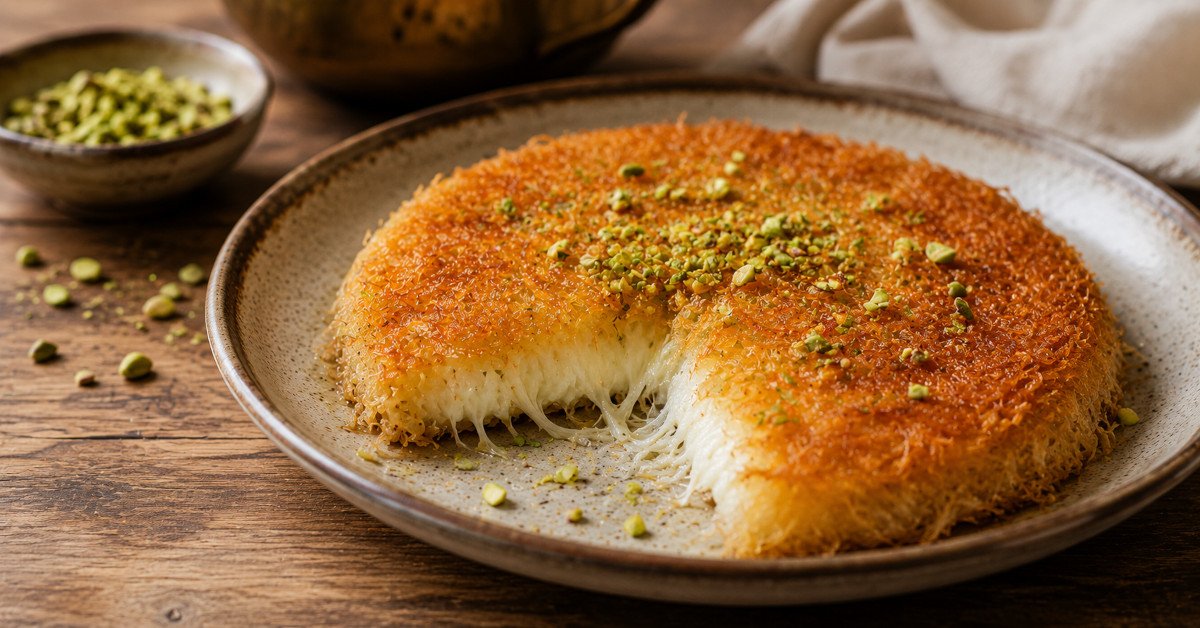
knafeh (also spelled kunafa or knafeh) — arguably the most iconic dessert in the Levant, and a dish so closely tied to one particular city that its name has become shorthand for quality: “Nabulsi” knafeh, from Nablus in the West Bank, is considered the gold standard against which every other version is measured.
A Dessert Named After Its City of Origin
Knafeh’s most celebrated form, knafeh nabulsiyeh, comes from Nablus, a city that has been a center of dairy production for centuries thanks to the surrounding pastureland. The dish’s defining ingredient is a soft, slightly salty white cheese called Nabulsi cheese, made locally and prized for how well it melts — becoming stretchy and gooey under heat without turning greasy or breaking down entirely. This particular cheese’s melting behavior is really the whole reason knafeh works the way it does, and it’s part of why truly authentic knafeh is hard to replicate outside the region without a good substitute cheese.
The dessert’s exact origins are debated, with some food historians tracing versions of it back over a thousand years to the Fatimid or Ayyubid periods, mentioned in early Arabic culinary texts. Over centuries, it spread throughout the Levant and into Turkey (where it’s called künefe) and Egypt, with each region developing its own signature style — some using semolina-based dough instead of the shredded kataifi pastry more associated with the Nabulsi version.
Two Textures, One Dessert
What makes knafeh so distinctive is the contrast between its top and bottom layers. The base is made of kataifi — very fine, shredded phyllo-like pastry strands — that get soaked in butter or ghee and baked until deeply golden and crisp, almost like a dense, buttery hash brown in texture. Sandwiched inside or layered underneath is the melted cheese, soft and stretchy. Once baked, the whole thing gets doused in a fragrant simple syrup called ater, usually scented with rosewater or orange blossom water, which soaks into the crisp pastry just enough to add sweetness without turning it soggy. A scatter of crushed pistachios on top finishes the dish, adding color and a final layer of crunch.
The eating experience is meant to hit multiple textures in a single bite: the shatter of the crisp pastry top, the pull of the melted cheese underneath, and the syrupy sweetness tying it all together.
The Recipe
Serves 8
Ingredients
For the base:
- 1 lb kataifi pastry (shredded phyllo), thawed if frozen
- ¾ cup unsalted butter or ghee, melted
- 1 lb Nabulsi cheese, or a mix of fresh mozzarella and ricotta as a substitute, thinly sliced or shredded
- A few drops of orange food coloring mixed with 1 tablespoon water (optional, for the traditional bright orange top)
For the syrup (ater):
- 1 ½ cups sugar
- ¾ cup water
- 1 tablespoon lemon juice
- 1 tablespoon rosewater or orange blossom water
For garnish:
- ½ cup crushed pistachios
Instructions
- Make the syrup first. Combine sugar, water, and lemon juice in a small saucepan. Bring to a boil, then reduce heat and simmer for 8–10 minutes until slightly thickened. Remove from heat and stir in the rosewater or orange blossom water. Let cool completely — the syrup should be cold when it meets the hot pastry, which is key to keeping the top crisp.
- Prepare the cheese. If using Nabulsi cheese, soak it in water for a few hours beforehand to reduce its saltiness, changing the water once or twice. If using a mozzarella-ricotta mix, no soaking is needed.
- Prepare the kataifi. Pull apart the shredded pastry strands so they’re loose, not clumped. Toss thoroughly with the melted butter or ghee until every strand is coated.
- Layer the base. Press about two-thirds of the buttered kataifi into the bottom of a greased round baking pan, packing it down firmly and evenly.
- Add the cheese. Spread the cheese evenly over the pastry layer, leaving a small border around the edges.
- Top and press. Cover the cheese with the remaining kataifi, pressing down firmly so the layers stick together. If using food coloring, brush a little over the top for the traditional bright orange color.
- Bake. Bake at 400°F (200°C) for 30–40 minutes, until the top is deeply golden and crisp. Some cooks finish it briefly under the broiler for extra color, watching closely to avoid burning.
- Syrup while hot. As soon as the knafeh comes out of the oven, pour the cooled syrup evenly over the top. The sizzle when cold syrup meets hot pastry is normal and is part of what keeps the texture right.
- Garnish and serve. Sprinkle generously with crushed pistachios. Let rest for 5–10 minutes before slicing.
A Note on the Cheese
Nabulsi cheese can be hard to find outside the Middle East. A reasonable substitute is a mix of low-moisture mozzarella and ricotta, which mimics the stretch and mild saltiness reasonably well, though it won’t be a perfect match for the real thing.
Serving Suggestions
Knafeh is best served warm, ideally within an hour of baking, while the cheese is still soft and stretchy and the pastry is still crisp. It’s traditionally eaten as a treat any time of day, not strictly reserved for after a meal — in Nablus, it’s common to eat knafeh for breakfast.
A dessert defined as much by a city’s dairy tradition as by its syrup and pastry, knafeh is proof that the best sweets often come from a very specific sense of place.