
Mansaf: Jordan’s National Dish of Lamb, Rice, and Fermented Yogurt

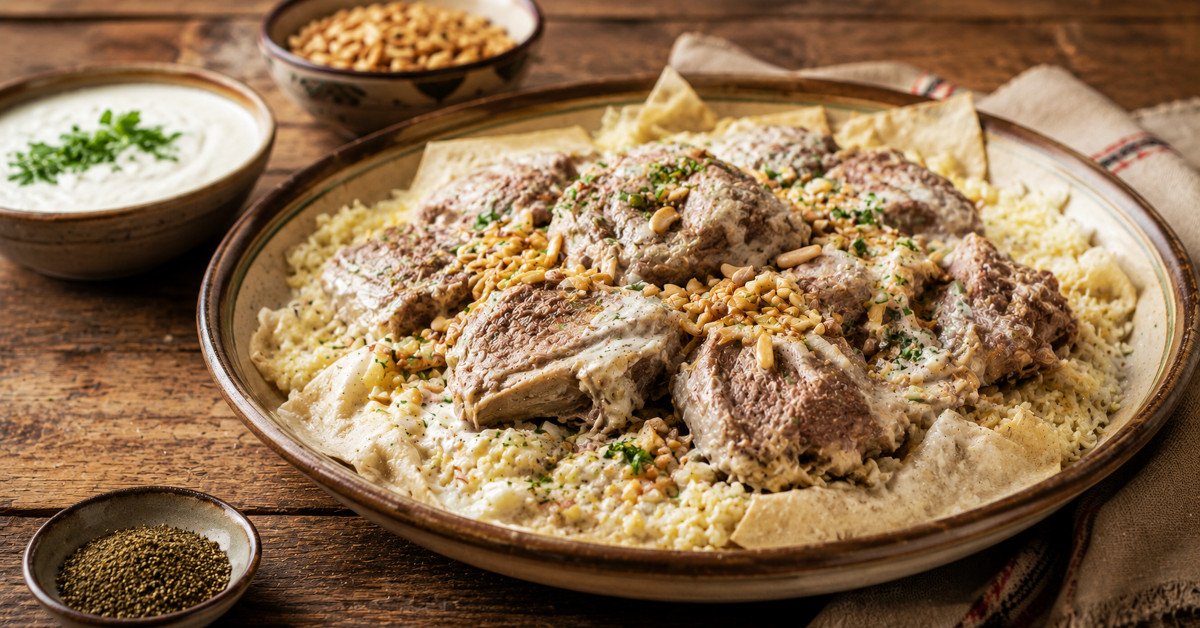
widely recognized as Jordan’s national dish and one of the most ceremonially significant meals in the entire Levant. Built around tender lamb cooked in a tangy fermented yogurt sauce called jameed, served over rice and flatbread, mansaf isn’t really an everyday meal. It’s a dish tied to hospitality, celebration, and tradition in a way few other dishes are.
More Than a Recipe — A Social Ritual
Mansaf holds a status in Jordanian culture that goes well beyond taste. It’s the dish served at weddings, funerals, graduations, the return of a traveler, and the reception of an honored guest. In Bedouin tradition, offering mansaf to a guest is considered one of the highest expressions of hospitality, and refusing it can be seen as an insult. In 2022, mansaf was even added to UNESCO’s Representative List of the Intangible Cultural Heritage of Humanity, recognizing its role as a marker of Jordanian identity and communal life, not just as food.
The dish is traditionally eaten communally, straight from a single large shared tray, with everyone gathered around standing rather than seated. Eating mansaf by hand, rolling the rice and lamb into a small ball with the right hand before eating, is still considered the most authentic way to enjoy it, though spoons are common today as well.
Jameed: The Ingredient That Defines the Dish
The heart of mansaf is jameed — a hard, dried fermented yogurt made traditionally from sheep’s milk, formed into balls or blocks and dried in the sun until rock-hard, sometimes for weeks. This preservation method dates back to Bedouin nomadic life, when fresh dairy needed a way to survive travel through the desert without refrigeration. To use it, the dried jameed is soaked, then blended with water and simmered until it becomes a smooth, tangy, off-white sauce with a flavor that’s distinctly more sour and complex than fresh yogurt — sharper, slightly funky, and unlike anything else used as a cooking liquid in the region.
Because jameed can be difficult to find outside Jordan and the wider Levant, many home cooks abroad substitute with a mixture of plain yogurt and a bit of extra tanginess added through lemon juice, though the result is milder and less complex than the real thing.
The Recipe
Serves 6–8
Ingredients
For the lamb:
- 3 lbs bone-in lamb shoulder or leg, cut into large pieces
- 1 large onion, quartered
- 2 bay leaves
- 1 cinnamon stick
- 4 green cardamom pods
- Salt, to taste
- Water, to cover
For the jameed sauce:
- 1 lb jameed (dried fermented yogurt), or substitute: 4 cups plain full-fat yogurt whisked with 2 tablespoons lemon juice
- 2 tablespoons cornstarch, mixed with a little water (to help stabilize the sauce if using fresh yogurt)
- 1 clove garlic, minced
For the rice:
- 2 cups long-grain rice, rinsed
- 3 tablespoons ghee or butter
- 3 ½ cups water or lamb broth
- Salt, to taste
To assemble:
- 2–3 pieces shrak or markook bread (thin Jordanian flatbread), or regular flatbread
- ¼ cup toasted almonds and pine nuts
- Fresh parsley, chopped, for garnish
Instructions
- Cook the lamb. In a large pot, combine the lamb, onion, bay leaves, cinnamon stick, cardamom, and salt. Cover with water and bring to a boil, skimming off any foam. Reduce heat and simmer, covered, for 1 ½ to 2 hours, until the lamb is very tender. Reserve the broth.
- Prepare the jameed. If using dried jameed, soak it in water for a few hours until softened, then blend with fresh water until smooth. Simmer the blended jameed in a saucepan over low heat, stirring frequently, for about 20–30 minutes, until it thickens into a smooth, pourable sauce. If using the yogurt substitute, whisk the yogurt with the cornstarch mixture and garlic, then heat gently over low heat, stirring constantly in one direction to prevent curdling, until thickened slightly.
- Combine. Add the cooked lamb pieces to the jameed sauce and simmer together gently for 15–20 minutes so the meat absorbs the tangy flavor.
- Cook the rice. In a separate pot, melt the ghee, add the rice, and stir briefly to coat. Add the water or reserved lamb broth and salt, bring to a boil, then reduce heat, cover, and simmer for 15–18 minutes until tender.
- Assemble the tray. Lay the flatbread flat across a large serving tray. Spread the rice evenly over the bread, then arrange the lamb pieces on top. Pour a generous amount of the warm jameed sauce over everything, letting it soak into the rice and bread.
- Garnish and serve. Scatter with toasted almonds, pine nuts, and chopped parsley. Serve extra jameed sauce on the side for guests to add more as they eat.
A Note on the Sauce
If using the yogurt substitute rather than true jameed, be careful with the heat — yogurt can curdle if it boils or is heated too quickly. Keep the heat low and stir constantly, and the cornstarch will help it hold together as a smooth sauce.
Serving Suggestions
Mansaf is a complete, standalone meal meant for sharing. It’s traditionally accompanied by nothing more than extra warm jameed sauce on the side — the dish is rich and filling enough that no additional sides are typically needed.
More than a recipe, mansaf is a tradition served on a shared tray — proof that in Jordanian culture, some meals are as much about who you’re eating with as what’s on the plate.