
Tahdig: The Crispy Rice That Persians Fight Over

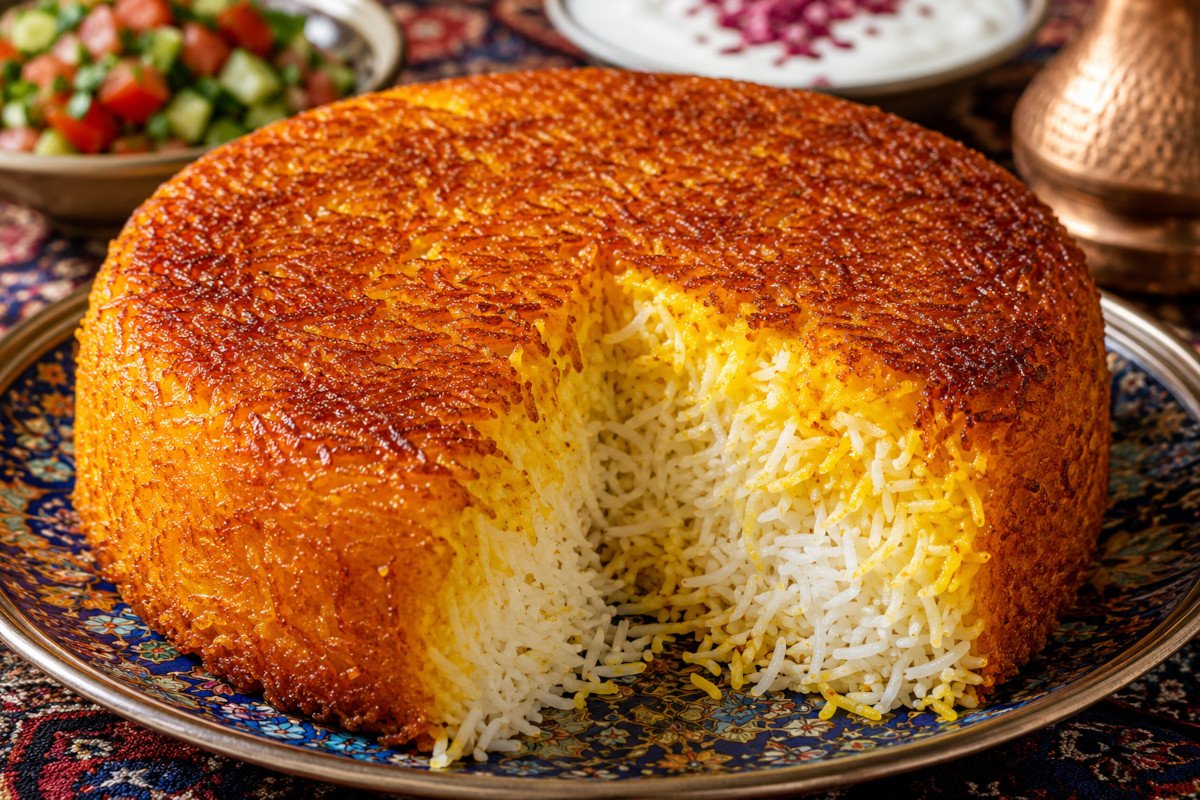
Today’s random pick lands on tahdig — not really a standalone dish so much as the single most prized part of Persian rice cookery: the golden, crispy crust that forms at the bottom of the pot during cooking. In Iranian households, tahdig is often treated as the best part of the entire meal, and it’s common for family members to good-naturedly compete over who gets the crunchiest, most golden pieces once the pot is turned out.
A Technique Born From Making the Most of Rice
Persian rice cooking has a long tradition of treating rice preparation as a genuine technical skill, distinct from the simpler steaming or boiling methods common elsewhere. The technique behind tahdig — cooking rice using a par-boil-and-steam method that deliberately creates a crisp, deeply browned layer at the bottom of the pot — is believed to have developed as Persian cooks refined their rice technique over centuries, turning what could easily be considered a byproduct or even a mistake in other culinary traditions (rice sticking and browning at the bottom of a pot) into the most celebrated element of the dish.
Rice itself arrived in Persia via trade routes from South and East Asia in ancient times, and over the centuries Persian cooking developed some of the most technically refined rice preparations found anywhere in the world — of which tahdig represents perhaps the most distinctive achievement, precisely because it inverts the usual instinct to avoid burning or sticking and instead engineers it deliberately.
More Than Just Rice: What Tahdig Can Be Made From
While plain crispy rice is the most common form, tahdig has expanded over time into a category of its own, with the same crisping technique applied to a layer of thinly sliced potatoes, lavash bread, or even thin slices of flatbread placed at the bottom of the pot beneath the rice. Each version produces a different textural result — potato tahdig, for instance, creates a crisp, almost hash-brown-like layer, while bread tahdig results in something closer to a cracker-crisp base. Whatever the base ingredient, the underlying principle stays the same: a layer positioned to crisp and caramelize against the hot pot while the rice above steams gently.
Getting the Flip Right
The most nerve-wracking moment in making tahdig is the flip — inverting the entire pot onto a serving platter so the crispy layer, which has been on the bottom throughout cooking, ends up on top, fully intact rather than broken apart. This moment carries real weight in Persian home cooking, and a clean, unbroken flip is considered a mark of real skill, sometimes met with genuine celebration at the table when it goes well.
The Recipe
Serves 4–6
Ingredients
- 2 cups basmati rice
- Water, for soaking and boiling
- 3 tablespoons salt (for the parboiling water)
- 4 tablespoons vegetable oil or ghee, divided
- 2 tablespoons plain yogurt
- 3–4 tablespoons water
- Pinch of saffron threads, dissolved in 2 tablespoons hot water (optional, for color and aroma)
Instructions
- Soak the rice. Rinse the basmati rice thoroughly until the water runs mostly clear, then soak in cold water with a bit of salt for at least 1–2 hours (or up to overnight for the best texture). Drain before using.
- Parboil the rice. Bring a large pot of water to a boil with the salt. Add the drained rice and boil for 5–7 minutes, until the rice is about 70% cooked — tender on the outside but still firm in the center. Drain immediately in a colander.
- Prepare the tahdig base. In a small bowl, mix 2 tablespoons of the oil or ghee with the yogurt, water, and a spoonful of the parboiled rice (this yogurt mixture helps the base layer crisp evenly and release cleanly later).
- Layer the pot. Heat the remaining oil or ghee in a heavy, nonstick pot over medium heat. Spread the yogurt-rice mixture evenly across the bottom of the pot, pressing it down gently to form an even layer — this will become the crispy base.
- Add the rice. Gently mound the remaining parboiled rice on top of the base layer, shaping it into a pyramid rather than pressing it down flat, which helps steam circulate evenly. If using saffron water, drizzle it over the top of the rice mound.
- Steam. Cover the pot with a lid wrapped in a clean kitchen towel (which absorbs excess steam and prevents condensation from dripping back onto the rice). Cook on low heat for 45–50 minutes, resisting the urge to lift the lid and check, which lets out valuable steam.
- The flip. Once done, remove from heat and let sit, covered, for 5–10 minutes off the burner. Place a large serving platter over the pot and, in one confident motion, flip the pot upside down so the platter is on the bottom. Gently lift the pot away, revealing the golden, crispy tahdig layer on top of the rice.
A Note on Confidence
The flip is genuinely intimidating the first few times, but a few tricks help: making sure the base layer had enough oil to release cleanly, and not rushing the process — letting the pot rest briefly off the heat before flipping helps the crust set and separate more easily from the pot.
Serving Suggestions
Tahdig is typically served alongside a main stew like ghormeh sabzi or fesenjan, with the crispy pieces distributed among diners — often the most requested part of the entire meal.
Tahdig turns what most cooking traditions consider a mistake into the most celebrated part of the meal — proof that sometimes the best technique is simply a shift in perspective.