
Tabbouleh: The Parsley Salad Where the Ratio Is Everything

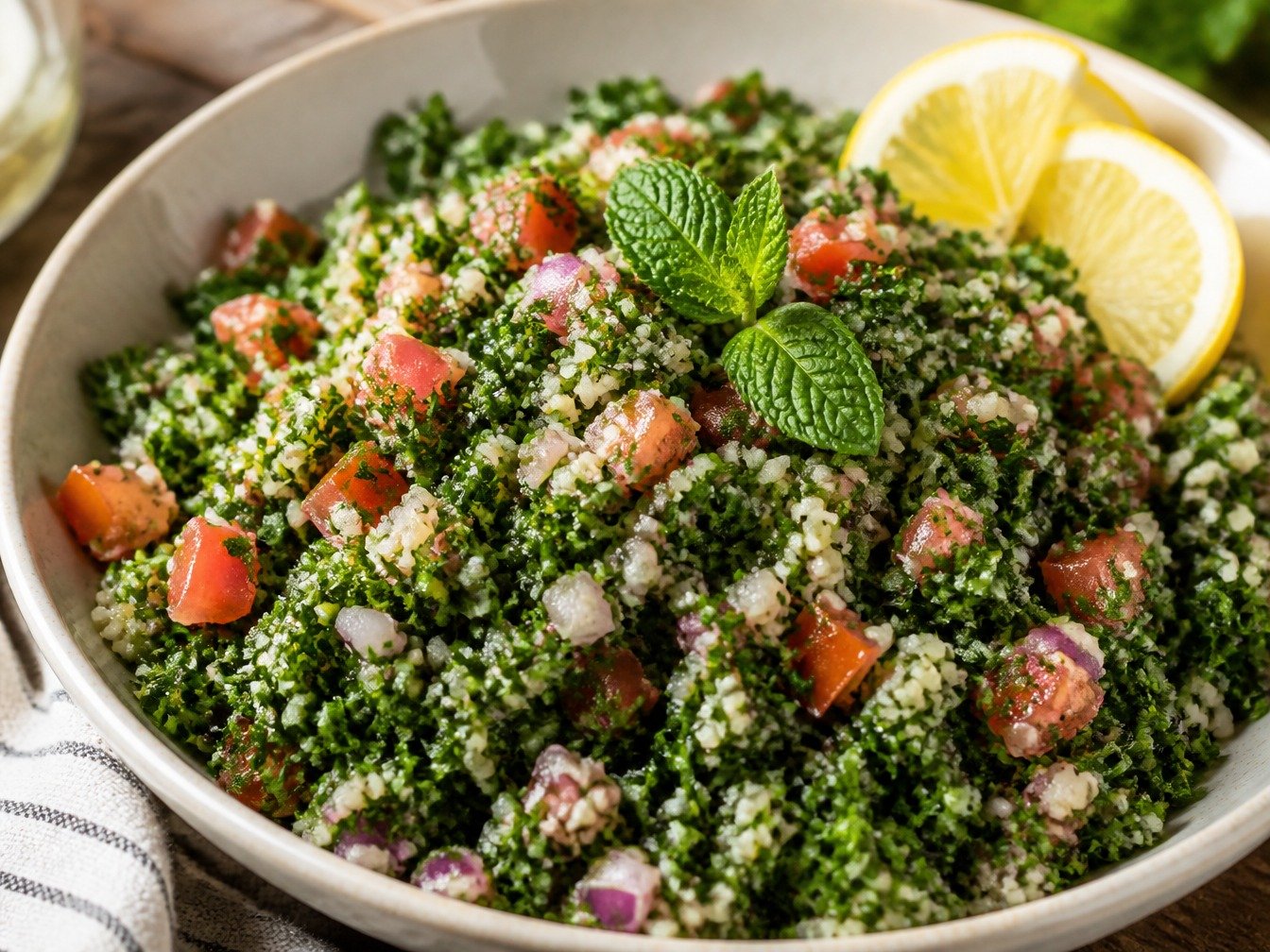
Tabbouleh — a bright, herb-forward salad built primarily from finely chopped parsley, with tomato, mint, bulgur, lemon juice, and olive oil rounding it out. Widely considered a Lebanese national dish, and claimed just as strongly across Syria, tabbouleh is a rare case of a salad where getting one specific ratio right or wrong genuinely determines whether the dish succeeds.
A Mountain Dish That Became a National Symbol
Tabbouleh’s roots trace back to the mountainous regions of Lebanon and Syria, where the mix of fresh herbs, particularly parsley and mint, along with bulgur wheat, reflects ingredients that grew well in that terrain and climate. Historical references to the dish appear in Levantine cooking going back centuries, and by the 20th century tabbouleh had become firmly established as one of the signature dishes of Lebanese cuisine specifically, closely tied to national identity in a way that goes beyond simply being a popular recipe — it’s frequently cited alongside dishes like kibbeh and hummus as emblematic of Lebanese culinary heritage, and Lebanon has at times promoted large communal tabbouleh preparations as a point of cultural pride.
Syria maintains an equally strong claim to the dish, given the shared culinary and cultural history across the Levant region, and tabbouleh appears with only minor variation in Syrian home cooking and restaurants as well. As with many dishes from this part of the world, national pride around tabbouleh reflects a broader, shared regional food culture rather than a dispute over a single clearly documented origin.
The Ratio That Defines Real Tabbouleh
The single most important thing to understand about authentic Levantine tabbouleh is that it is fundamentally a parsley salad with a small amount of bulgur added, not a bulgur salad with some parsley mixed in — a distinction that trips up a lot of people encountering the dish outside the region for the first time. Many tabbouleh recipes found outside the Levant significantly overload the bulgur relative to the herbs, producing something closer to a grain salad, which is a meaningful departure from how the dish is traditionally made. In proper Lebanese and Syrian tabbouleh, parsley makes up the clear majority of the volume, with only a small amount of fine bulgur — often just a few tablespoons per large bunch of parsley — added mostly for a bit of texture rather than as a primary component.
Getting the chop right on the parsley also matters more than people expect. Traditionally, tabbouleh’s parsley is chopped very finely by hand, a genuinely time-consuming task that produces a much better texture than the rougher, larger pieces you’d get from a quick pass in a food processor, which tends to bruise and water down the herbs rather than cleanly cutting them.
The Recipe
Serves 4–6
Ingredients
- 4 cups fresh parsley, very finely chopped (tightly packed before chopping)
- 2 tablespoons fine bulgur wheat
- 3 tablespoons fresh mint, finely chopped
- 3 medium tomatoes, finely diced
- 3–4 green onions, finely chopped
- ¼ cup fresh lemon juice
- ¼ cup olive oil
- ½ teaspoon salt, plus more to taste
- ¼ teaspoon black pepper
- Romaine lettuce leaves, for serving (optional)
Instructions
- Soak the bulgur. Place the fine bulgur in a small bowl and cover with a little cold water, just enough to soften it, for about 10–15 minutes. Drain well and squeeze out any excess moisture — you want it just softened, not soggy.
- Prepare the parsley. Wash and thoroughly dry the parsley (excess water will water down the finished salad). Chop very finely by hand, working in batches if needed, until you have a fine, almost fluffy texture.
- Prepare the remaining vegetables. Finely chop the mint and green onions. Dice the tomatoes finely, ideally draining off excess liquid and seeds so the salad doesn’t become watery.
- Combine. In a large bowl, combine the chopped parsley, softened bulgur, mint, tomato, and green onions.
- Dress just before serving. Add lemon juice, olive oil, salt, and pepper, tossing gently to combine. Taste and adjust the lemon and salt as needed — tabbouleh should taste bright and distinctly lemony, not muted.
- Serve. Serve immediately, ideally within an hour of dressing, since the salad can become watery if it sits too long once dressed. Traditionally served with crisp romaine lettuce leaves used as edible scoops.
A Note on Timing
Because parsley releases moisture once salted and dressed, tabbouleh is best made close to serving time rather than well ahead — if you need to prep in advance, keep the dressing separate and toss everything together right before serving.
Serving Suggestions
Tabbouleh is a staple of the mezze table, traditionally served alongside hummus, baba ganoush, and warm pita, and works especially well as a bright, acidic counterpoint to richer dishes like kibbeh or grilled meats.
Tabbouleh is a reminder that a dish doesn’t need many ingredients to be exacting — sometimes getting the ratio right between just a few things is the entire craft.