
Shakshuka: The Egg Dish With More Homelands Than Most

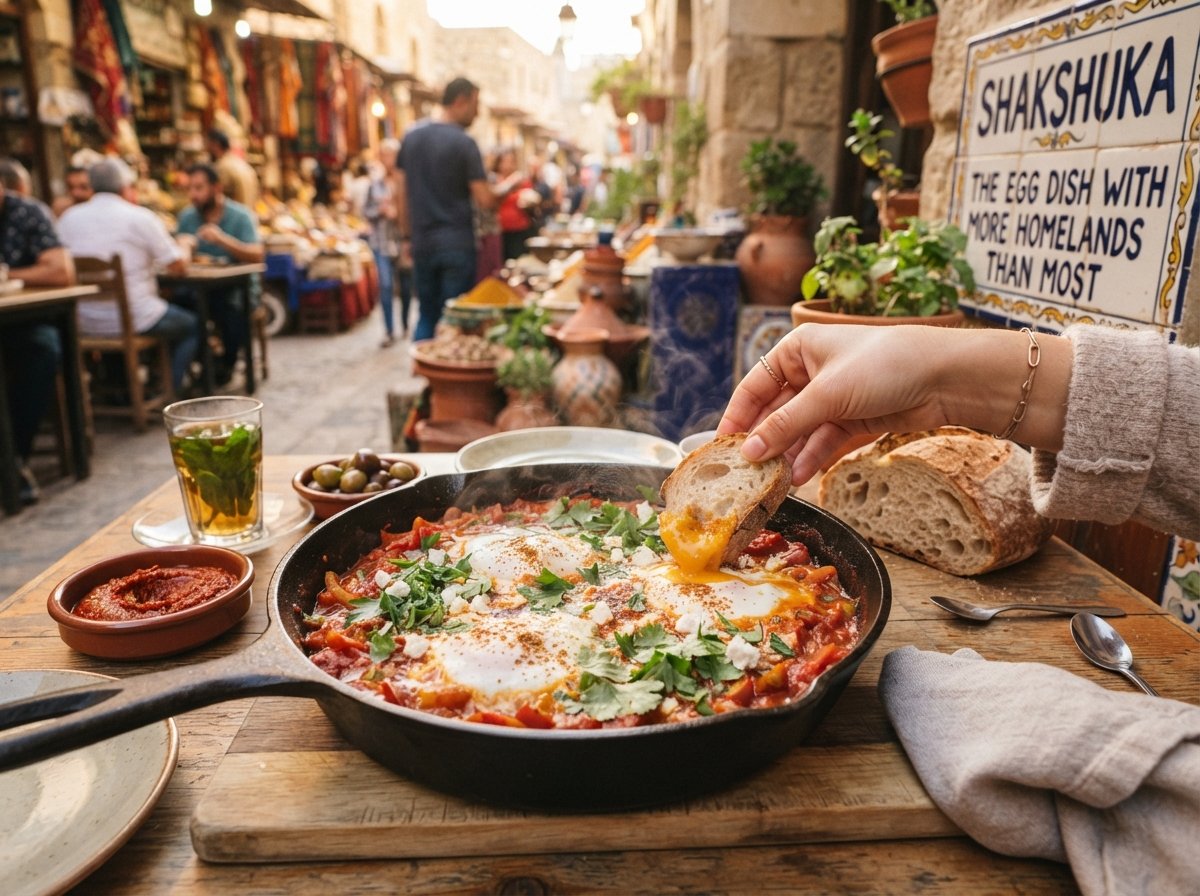
Shakshuka — eggs gently poached directly in a simmering, spiced tomato and pepper sauce, served straight from the pan with bread for scooping. It’s become one of the most globally recognisable Middle Eastern and North African dishes in recent years, showing up on brunch menus far outside the region, but its actual origin is genuinely harder to pin down than its current popularity might suggest.
An Origin Story With Several Competing Claims
Shakshuka’s history is disputed in a way that reflects the dish’s wide geographic footprint rather than any single clear record. The most commonly cited theory traces it to North Africa, particularly Tunisia, or more broadly to Ottoman-era cooking, with the name itself believed to derive from a word meaning “mixture” or “all mixed up” in Maghrebi Arabic, a fairly literal description of the dish’s technique. Some food historians point to Yemen as a likely point of origin instead, connecting shakshuka to older egg-and-tomato preparations from Yemeni Jewish cooking traditions, which would help explain how the dish became so closely associated with Israeli cuisine following the large-scale immigration of Yemeni and North African Jewish communities to Israel in the mid-20th century, similar to how sabich and jachnun arrived through Iraqi and Yemeni immigration respectively.
What’s clear is that versions of eggs cooked in a spiced tomato base exist, and likely have existed for a long time, across a wide swath of North Africa and the Eastern Mediterranean, and the dish’s association with any single country is genuinely contested rather than settled. Shakshuka’s more recent global popularity, particularly its strong identification with Israeli breakfast and brunch culture, represents a relatively modern chapter in a much older and more geographically distributed food story.
Not to Be Confused With the Similarly Named Algerian Dish
It’s worth flagging a naming overlap that trips people up: shakshuka, the eggs-in-tomato-sauce dish covered here, is entirely unrelated to chakhchoukha, the Algerian torn-bread-and-stew dish. The names sound similar and both come from the same general linguistic root related to mixing, but they’re completely different dishes with no shared ingredients or technique — a point of genuine confusion for people newly exploring the region’s food.
Why the Technique Matters More Than Any Specific Ingredient List
Unlike many dishes defined by a strict, specific set of ingredients, shakshuka is better understood as a flexible technique — a well-spiced, simmered tomato and pepper base, into which eggs are cracked directly and gently cooked until the whites set but the yolks stay soft. This technique-first identity is part of why shakshuka varies so much from household to household and region to region, with some versions leaning heavily on bell peppers, others incorporating harissa for heat, and still others adding feta or other cheeses toward the end. The one consistent element across nearly all versions is the method: eggs poached directly in a hot, actively simmering sauce, rather than cooked separately and added afterward.
The Recipe
Serves 4
Ingredients
- 3 tablespoons olive oil
- 1 large onion, diced
- 1 red bell pepper, diced
- 4 cloves garlic, minced
- 1 teaspoon ground cumin
- 1 teaspoon paprika
- ½ teaspoon chili flakes or a small spoonful of harissa (optional, for heat)
- 1 can (28 oz) crushed tomatoes
- Salt and black pepper, to taste
- 6 eggs
- ¼ cup crumbled feta (optional)
- Fresh parsley or cilantro, chopped, for garnish
Instructions
- Build the base. Heat olive oil in a large, wide skillet over medium heat. Add the onion and bell pepper, cooking for about 8 minutes until softened. Add garlic and cook for another minute until fragrant.
- Add spices and tomatoes. Stir in the cumin, paprika, and chili flakes or harissa if using, cooking briefly to toast the spices. Pour in the crushed tomatoes, season with salt and pepper, and bring to a gentle simmer. Cook uncovered for 10–15 minutes, until the sauce thickens slightly.
- Make wells for the eggs. Using the back of a spoon, create small wells in the sauce, evenly spaced around the pan. Crack an egg into each well.
- Poach the eggs. Reduce the heat to low, cover the pan, and cook for 6–8 minutes, until the egg whites are fully set but the yolks remain soft and runny. Cooking time will vary depending on how set you prefer the yolks.
- Finish and serve. Scatter with crumbled feta if using, and fresh parsley or cilantro. Serve directly from the pan, with plenty of warm bread for scooping.
A Note on Egg Doneness
Since the eggs finish cooking gently in the residual heat even after being removed from direct heat, it’s worth pulling the pan off the burner slightly before the yolks look fully done to your liking, since they’ll continue setting for another minute or two.
Serving Suggestions
Shakshuka is traditionally served straight from the cooking pan, eaten communally with warm crusty bread, pita, or challah for scooping up the sauce and eggs together — no individual plating needed.
Shakshuka’s contested origins are part of what make it interesting — a dish claimed by several regions at once, unified less by a fixed recipe than by a shared, flexible technique.