
Maqluba: The Rice Dish That Literally Means “Upside Down”

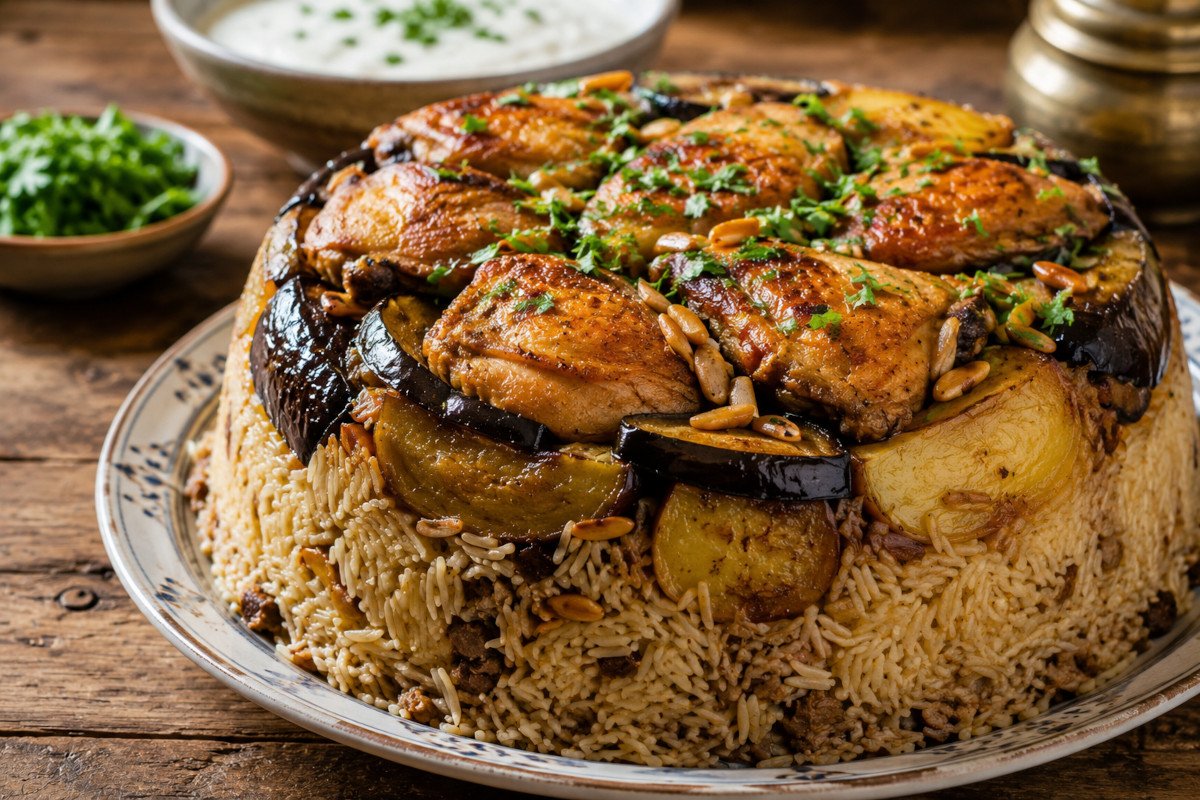
Country of origin: Levant (particularly Palestine and Jordan)
This round’s pick is maqluba — a layered dish of rice, fried vegetables, and meat, cooked together in a single pot and then dramatically flipped upside down onto a serving platter just before eating, revealing a neatly stacked tower with the vegetables and meat now sitting on top of the rice. The name itself, maqluba, translates directly to “upside down” in Arabic, a completely literal description of the dish’s signature moment and arguably its entire reason for being memorable.
A Centuries-Old Dish With an Early Written Reference
Maqluba has a history that reaches back centuries within Levantine and broader Arab culinary tradition, with some food historians pointing to references to a similar layered, inverted rice dish appearing in a 13th-century Arabic cookbook associated with Baghdad, suggesting the core concept of building a dish in layers and then flipping it has genuinely old roots within the region’s cooking, even as the specific version now closely tied to Palestinian and Jordanian cuisine developed its own distinct regional identity over time. Today, maqluba is considered one of the signature dishes of Palestinian cuisine specifically, closely associated with festive family meals and considered a dish worth the real effort it takes to prepare and serve properly.
Why the Order of Layers Actually Matters
Getting maqluba right depends heavily on layering the ingredients in the correct order within the cooking pot, since that layering directly determines the final presentation once the dish is flipped. Vegetables — commonly fried eggplant, cauliflower, or potato — are arranged at the bottom of the pot, followed by the meat (often chicken or lamb), and finally the rice on top, filling the remaining space in the pot. This order might seem backward at first glance, but it’s precisely because the dish gets flipped upside down for serving: what starts at the bottom of the pot ends up on top of the final presentation, meaning the vegetables and meat, layered first, become the visually prominent top layer once inverted, while the rice, added last, becomes the base that anchors the tower once flipped.
The Flip Carries Real Weight at the Table
As with tahdig, discussed elsewhere on this blog, the moment of inverting the pot is the most nerve-wracking and celebrated part of preparing maqluba, and a clean, fully intact flip — where the entire layered structure holds together and comes out as a neat, stacked tower rather than collapsing into a jumbled pile — is considered a genuine point of pride and skill among home cooks. Because maqluba’s layers are more numerous and structurally complex than tahdig’s simpler two-layer rice-and-crust setup, the stakes of a successful flip are arguably even higher, and it’s not unusual for the moment of unveiling to be treated as something of a small performance at family gatherings, with people gathered around specifically to watch the platter be lifted away.
Frying the Vegetables First Isn’t Optional
A specific technical step that matters considerably for maqluba’s final texture is frying the vegetables — rather than boiling or steaming them — before they go into the pot to be layered with the meat and rice. Frying accomplishes two things: it develops a deeper, more caramelized flavor in the vegetables themselves, and it also firms up their structure somewhat, helping them hold their shape better through the subsequent slow simmering process, rather than turning to complete mush by the time the dish is fully cooked. Skipping this step and adding raw vegetables directly to the pot is one of the more common shortcuts that noticeably weakens the final texture and flavor of the dish.
The Recipe
Serves 6–8
Ingredients
- 1 medium eggplant, sliced into rounds
- 1 medium cauliflower, cut into florets
- Vegetable oil, for frying
- 2 lbs bone-in chicken pieces or lamb, cut into portions
- 1 onion, quartered
- 1 cinnamon stick
- 3 cardamom pods
- Salt, to taste
- 2 ½ cups basmati rice, rinsed and soaked for 30 minutes
- 1 teaspoon ground cumin
- 1 teaspoon ground allspice
- 4 cups reserved chicken or lamb broth
- ¼ cup toasted almonds or pine nuts, for garnish
- Plain yogurt, for serving
Instructions
- Fry the vegetables. Salt the eggplant slices and let sit for 15–20 minutes to draw out moisture, then pat dry. Fry the eggplant and cauliflower separately in vegetable oil until golden and tender, about 4–5 minutes per batch. Drain on paper towels.
- Cook the meat. In a pot, combine the chicken or lamb with the onion, cinnamon stick, cardamom, salt, and enough water to cover. Simmer for 35–45 minutes until tender. Remove the meat and reserve the broth, discarding the onion and whole spices.
- Layer the pot. In a large, heavy pot, arrange a layer of fried eggplant and cauliflower across the bottom. Add the cooked meat pieces on top of the vegetables.
- Add the rice. Spread the soaked, drained rice evenly over the meat, sprinkling with cumin and allspice.
- Add the liquid. Carefully pour the reserved broth over the rice, adding enough to cover the rice by about an inch, topping up with water if needed.
- Cook. Bring to a boil, then reduce heat to low, cover, and simmer for 30–35 minutes, until the rice is fully tender and the liquid is absorbed.
- The flip. Let the pot rest off the heat, covered, for 10–15 minutes. Place a large serving platter over the top of the pot and, holding both firmly together, flip the whole thing in one confident motion. Let it sit for a minute before carefully lifting the pot away, revealing the layered tower underneath.
- Garnish and serve. Scatter with toasted almonds or pine nuts and serve with plain yogurt on the side.
A Note on Flip Confidence
As with tahdig, a successful flip depends partly on giving the dish enough resting time off the heat before inverting, which allows the layers to settle and hold together better — resist the urge to flip immediately off the stove.
Serving Suggestions
Maqluba is a complete, celebratory main course, traditionally served with a simple yogurt and cucumber salad alongside to balance its richness.
Maqluba’s dramatic flip turns a practical layering technique into genuine table theater — proof that how a dish is revealed can matter almost as much as what’s inside it.