
Rummaniyeh: Gaza’s Pomegranate and Lentil Stew, a Cuisine of Its Own

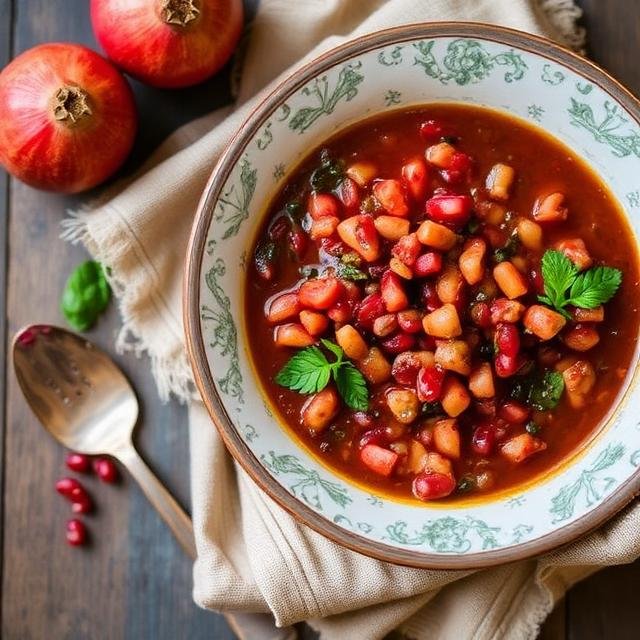
Country of origin: Palestine (Gaza specifically)
This round’s pick is rummaniyeh — a thick, deep red-brown stew of eggplant and lentils, bound together with pomegranate molasses and pomegranate juice, and distinguished by a spicing profile that sets it apart from much of the rest of Levantine cooking. Gazan cuisine has developed a genuinely distinct culinary identity within the broader Palestinian and Levantine tradition, and rummaniyeh is one of its clearest and most characteristic dishes.
Gaza’s Cuisine Stands Apart Within Palestinian Cooking
While Palestinian cuisine is often discussed as a single regional tradition, Gaza’s food culture has developed several genuinely distinctive characteristics that set it apart from cooking in the West Bank and much of the wider Levant, most notably a significantly heavier use of heat and a specific, less commonly used spice: dill seed. Gazan cooking is generally recognized as spicier than most other Palestinian and Levantine regional cooking, frequently incorporating fresh green chilies and a hotter overall flavor profile, a distinction that food writers and Palestinian cooks themselves often point to when describing what makes Gazan dishes immediately recognizable compared to dishes from Nablus, Ramallah, or Jerusalem. Rummaniyeh reflects this identity directly, built around a base that’s tart, earthy, and spicier than a typical eggplant or lentil dish elsewhere in the region.
Pomegranate as the Structural Ingredient, Not Just a Garnish
Where pomegranate molasses shows up as an accent ingredient in dishes like muhammara or fattoush, discussed elsewhere on this blog, rummaniyeh treats pomegranate — both the molasses and, in some versions, fresh pomegranate juice — as a central, structural component of the dish rather than a finishing touch. The tartness of the pomegranate is what defines the entire character of the stew, cutting through the earthiness of the lentils and the richness of the cooked-down eggplant, and its quantity in rummaniyeh is considerably more generous than the smaller, accent-level amounts typically used elsewhere in Levantine cooking. This makes rummaniyeh a useful dish for understanding just how differently the same defining ingredient can be deployed depending on the specific dish and region, similar to how kashk plays two very different roles across ash-e reshteh and kashk-e bademjan in Persian cooking.
Dill Seed: The Spice That Signals Gazan Identity
Alongside its heat and pomegranate-forward tartness, rummaniyeh, like many Gazan dishes, often incorporates dill seed, a specific spice — distinct from fresh dill herb — that’s far less commonly used across the rest of Levantine and broader Middle Eastern cooking, giving Gazan food a genuinely identifiable, somewhat warm and slightly bitter aromatic note that isn’t typical of dishes from other parts of Palestine. This detail matters for understanding rummaniyeh specifically: the dish isn’t simply “Palestinian eggplant stew” but reflects a set of specific, regionally distinct spicing choices that Gazan cooks have maintained as a marker of their particular culinary tradition within the broader Palestinian food landscape.
The Recipe
Serves 4–6
Ingredients
- 2 medium eggplants, cut into large chunks
- 1 cup brown or red lentils, rinsed
- 4 cups water or vegetable broth
- ¼ cup pomegranate molasses
- ½ cup fresh pomegranate juice (or additional pomegranate molasses if unavailable)
- 3 tablespoons olive oil
- 4 cloves garlic, minced
- 1–2 fresh green chilies, finely chopped (adjust to taste)
- 1 teaspoon ground dill seed
- ½ teaspoon ground cumin
- Salt, to taste
- Fresh pomegranate seeds, for garnish
- Fresh dill or cilantro, chopped, for garnish
Instructions
- Cook the lentils. In a pot, simmer the lentils in water or broth for about 20 minutes, until nearly tender but not fully broken down.
- Prepare the eggplant. While the lentils cook, heat olive oil in a wide pan and sauté the eggplant chunks over medium-high heat until lightly browned on the outside, about 8–10 minutes.
- Combine. Add the browned eggplant to the pot with the lentils. Stir in garlic, chopped chilies, dill seed, and cumin.
- Add the pomegranate. Pour in the pomegranate molasses and fresh pomegranate juice, stirring to combine evenly throughout the stew.
- Simmer. Continue simmering, uncovered, for another 20–25 minutes, until the eggplant is fully tender, the lentils have broken down somewhat, and the stew has thickened into a cohesive, deep reddish-brown consistency.
- Season and finish. Adjust salt and heat level to taste, adding more chopped chili if a spicier result is preferred.
- Serve. Garnish with fresh pomegranate seeds and chopped dill or cilantro.
A Note on Heat Level
Since Gazan cooking generally leans spicier than much of the rest of Levantine cuisine, don’t be shy with the chilies if you’re aiming for an authentic result — the heat is a meaningful part of what distinguishes rummaniyeh and other Gazan dishes from milder versions of similar ingredients found elsewhere in the region.
Serving Suggestions
Rummaniyeh is traditionally served with plain white rice, which helps balance both the tartness of the pomegranate and the dish’s characteristic heat.
Rummaniyeh is a useful reminder that “Palestinian food” isn’t a single uniform tradition — Gaza’s specific combination of heat, pomegranate, and dill seed marks out a culinary identity distinctly its own within the broader region.