
Mahshi: The Stuffed Vegetable Tradition That Goes Well Beyond Grape Leaves

Country of origin: Widely shared across Egypt and the Levant
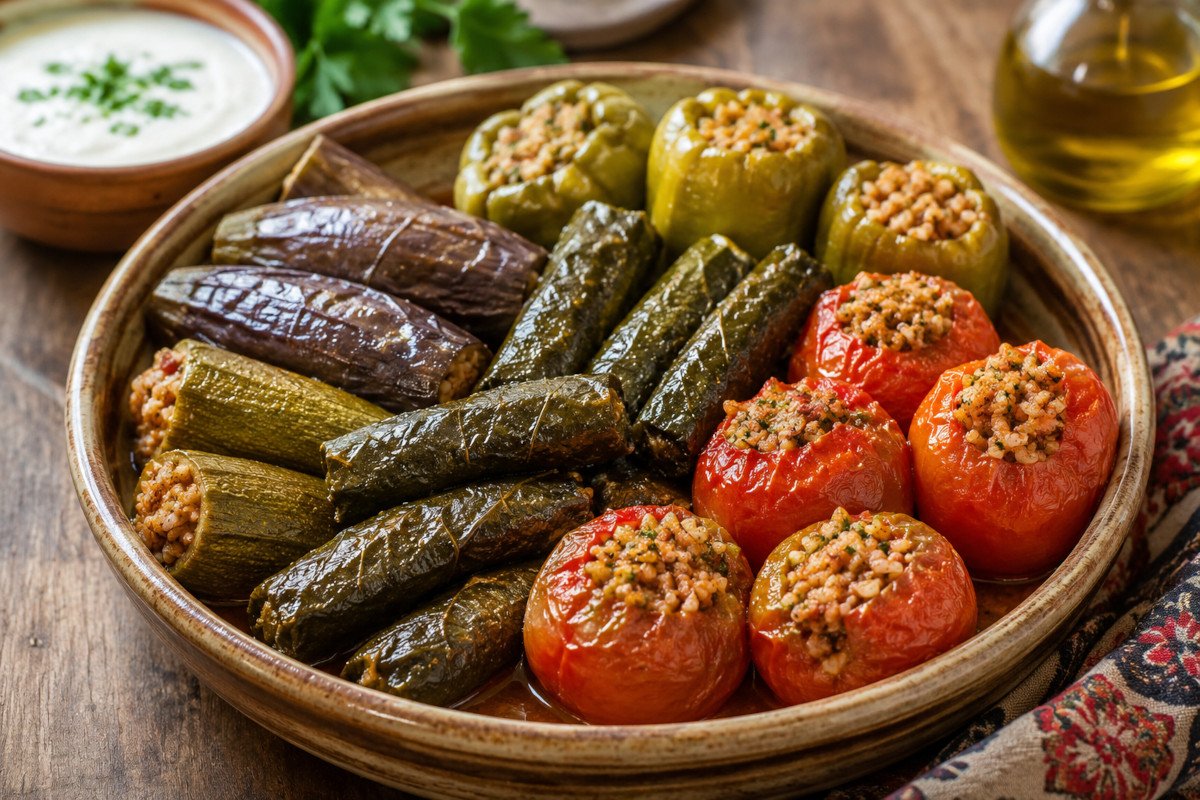
This round’s pick is mahshi — the broader Arabic term for stuffed vegetables, encompassing a whole family of dishes where zucchini, eggplant, bell peppers, cabbage leaves, and tomatoes are hollowed out and filled with a rice-and-herb mixture, then slow-cooked until tender. While warak enab, covered elsewhere on this blog, focuses specifically on stuffed grape leaves, mahshi represents the much wider category that technique belongs to, and understanding it as a category rather than a single dish reveals just how much a single core technique can stretch across completely different vegetables.
One Filling Technique, Applied Across an Entire Vegetable Drawer
The defining feature of mahshi as a category is the shared approach: a vegetable is hollowed out to create a cavity, then filled with a rice-based mixture (often combined with herbs, tomato, and sometimes ground meat), before being cooked slowly, usually simmered in a pot with tomato-based liquid, until the vegetable itself becomes tender and the rice filling fully cooks through, absorbing flavor from both the vegetable’s own moisture and the surrounding cooking liquid. This same basic logic gets applied to an unusually wide range of vegetables across Egyptian and Levantine cooking — zucchini (mahshi kousa), eggplant (mahshi betinjan), bell peppers (mahshi filfil), and cabbage leaves (mahshi malfouf) are among the most common, each requiring slightly different preparation for hollowing and cooking, but all following the same essential concept.
This breadth is part of what makes mahshi such a significant category within Egyptian and Levantine home cooking specifically — it’s less a single recipe passed down and more a flexible technique that home cooks apply seasonally, based on whatever vegetables happen to be fresh and available, making it a genuinely practical, adaptable tradition rather than a fixed dish tied to one specific set of ingredients.
The Coring Technique Is Its Own Skill
Hollowing out vegetables properly for stuffing, without puncturing the outer wall or removing so much flesh that the vegetable can’t hold its shape during cooking, is a specific skill in its own right, generally requiring a specialized corer tool (an apple corer or a dedicated vegetable-coring tool works well) for smaller vegetables like zucchini, where a narrow, even cavity needs to be carved out from one end while leaving the walls intact and reasonably thin. Getting this step right matters considerably for how the finished dish turns out — walls that are too thick leave less room for filling and take longer to cook through, while walls that are too thin risk tearing during the stuffing or cooking process, causing the filling to leak out into the cooking liquid rather than staying contained.
Why the Filling Expands, and Why That Matters
As with warak enab, one of the more important technical considerations across all mahshi varieties is accounting for the fact that rice expands significantly as it absorbs liquid during cooking. Packing the filling in too tightly, without leaving adequate room for that expansion, is a common mistake that can cause the vegetable to split open during cooking as the rice swells against the vegetable’s walls from the inside. Filling vegetables to only about three-quarters full, rather than packing them completely to the top, gives the rice the room it needs to expand properly without putting excessive pressure on the vegetable’s structure.
The Recipe: Mahshi Kousa (Stuffed Zucchini)
Serves 4–6
Ingredients
For the filling:
- 1 cup short-grain rice, rinsed
- 1 large tomato, finely diced
- ¼ cup fresh parsley, finely chopped
- 2 tablespoons fresh mint, finely chopped
- 3 tablespoons olive oil
- ½ lb ground beef or lamb (optional, for a meat version)
- 1 teaspoon salt
- ½ teaspoon black pepper
- ½ teaspoon ground allspice
- ¼ teaspoon cinnamon
For the vegetables and pot:
- 8–10 medium zucchini, cored
- 3 cloves garlic, thinly sliced
- 1 can (15 oz) tomato sauce
- 2 cups water or broth
- Juice of 1 lemon
- Salt, to taste
Instructions
- Core the zucchini. Using a vegetable corer or apple corer, carefully hollow out each zucchini from one end, leaving the walls about ¼ inch thick and being careful not to puncture through the sides or bottom.
- Prepare the filling. In a bowl, mix the rinsed rice, diced tomato, parsley, mint, olive oil, ground meat if using, salt, pepper, allspice, and cinnamon until well combined.
- Fill the zucchini. Loosely stuff each hollowed zucchini with the rice mixture, filling to about three-quarters full to leave room for the rice to expand during cooking.
- Arrange in the pot. Layer the stuffed zucchini snugly in a wide pot, scattering the sliced garlic among them.
- Add the cooking liquid. Pour the tomato sauce and water or broth over the zucchini, adding enough to come about halfway up the sides of the vegetables. Add lemon juice and a bit of salt.
- Simmer. Bring to a gentle boil, then reduce heat to low, cover, and simmer for 45 minutes to 1 hour, until the zucchini are tender and the rice inside is fully cooked.
- Rest and serve. Let the pot sit off the heat for 10 minutes before serving, which helps the filling firm up slightly.
A Note on Choosing Zucchini
Look for zucchini that are on the smaller, firmer side rather than large or very soft ones, since smaller zucchini hold their shape better during the extended simmering time and are less likely to become mushy or fall apart before the filling is fully cooked.
Serving Suggestions
Mahshi is typically served warm as a main course, often alongside a simple yogurt sauce or a light salad, and leftovers reheat well, making it a practical dish to prepare in a large batch.
Mahshi shows how a single well-designed technique — hollow, fill, and slow-cook — can be applied across an entire range of vegetables, making it less a single dish than a whole adaptable approach to cooking passed down through generations of Egyptian and Levantine kitchens.