
Karak: The Gulf’s Tea Culture, Built by Migration

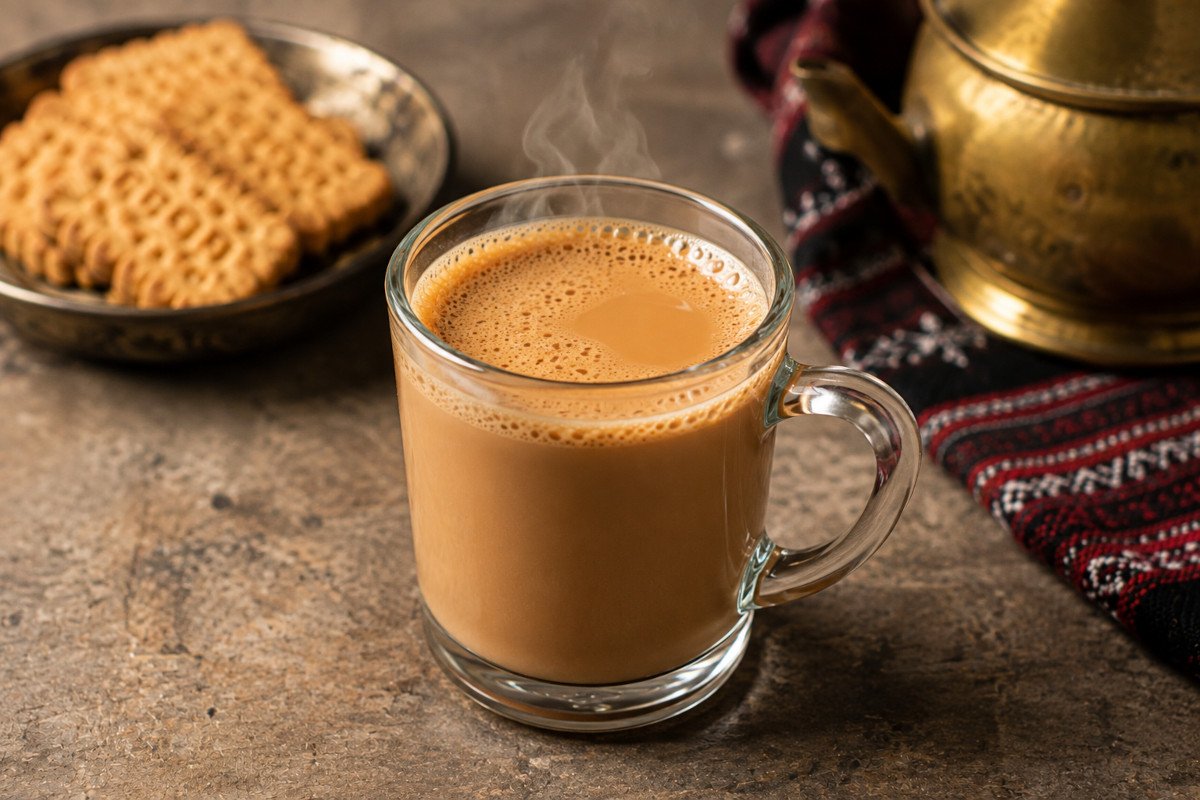
Country of origin: Gulf region (UAE, Qatar, Bahrain, Kuwait), with roots directly tied to South Asian tea culture
This round’s pick steps outside the usual recipe format to cover karak — a strongly brewed, heavily spiced, and generously sweetened milk tea that’s become one of the most consumed everyday drinks across the Gulf states. Unlike most dishes covered on this blog, which trace back centuries through Ottoman, Persian, or ancient regional trade, karak’s story is genuinely recent, and it’s inseparable from 20th-century South Asian labor migration to the Gulf.
A Tea Culture Imported Within Living Memory
Karak’s arrival in the Gulf is closely tied to the large South Asian expatriate communities, particularly from India and Pakistan, that have played a major role in the Gulf states’ workforce and broader development since the mid-20th century, especially accelerating alongside the region’s oil-driven economic growth. Karak is essentially a Gulf adaptation of South Asian masala chai, brought over and gradually adapted to local taste, eventually becoming so deeply embedded in everyday Gulf life that many people today, especially younger generations, think of karak as a thoroughly local Gulf drink rather than consciously tracing its more recent South Asian roots.
This makes karak a genuinely useful case study in how quickly a food or drink tradition can become deeply “native” feeling within a single generation or two, a much more recent and directly traceable example of cultural culinary exchange than most of the centuries-old migration stories that shaped dishes like sabich or jachnun, discussed elsewhere on this blog.
What Actually Makes Karak “Karak”
Karak differs from a standard cup of tea, or even standard masala chai, in a few specific ways. The tea itself is brewed very strongly, often using loose black tea leaves rather than tea bags, and it’s cooked directly with milk (rather than steeped in water and having milk added afterward), along with a generous amount of sugar and warming spices — cardamom is the most consistently used, though cinnamon, cloves, ginger, and sometimes a small amount of saffron appear in different versions. The tea is typically boiled and reduced for a meaningful stretch of time, concentrating the flavor considerably beyond what a quick steep would produce, and it’s traditionally poured back and forth between two vessels from a height, a technique that both cools the tea slightly and creates a light, frothy top layer.
A Drink Tied to Its Own Roadside Culture
Much like manakish’s association with neighborhood bakeries, discussed elsewhere on this blog, karak has developed its own distinct social infrastructure across the Gulf: small, often informal karak stands and cafeterias, frequently run by South Asian expatriate workers, serve as low-cost, everyday gathering spots where people from a wide range of backgrounds and income levels grab a quick cup, often alongside a simple snack like a samosa or biscuit. These karak stands have become genuinely significant social spaces in cities like Dubai and Doha, valued for being accessible and unpretentious in contrast to more formal café culture, and they represent one of the more visible, everyday ways South Asian and Gulf Arab cultures interact and overlap in daily life.
The Recipe
Serves 4
Ingredients
- 3 cups water
- 3 tablespoons loose black tea leaves (or 4–5 strong black tea bags)
- 4 green cardamom pods, lightly crushed
- 1 small cinnamon stick (optional)
- 2 cups whole milk
- 3–4 tablespoons sugar, adjusted to taste
- Pinch of saffron threads (optional)
Instructions
- Boil the tea and spices. In a saucepan, bring the water to a boil. Add the loose tea leaves, crushed cardamom pods, and cinnamon stick if using. Boil for 2–3 minutes to extract a strong base flavor.
- Add milk and sugar. Pour in the milk and add the sugar, along with saffron if using. Bring back to a gentle boil, then reduce heat slightly and let it simmer, uncovered, for 8–10 minutes, allowing the mixture to reduce and the flavors to concentrate. Keep an eye on it, since milk-based tea can boil over quickly if left unwatched.
- Strain. Strain the tea through a fine mesh strainer into a heatproof pitcher or directly into serving cups, removing the tea leaves and spices.
- Pull the tea (optional but traditional). For a frothier texture, pour the strained tea back and forth between two containers from a small height several times before serving.
- Serve hot. Serve immediately in small cups or glasses.
A Note on Strength
Karak is meant to be noticeably stronger and more concentrated than a typical cup of tea — if your version tastes closer to a mild, standard tea, let it simmer a bit longer to reduce further and intensify the flavor, rather than adding more tea leaves, which can turn overly bitter instead of simply stronger.
Serving Suggestions
Karak is traditionally enjoyed throughout the day, any time of day, often alongside a small savory snack, and it’s especially common as a mid-afternoon or evening social drink shared with others rather than a solitary morning coffee alternative.
Karak’s rapid, thorough integration into everyday Gulf life is a reminder that not every defining regional tradition needs centuries to take root — sometimes a single generation of migration and shared daily habit is enough.