
Koshari: Egypt’s Everyman Dish That Became a National Icon

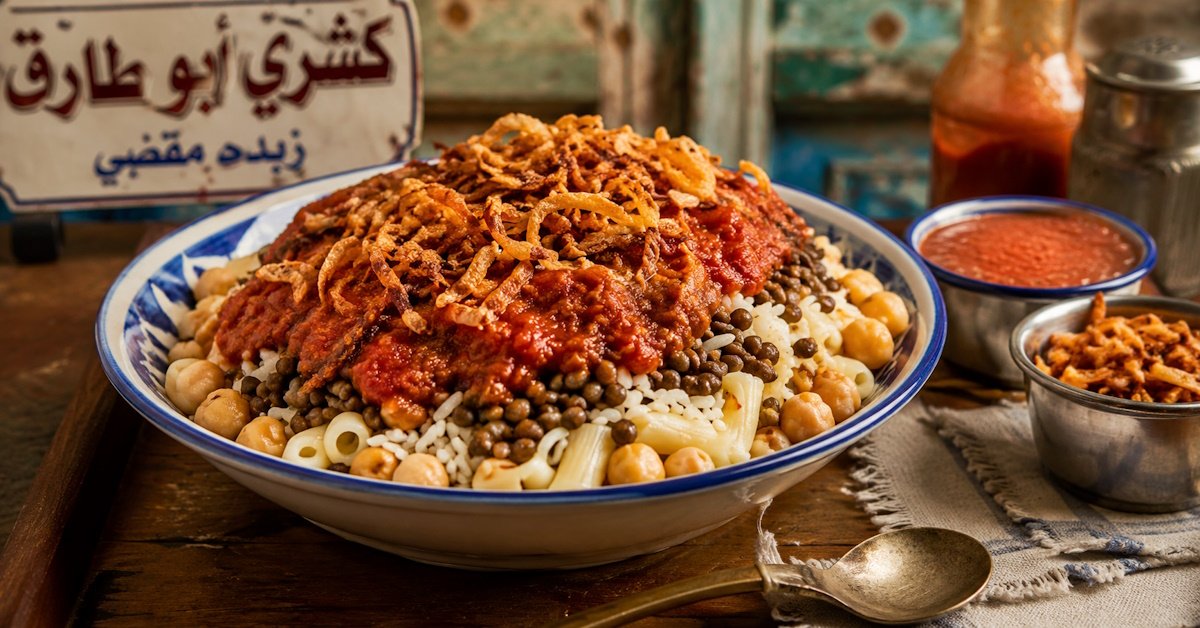
Koshari, arguably the most beloved street food in the entire country and, by most accounts, Egypt’s unofficial national dish. At first glance it looks almost improbable: a bowl piled with rice, lentils, and pasta, topped with a spiced tomato sauce, crispy fried onions, and a garlicky vinegar sauce on the side. But that combination has been feeding Egyptians for well over a century, and it remains one of the cheapest, most satisfying meals you’ll find in Cairo.
A Dish Built From Immigration and Trade
Koshari’s origins are a genuinely interesting piece of culinary history. Food historians generally trace it back to the 19th century, when Egypt’s growing trade and labor connections to India brought dishes like khichdi — a simple rice-and-lentil dish — into contact with Egyptian cooking. Over time, that base picked up Italian-style pasta (thanks to Egypt’s Mediterranean trade links and Italian immigrant communities in Alexandria and Cairo) and a distinctly Egyptian tomato sauce, along with a Middle Eastern tradition of deep-fried onions as a garnish. What emerged wasn’t really any one of those cuisines — it became something entirely new and entirely Egyptian.
By the early-to-mid 20th century, koshari had become a fixture of Cairo’s working-class food stalls, prized for being filling, meatless, and cheap to make — all qualities that turned it into an everyday meal for millions rather than an occasional treat. It’s still sold that way today, from dedicated koshari shops with stacked metal bowls to street carts scooping it to-go.
Why the Combination Works
On paper, rice + lentils + pasta all in one bowl sounds like carb overload without much point. In practice, the dish works because of how differently each element behaves. The rice is soft and mild, the small brown lentils add an earthy, slightly nutty bite, and the short pasta (usually elbow macaroni or small tubes) brings a different chew entirely. None of it would be interesting on its own — what pulls it together is the sauce layer: a bright, garlicky tomato sauce spiced with cumin and a touch of heat, plus a sharp vinegar-garlic sauce (called dukkah or shatta depending on the region) that gets drizzled on top or served on the side for people to add as much tang as they want. The crispy fried onions on top add crunch and a deep savoriness that ties the whole bowl together.
The Recipe
Serves 4–6
Ingredients
For the rice and lentils:
- 1 cup brown lentils, rinsed
- 1 cup long-grain rice, rinsed
- 3 tablespoons vegetable oil
- 2 ½ cups water, divided
- Salt, to taste
For the pasta:
- 1 ½ cups small elbow macaroni or ditalini
For the tomato sauce:
- 3 tablespoons olive oil
- 4 cloves garlic, minced
- 1 can (28 oz) crushed tomatoes
- 1 teaspoon ground cumin
- ½ teaspoon chili flakes (optional)
- Salt and black pepper, to taste
For the garlic-vinegar sauce:
- 4 cloves garlic, minced
- ¼ cup white vinegar
- 2 tablespoons water
- ½ teaspoon salt
- Pinch of chili flakes (optional)
For the crispy onions:
- 2 large onions, thinly sliced
- Vegetable oil, for frying
- 2 tablespoons flour (optional, for extra crispness)
Instructions
- Cook the lentils. Simmer the lentils in about 3 cups of water for 20–25 minutes, until tender but still holding their shape. Drain and set aside.
- Cook the rice. In a pot, heat the oil over medium heat, add the rice, and stir for a minute to coat. Add 2 ½ cups water and salt, bring to a boil, then reduce heat, cover, and simmer for 15–18 minutes until tender. Fluff and set aside.
- Cook the pasta. Boil the macaroni in salted water according to package instructions until al dente. Drain and set aside.
- Make the tomato sauce. Heat olive oil in a saucepan, add garlic, and cook briefly until fragrant. Add crushed tomatoes, cumin, chili flakes, salt, and pepper. Simmer for 15–20 minutes until slightly thickened.
- Make the garlic-vinegar sauce. Whisk together garlic, vinegar, water, salt, and chili flakes in a small bowl. Let sit for at least 10 minutes so the garlic mellows slightly.
- Fry the onions. Toss the sliced onions with flour if using. Fry in hot oil in batches until deep golden and crisp, about 4–5 minutes per batch. Drain on paper towels.
- Assemble. In each bowl, layer rice and lentils together as the base, then a layer of pasta. Top with a generous spoonful of tomato sauce, a drizzle of garlic-vinegar sauce, and a handful of crispy fried onions.
A Note on Assembly
Traditionally in Egypt, the rice and lentils are actually cooked together in the same pot rather than separately, which saves a step and lets the lentils’ earthiness flavor the rice slightly. Feel free to combine them once both are done, whichever is easier for you.
Serving Suggestions
Koshari is a complete meal on its own, but it’s often served with extra garlic-vinegar sauce and a hot chili sauce (shatta) on the side so everyone can adjust the heat and tang to taste. A simple side salad of chopped tomato and cucumber is a common, refreshing addition.
Koshari proves that a dish doesn’t need a single point of origin to become a country’s most beloved food — sometimes the best dishes are the ones built at the crossroads.