
Fesenjan: Persia’s Ancient Pomegranate and Walnut Stew

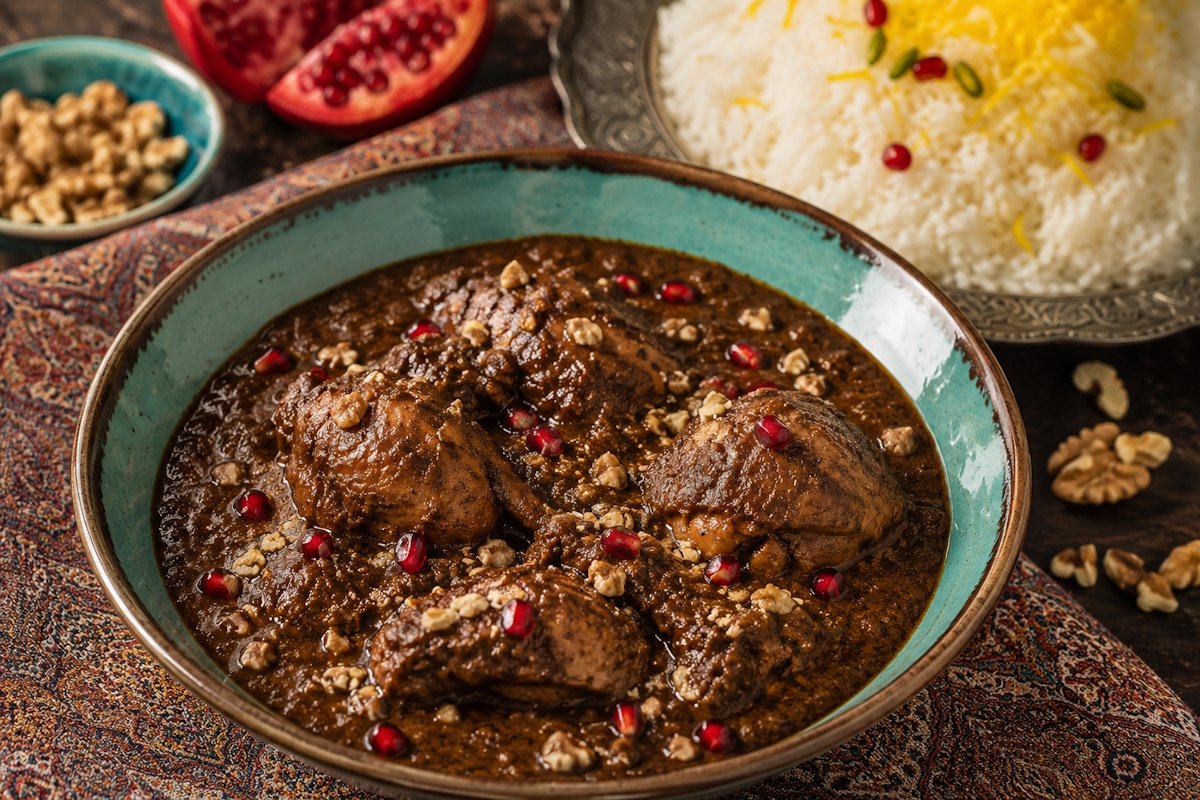
One of Persian cuisine’s oldest and most distinctive dishes. Dark, glossy, and deeply savory-sweet, it’s a stew built from just two main ingredients — ground walnuts and pomegranate molasses — simmered down for hours until they transform into something rich enough to coat duck, chicken, or even meatballs in a sauce unlike anything else in the region’s cooking.
A Dish With Roots in Ancient Persia
Fesenjan’s history stretches back well over a thousand years, with references to walnut-and-pomegranate stews appearing in Persian texts from as early as the Achaemenid and Sassanid eras. Pomegranates are native to the Iranian plateau, and walnuts have grown across the region for millennia, so in many ways fesenjan represents one of the most “native” combinations in all of Persian cooking — not an import shaped by trade, but a dish built from what was already growing in the region’s orchards.
It’s traditionally served at celebrations and special occasions, particularly in northern Iran’s Gilan and Mazandaran provinces, where pomegranates and walnuts are especially abundant. Duck is the classic protein pairing there, since the fattiness of duck balances the tartness of the sauce, though chicken is far more common in home cooking today.
The Sauce Is Everything
What makes fesenjan unusual is that there’s no tomato base, no yogurt, no stock-heavy foundation — the sauce is essentially ground walnuts and pomegranate molasses, slow-cooked until the natural oils release from the walnuts and the sauce thickens into something velvety and deeply concentrated. Getting this right depends on two things: toasting the walnuts before grinding to bring out their oils and flavor, and using genuinely good pomegranate molasses — a tart, syrupy reduction of pomegranate juice, not to be confused with sweetened grenadine.
The balance between the walnut’s earthy richness and the pomegranate’s tartness is the whole point of the dish. Traditionally, a small amount of sugar is added to round out the sourness, but the goal is a sauce that stays predominantly tart and savory, not sweet — fesenjan should never taste like dessert.
The Recipe
Serves 4–6
Ingredients
- 2 cups walnuts, toasted and finely ground
- 2 tablespoons vegetable oil or ghee
- 1 large onion, finely chopped
- 2 lbs bone-in chicken thighs (or duck pieces)
- 1 cup pomegranate molasses
- 2 cups water or chicken broth
- 1–2 tablespoons sugar, to taste
- ½ teaspoon ground cinnamon
- ¼ teaspoon ground cardamom
- Salt and black pepper, to taste
- Pomegranate seeds and chopped walnuts, for garnish
Instructions
- Toast and grind the walnuts. Toast the walnuts in a dry pan over medium heat for 5–7 minutes until fragrant, being careful not to burn them. Let cool, then grind finely in a food processor — the texture should be like coarse sand, not a paste.
- Brown the chicken. In a large pot, heat the oil over medium-high heat. Season the chicken with salt and pepper and brown on all sides, about 8 minutes. Remove and set aside.
- Build the base. In the same pot, add the onion and cook until soft and golden, about 8 minutes. Stir in the ground walnuts and cook for 3–4 minutes, stirring constantly, until they release some of their oil and smell toasty.
- Simmer the sauce. Add the pomegranate molasses and water or broth, stirring to combine into a smooth, dark sauce. Return the chicken to the pot, add cinnamon and cardamom, and bring to a gentle simmer.
- Slow cook. Cover and simmer on low heat for 1 ½ to 2 hours, stirring occasionally to prevent the walnuts from sticking to the bottom. The sauce should reduce and thicken considerably, turning a deep mahogany color.
- Balance the flavor. Taste and adjust with sugar (for balance, not sweetness) and salt. The final sauce should taste tart first, with sweetness and richness following behind it.
- Serve. Garnish with fresh pomegranate seeds and a scatter of chopped walnuts.
A Note on Getting the Balance Right
The most common mistake with fesenjan is rushing the simmer — the sauce needs time for the walnut oils to fully render and the flavors to meld, which is what gives it that signature velvety texture. If the sauce looks too thin after an hour, keep simmering uncovered; it will continue to thicken.
Serving Suggestions
Fesenjan is almost always served over saffron-scented basmati rice (chelow), which soaks up the rich sauce beautifully. A simple side of Persian herbed yogurt (mast-o-khiar) helps balance the richness.
Fesenjan is a reminder that some of the most sophisticated flavors come not from long ingredient lists, but from patience with just a few very good ones