
Çiğ Köfte: The Raw Dish That Became Meatless By Law

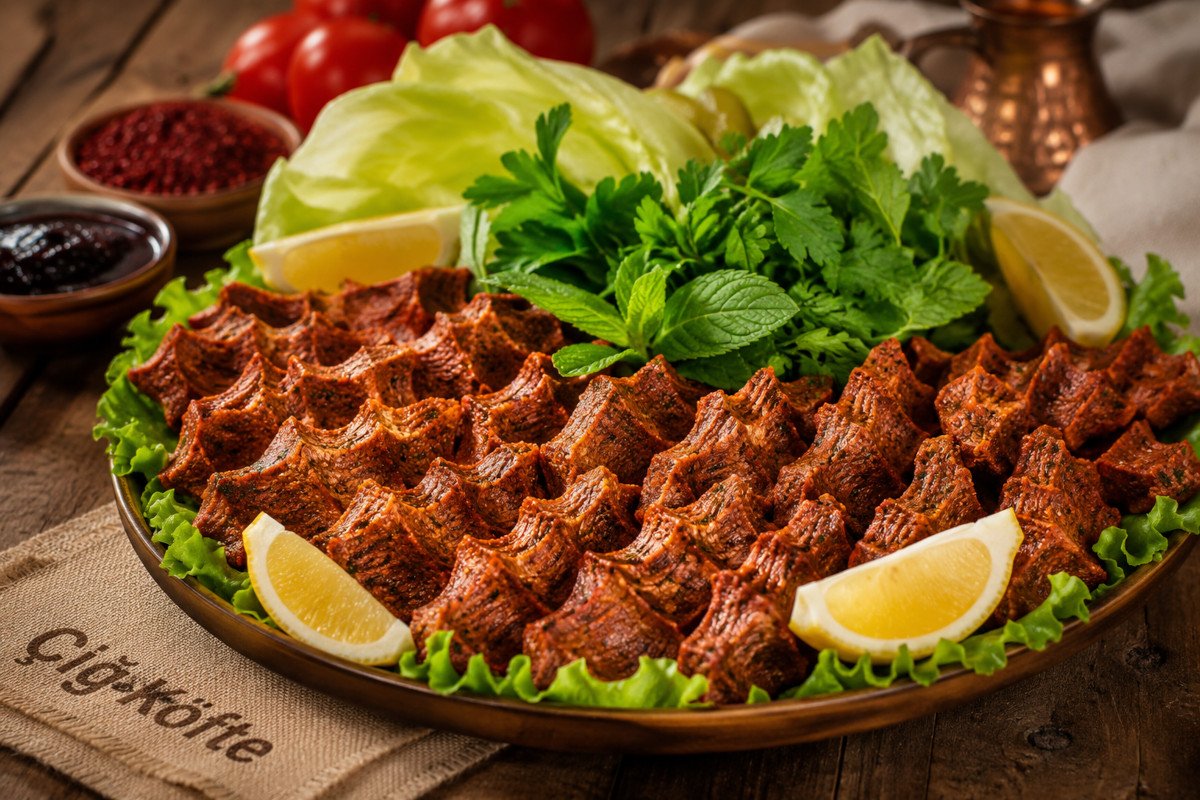
Country of origin: Turkey (Şanlıurfa region), with strong ties across the Levant as well
Today’s random pick lands on çiğ köfte (pronounced roughly “chee kur-fteh,” meaning “raw meatball” in Turkish) — a spiced, hand-kneaded mixture of fine bulgur, tomato and pepper paste, and warming spices, traditionally rolled into small patties and eaten without any cooking at all. What makes çiğ köfte’s story particularly interesting is that the dish most commonly eaten today under this name in Turkey is, somewhat counterintuitively, no longer actually raw meat at all — a shift driven largely by food safety regulation rather than changing taste.
A Dish That Used to Be Exactly What Its Name Says
Çiğ köfte’s origins trace to southeastern Turkey, particularly the Şanlıurfa region, and closely related raw meat and bulgur preparations appear across parts of the Levant as well, most notably as kibbeh nayyeh, discussed elsewhere on this blog in relation to kibbeh more broadly. Traditionally, çiğ köfte was made with raw ground meat — lamb or beef — worked by hand for a long period with fine bulgur, tomato paste, and spices until the meat’s proteins broke down and the mixture became smooth and cohesive enough to eat safely without cooking, a process that traditional cooks insist took real skill and lengthy, vigorous kneading to achieve properly.
Why the Meat Disappeared
In more recent decades, particularly in Turkey, food safety regulations around raw meat products led to significant changes in how çiğ köfte is commercially prepared and sold. Concerns about the safety of raw ground meat sold to the public, especially as çiğ köfte grew from a home-cooked or small-vendor specialty into a widely popular commercial street food sold at dedicated çiğ köfte restaurants and chains across Turkey, led many producers to remove meat from the recipe entirely, replacing it with additional bulgur, walnuts, and a more heavily spiced tomato-pepper paste base to compensate for the flavor and texture the meat previously provided. This meatless version has become so widespread and commercially dominant in Turkey today that many people, particularly younger generations, primarily encounter çiğ köfte as an entirely vegan dish, even though the name still literally translates to “raw meatball,” a linguistic holdover from a version of the dish that’s become considerably less common in everyday Turkish life.
This shift represents a genuinely unusual case in the region’s food history: a dish’s core defining ingredient changing dramatically within relatively recent memory, driven by food safety policy rather than the more typical drivers of culinary change, like migration, trade, or gradual regional adaptation.
The Kneading Technique Still Matters
Even in its now-common meatless form, çiğ köfte retains its traditional emphasis on extended, vigorous hand-kneading as the key technique that brings the mixture together. The fine bulgur needs to be worked thoroughly with the tomato and pepper paste, along with the spice blend, until it becomes a smooth, cohesive, slightly tacky mixture that holds together when shaped, a texture that can’t really be achieved quickly or with a machine in quite the same way — the working of the mixture by hand over an extended period is still considered essential to getting the right final consistency, regardless of whether meat is included.
The Recipe (Meatless, Modern Style)
Serves 4–6
Ingredients
- 2 cups fine bulgur wheat
- ¼ cup tomato paste
- 2 tablespoons red pepper paste (biber salçası), or additional tomato paste if unavailable
- 1 small onion, finely grated
- 3 cloves garlic, minced
- ¼ cup walnuts, finely ground
- 2 tablespoons olive oil
- 1 tablespoon pomegranate molasses
- 1 teaspoon ground cumin
- 1 teaspoon Aleppo pepper or paprika
- ½ teaspoon ground allspice
- Salt, to taste
- 1–1 ½ cups warm water, as needed
- Romaine lettuce leaves and lemon wedges, for serving
- Fresh parsley and green onion, chopped, for serving
Instructions
- Soak the bulgur. Place the fine bulgur in a large bowl and pour in about 1 cup of warm water, just enough to soften it. Let sit for about 15 minutes, then check the texture — it should be softened but not mushy.
- Combine the base. Add the tomato paste, red pepper paste, grated onion, garlic, ground walnuts, olive oil, pomegranate molasses, cumin, Aleppo pepper, allspice, and salt to the bowl.
- Knead thoroughly. Using your hands, knead the mixture vigorously for at least 10–15 minutes, working it much like a bread dough. The mixture should become smooth, cohesive, and slightly sticky. Add small amounts of warm water as needed if it feels too dry or crumbly to hold together.
- Adjust seasoning. Taste and adjust salt, pepper paste, or pomegranate molasses as needed — the mixture should taste bold, tangy, and well-spiced.
- Shape. Take small portions of the mixture and shape into small oval patties or logs, pressing firmly so they hold together, traditionally leaving an indentation with the fingers along the length of each piece.
- Serve. Serve immediately, arranged on or wrapped in romaine lettuce leaves, with lemon wedges, fresh parsley, and green onion alongside.
A Note on Kneading Time
Don’t rush the kneading step — this is genuinely the most important part of the process, and a mixture that hasn’t been worked long enough will taste and feel gritty and separate rather than smooth and cohesive.
Serving Suggestions
Çiğ köfte is traditionally eaten wrapped in lettuce leaves with a squeeze of lemon, often as a quick snack or light meal, and pairs well with ayran (a salted yogurt drink) to balance its bold, tangy spice.
Çiğ köfte’s shift away from raw meat is a rare example in this region’s food history of a dish’s core identity changing within living memory — proof that food traditions can adapt even when the name stays exactly the same.