
Lahmacun: The Flatbread Wrongly Nicknamed “Turkish Pizza”

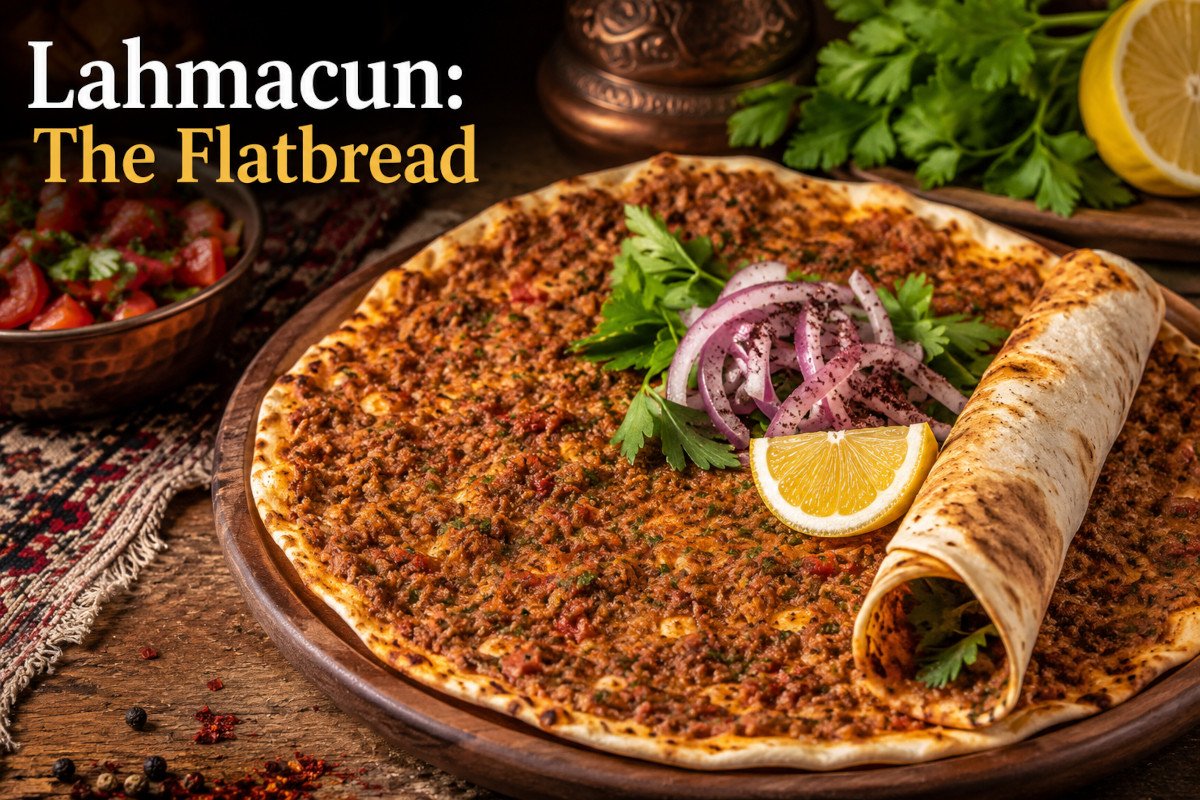
Country of origin: Turkey, with a closely contested claim from Armenian culinary tradition
Lahmacun – an extremely thin, crisp round of dough topped with a finely minced mixture of meat, tomato, pepper, and parsley, baked at very high heat until the edges crackle. It’s often introduced to newcomers as “Turkish pizza,” a comparison that’s popular precisely because it’s an easy shorthand, but one that actually undersells and misrepresents the dish once you look at how differently it’s eaten.
A Name Whose Origin Points Beyond Turkey
The word “lahmacun” comes from Arabic, roughly translating to “meat with dough,” and versions of similarly thin, meat-topped flatbreads appear not just in Turkey but throughout Armenian, Syrian, and broader Levantine culinary tradition, closely related to the sfiha discussed elsewhere on this blog. Armenian culinary historians and communities have long maintained a strong claim to lahmacun as well, particularly given the significant historical presence of Armenian communities within the Ottoman Empire and the dish’s continued prominence in Armenian diaspora cooking today. As with so many dishes shaped by the Ottoman Empire’s vast, multi-ethnic territory, lahmacun’s true origin likely reflects a shared culinary development across several communities living in close proximity for centuries, rather than a single clean point of invention belonging to just one group.
Today, lahmacun is strongly associated with Turkish street food culture, sold at dedicated lahmacun restaurants and stands throughout the country, while remaining an equally cherished dish within Armenian communities both in the region and across the global diaspora.
Why “Turkish Pizza” Undersells the Dish
The pizza comparison, while understandable at a glance — both are round, flat, topped with a savory mixture, and baked — misses what actually makes lahmacun distinctive, and arguably does the dish a disservice. Unlike pizza, lahmacun’s dough is rolled extremely thin, closer to a cracker or tortilla than to a chewy pizza crust, and it’s not meant to be eaten flat off a plate the way pizza typically is. Instead, lahmacun is traditionally rolled or folded up immediately after coming out of the oven, often stuffed with fresh parsley, chopped tomato, onion, and a squeeze of lemon, and eaten more like a wrap than a slice. This eating method fundamentally changes the experience: the thin, crisp base becomes a flexible wrapper rather than a flat base you’d top with cheese and additional toppings the way you would with pizza, which stays structurally rigid.
The Meat Topping Is Meant to Be Thin
Getting good lahmacun right depends on the topping being spread extremely thin and evenly across the dough, almost translucent in places, rather than piled on thickly. This isn’t a matter of skimping on flavor — a thin, evenly spread layer of finely minced meat and vegetables cooks through completely in the short, very high-heat baking time that also crisps the thin dough beneath it. A thicker layer of topping would either leave the meat undercooked by the time the thin dough is done, or force a longer bake that would over-crisp and potentially burn the delicate base. The thinness of both the dough and the topping are directly connected, technical choices that work together rather than separate style decisions.
The Recipe
Makes about 10 pieces
Ingredients
For the dough:
- 3 cups all-purpose flour
- 1 teaspoon instant yeast
- 1 teaspoon sugar
- 1 teaspoon salt
- 2 tablespoons olive oil
- 1 cup warm water (approximate, as needed)
For the topping:
- ½ lb ground lamb or beef, very finely minced (a food processor helps achieve the right fine texture)
- 1 small onion, very finely chopped or grated
- 1 small green bell pepper, very finely chopped
- 2 medium tomatoes, very finely chopped
- 2 cloves garlic, minced
- 2 tablespoons tomato paste
- 1 tablespoon red pepper paste (biber salçası), or extra tomato paste
- 2 tablespoons fresh parsley, finely chopped
- 1 teaspoon ground cumin
- ½ teaspoon paprika
- ¼ teaspoon Aleppo pepper or chili flakes (optional)
- Salt and black pepper, to taste
- 2 tablespoons olive oil
To serve:
- Fresh parsley, chopped tomato, and sliced onion
- Lemon wedges
Instructions
- Make the dough. Combine flour, yeast, sugar, and salt. Add olive oil and gradually mix in warm water, kneading for 8–10 minutes until smooth and elastic. Cover and let rise for about 1 hour, until roughly doubled.
- Make the topping. In a bowl, combine the finely minced meat, onion, bell pepper, tomato, garlic, tomato paste, red pepper paste, parsley, cumin, paprika, Aleppo pepper if using, salt, pepper, and olive oil. Mix thoroughly into a loose, well-combined, spreadable mixture — it should be almost paste-like in consistency.
- Divide the dough. Punch down the dough and divide into 10 small balls. Working with one at a time, roll each ball out as thin as possible — noticeably thinner than a typical pizza dough, closer to a large tortilla.
- Spread the topping. Spread a very thin, even layer of the meat mixture across each rolled-out round, all the way to the edges, using the back of a spoon to work it into an even, almost translucent layer.
- Bake. Bake at 500°F (260°C), or as hot as your oven will go, for 6–8 minutes, until the edges are crisp and the meat topping is fully cooked. The high heat and short time are essential — this isn’t a low-and-slow bake.
- Serve immediately. While still warm, scatter with fresh parsley, chopped tomato, and onion, add a squeeze of lemon, and roll or fold the lahmacun up to eat.
A Note on Rolling the Dough Thin
If your dough keeps springing back as you try to roll it thin, let it rest, covered, for 5–10 minutes and try again — overworked gluten resists thinning, and a short rest relaxes it enough to roll out properly.
Serving Suggestions
Lahmacun is meant to be eaten immediately, rolled up and often on the go, making it a popular quick lunch or street food option rather than a sit-down, multi-course dish.
Lahmacun’s “Turkish pizza” nickname is convenient shorthand, but it hides a dish with its own distinct logic — thin by design, wrapped rather than sliced, and shared across more than one culinary tradition that still claims it today.