
Sayadieh: The Levant’s Coastal Answer to a Rice Pilaf

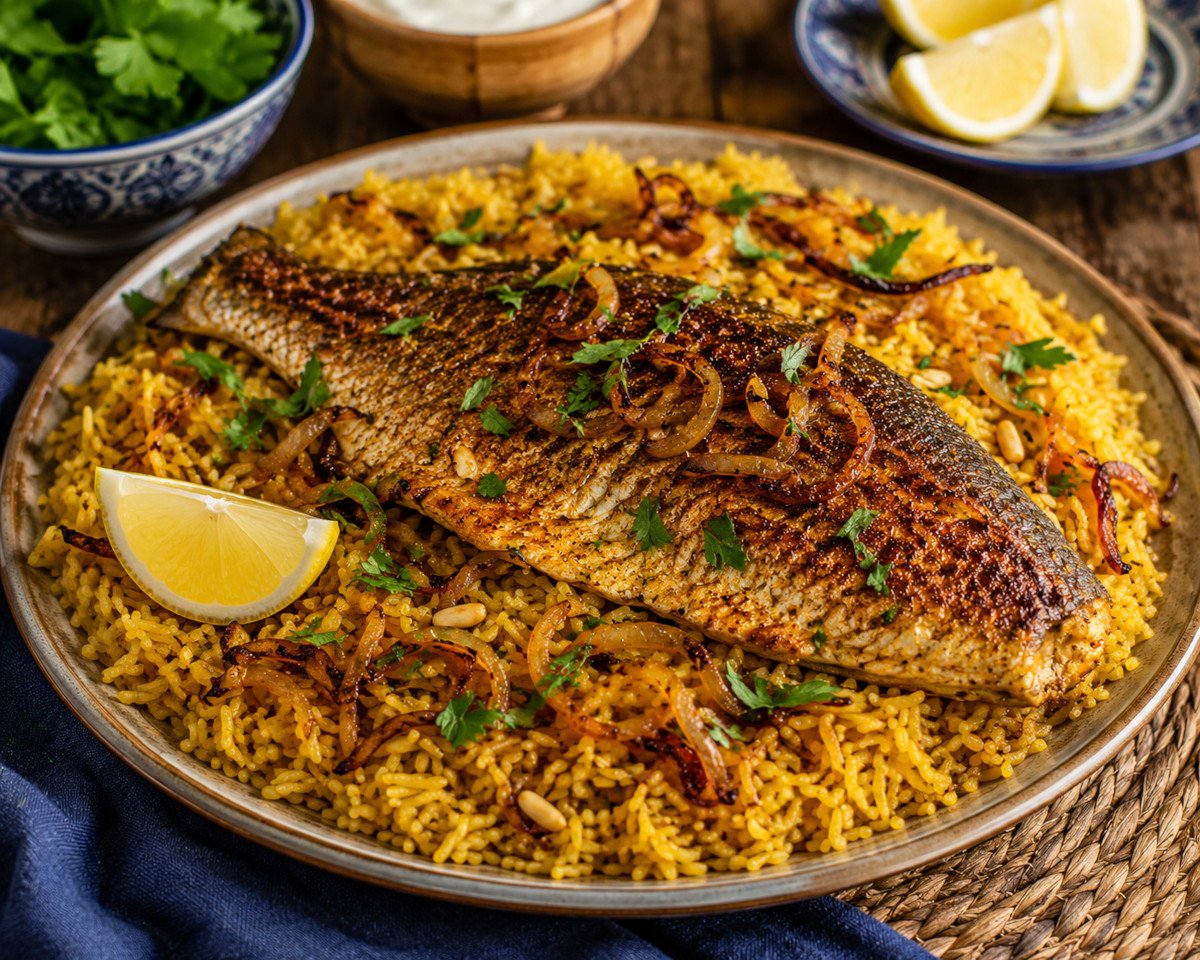
Country of origin: Levant (particularly coastal Lebanon and Palestine)
This round’s pick is sayadieh — a fish and rice dish from the coastal cities of the Levant, where fillets of white fish are served over a deeply flavored, dark golden rice cooked in a broth built from caramelized onions and the fish’s own stock. Where much of Levantine cuisine, as covered elsewhere on this blog, leans heavily on lamb, chicken, and legumes, sayadieh represents the region’s coastal counterpart — a dish shaped directly by proximity to the Mediterranean rather than the inland agricultural traditions behind dishes like mujaddara or kibbeh.
A Dish Named for the Fishermen Who Made It
The name sayadieh derives from the Arabic word for fisherman (“sayad”), a fairly direct reference to the dish’s origin among coastal fishing communities along the Eastern Mediterranean, particularly in cities like Sidon and Tripoli in Lebanon, and along the Palestinian coast, including Gaza and Jaffa historically. As a practical dish born from fishing communities, sayadieh reflects a straightforward culinary logic: use the whole catch efficiently, turning fish bones and trimmings into a flavorful stock rather than discarding them, and building the rice directly on top of that stock so nothing goes to waste. This waste-conscious, resourceful approach echoes a theme that shows up elsewhere in Levantine cooking too, similar in spirit to how fattoush developed around using up stale bread rather than throwing it away.
Why the Rice Turns Dark and Deeply Flavored
What sets sayadieh apart from other Middle Eastern rice pilafs, including many of the Persian and Gulf rice dishes covered elsewhere on this blog, is its color and flavor base. Rather than relying on saffron or a lighter spice blend for its aromatic quality, sayadieh’s rice gets its deep golden-brown color and rich, almost caramelized flavor from a generous quantity of onions, cooked low and slow until they turn a very deep brown, verging on the edge of burnt without quite crossing it. These deeply caramelized onions are then blended or mashed into the fish stock used to cook the rice, meaning the onion’s flavor and color become fully integrated into the grain itself rather than sitting as a separate garnish or topping, which is the more common approach in many other regional rice dishes.
Fish Stock as the Foundation, Not an Afterthought
The other defining technical element of sayadieh is that the rice is cooked entirely in fish stock rather than water or a general broth, giving the dish a savory, slightly briny depth that ties the rice and fish together as a cohesive whole rather than two separately flavored components simply plated next to each other. This stock is typically made by simmering the fish bones, head, and trimmings — parts that would otherwise go to waste — with aromatics like bay leaf, cumin, and sometimes a bit of tamarind or lemon for acidity, extracting as much flavor as possible before straining and using the liquid as the rice’s cooking liquid.
The Recipe
Serves 4–6
Ingredients
For the fish and stock:
- 2 lbs white fish fillets (such as grouper, snapper, or cod), plus bones/trimmings if available
- 1 onion, quartered
- 1 bay leaf
- 1 teaspoon cumin seeds
- 4 cups water
- Salt, to taste
For the caramelized onion rice:
- 4 large onions, thinly sliced
- 4 tablespoons olive oil
- 2 cups basmati rice, rinsed and soaked for 30 minutes
- 1 teaspoon ground cumin
- ½ teaspoon ground coriander
- Salt and black pepper, to taste
For serving:
- ¼ cup toasted pine nuts or slivered almonds
- Fresh lemon wedges
- Tahini sauce (tahini thinned with lemon juice, garlic, and water)
Instructions
- Make the fish stock. If using fish bones and trimmings, simmer them with the quartered onion, bay leaf, cumin seeds, water, and salt for about 30 minutes. Strain and reserve the stock. If bones aren’t available, a light fish or vegetable broth can substitute, though the flavor will be somewhat less rich.
- Cook the fish. Season the fish fillets with salt and pepper, then pan-sear or bake until just cooked through, about 4–5 minutes per side depending on thickness. Set aside.
- Caramelize the onions. In a wide pot, heat the olive oil over medium-low heat. Add the sliced onions and cook slowly, stirring occasionally, for 30–40 minutes, until deeply browned and almost jammy — this is the step that gives the dish its signature color and flavor, so don’t rush it.
- Blend some of the onions into the stock. Set aside about a third of the caramelized onions for garnish. Blend the remaining onions with about 2 cups of the reserved fish stock until smooth, then return this mixture to the pot along with any remaining stock needed to total about 3 ½ cups of liquid.
- Cook the rice. Add the soaked, drained rice to the onion-infused stock, along with cumin, coriander, salt, and pepper. Bring to a boil, then reduce heat, cover, and simmer for 18–20 minutes, until the rice is tender and the liquid is absorbed.
- Assemble. Spread the rice on a large serving platter. Arrange the cooked fish on top, and scatter with the reserved caramelized onions and toasted nuts.
- Serve. Serve with lemon wedges and tahini sauce on the side.
A Note on the Onions
The color and flavor of sayadieh depend heavily on how deeply the onions are caramelized — aim for a very deep golden-brown color, well beyond the pale gold typical of a quick sauté, though stopping short of actually burning them, which would introduce a bitter flavor rather than the rich, sweet depth you’re after.
Serving Suggestions
Sayadieh is a complete meal on its own, often served with a simple side salad or extra tahini sauce, reflecting its roots as a straightforward, hearty dish built for feeding fishing families well after a day’s work.
Sayadieh is a reminder that Levantine cuisine isn’t only shaped by its inland agricultural traditions — its coastal fishing communities left their own distinct, resourceful mark on the region’s cooking too.