
Kabab Koobideh: The Persian Skewer That Falls Apart If You Get the Ratio Wrong

Country of origin: Iran
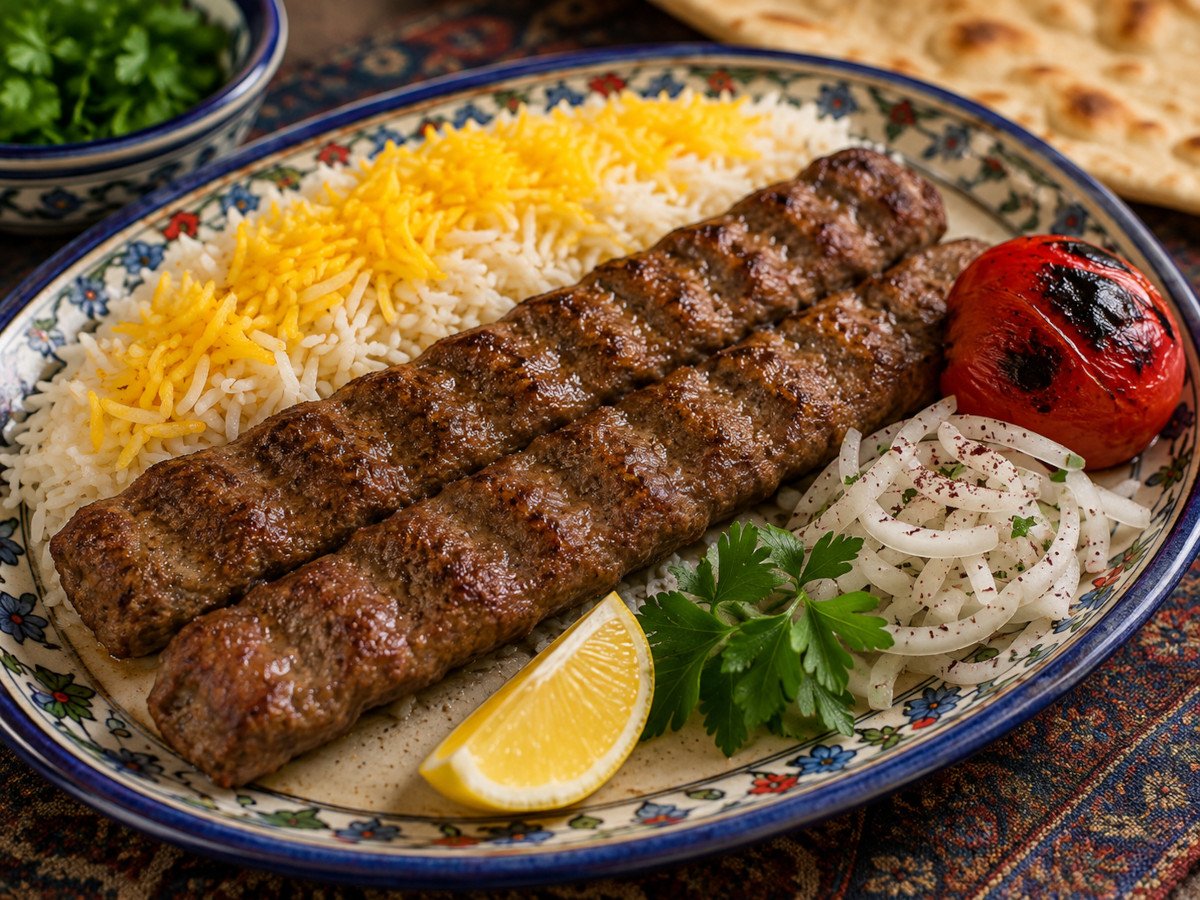
This round’s pick is kabab koobideh — long, flattened skewers of seasoned ground meat, grilled over open flame until charred at the edges and smoky throughout, served over saffron rice or tucked into flatbread. It’s one of the most common dishes at Persian restaurants and grill houses worldwide, and also one of the more technically unforgiving — a dish that looks simple but has a real, specific failure point that trips up a lot of home cooks on their first attempt.
A Grill Staple Built Around a Precise Ratio
Kabab koobideh’s identity centers on ground meat, traditionally a mix of lamb and beef, seasoned simply with grated onion, salt, pepper, and sometimes a bit of saffron or sumac, then packed tightly around wide, flat metal skewers and grilled directly over hot coals or an open flame. Unlike many of the more historically documented dishes covered on this blog, kabab koobideh doesn’t come with a specific founding story or named inventor — it belongs to Iran’s long-standing grilling tradition, a style of cooking well suited to the country’s historical use of open-fire cooking for skewered meats, alongside other Persian kabab varieties like kabab barg (thin sliced marinated meat) and joojeh kabab (saffron chicken).
What makes koobideh specifically distinctive among grilled meat dishes across the region is its reliance on ground rather than sliced or cubed meat, shaped by hand directly onto the skewer into a long, evenly flattened form, a technique that requires the meat mixture to hold together firmly enough to survive both the shaping process and the direct heat of grilling without falling off the skewer or crumbling apart.
The Real Secret Is in the Fat and the Onion
Getting kabab koobideh to hold together on the skewer, rather than falling apart into the coals, comes down to two specific factors experienced cooks pay close attention to: fat content and moisture management. The ground meat needs a reasonably high fat content, typically around 20%, since fat is essential to binding the mixture together as it cooks — using overly lean meat is one of the most common reasons home versions crumble apart on the grill. Just as important is grated onion, a defining ingredient in the seasoning that does more than add flavor: as the onion is grated, it releases juice, and this juice, when properly incorporated and then allowed to be worked into the meat through vigorous kneading, actually helps bind the meat mixture together in a way that plays a real structural role, not just a flavoring one. Skipping a thorough kneading step, or using pre-chopped rather than freshly grated onion, tends to result in a looser mixture that’s considerably harder to shape and keep intact on the skewer.
Why Flat, Wide Skewers Matter
The specific type of skewer used for koobideh isn’t interchangeable with a typical thin, round metal or bamboo skewer — traditional koobideh skewers are wide and flat, specifically designed to give the ground meat mixture more surface area to grip onto as it’s shaped and pressed along the skewer’s length. A thin, round skewer simply doesn’t provide enough contact surface for the meat to hold securely, which is part of why this specific equipment detail matters more here than with most other skewered meat dishes, where round skewers work perfectly well.
The Recipe
Serves 4 (makes about 8 skewers)
Ingredients
- 2 lbs ground lamb and beef mixture (about 20% fat content)
- 1 large onion, grated (juice included)
- 1 teaspoon baking soda
- 1 teaspoon salt
- ½ teaspoon black pepper
- ¼ teaspoon ground saffron (optional, dissolved in a teaspoon of warm water)
- Flat metal skewers
For serving:
- Grilled tomatoes
- Saffron basmati rice or flatbread
- Butter, for topping the rice
- Sumac, for sprinkling
Instructions
- Combine the meat and onion. In a large bowl, combine the ground meat with the grated onion and its juice, baking soda, salt, and pepper. If using saffron, add the dissolved saffron water as well.
- Knead thoroughly. Knead the mixture vigorously by hand for at least 8–10 minutes, until it becomes noticeably smoother, slightly sticky, and well combined — this step is essential for developing the binding structure the meat needs to hold together on the skewer.
- Rest the mixture. Cover and refrigerate for at least 30 minutes to 1 hour, which helps the mixture firm up and makes it considerably easier to shape.
- Shape onto skewers. Wetting your hands with cold water to prevent sticking, take a portion of the meat mixture and mold it firmly around a flat skewer, pressing and shaping it into a long, evenly flattened form, about ½ inch thick, making sure it’s tightly packed with no gaps or thin spots that might break apart on the grill.
- Grill. Heat a grill or open flame to high heat. Grill the skewers, turning every couple of minutes, for about 10–12 minutes total, until well-charred on the outside and cooked through, rotating gently and carefully to avoid the meat slipping or breaking off the skewer.
- Serve. Slide the cooked meat off the skewers directly onto a bed of saffron rice or flatbread, ideally using a piece of flatbread to help ease it off cleanly. Serve with grilled tomatoes and a sprinkle of sumac.
A Note on Troubleshooting
If your mixture keeps falling apart on the skewer or during grilling, the most common fixes are: using meat with slightly more fat, kneading longer and more vigorously, and making sure the mixture has rested and firmed up in the refrigerator before shaping — rushing any of these three steps is the most frequent cause of koobideh that doesn’t hold together.
Serving Suggestions
Kabab koobideh is traditionally served with saffron rice topped with a pat of butter, alongside grilled tomatoes and a raw onion and sumac garnish, though it’s equally popular wrapped in flatbread as a more casual, handheld meal.
Kabab koobideh’s deceptively simple ingredient list hides a real technical challenge — proof that sometimes the difference between a dish falling apart and holding together comes down to a few minutes of extra kneading.