
Ash-e Reshteh: The Soup Persians Eat to Wish Someone a Good Path Ahead

Country of origin: Iran
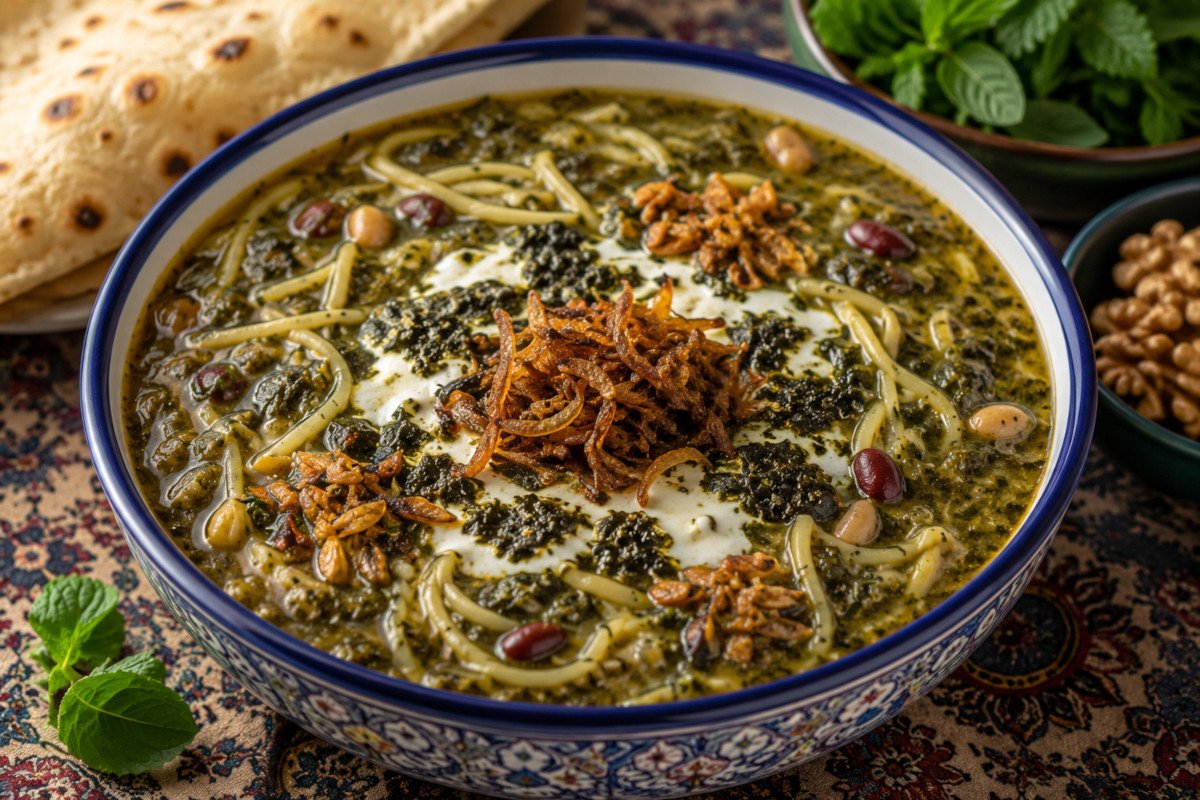
This round’s pick is ash-e reshteh — a thick, hearty Persian soup built from noodles, herbs, beans, and kashk (a tangy fermented whey), most closely associated with Nowruz, the Persian New Year, though eaten throughout the year as well. Few dishes in the region carry as much symbolic weight tied to a specific ingredient as this one does with its noodles, which aren’t just a textural component but are believed by many Iranians to carry genuine meaning about the year ahead.
Noodles That Are Believed to Represent Life’s Path
The reshteh in ash-e reshteh means “noodles,” and those noodles hold a specific symbolic role in Persian New Year tradition that goes beyond flavor or texture. According to widely held belief within Iranian culture, eating reshteh (noodles) around Nowruz is thought to help guide a person toward finding their path in life or making the right decisions in the year ahead, with the long, unbroken strands of noodle symbolically representing a life path stretching forward. This belief is part of why ash-e reshteh appears so consistently on Nowruz tables specifically, distinguishing it from many other Persian soups that don’t carry the same seasonal or symbolic significance.
Beyond its New Year associations, ash-e reshteh is also commonly prepared and given away as an act of charity or gratitude in Iranian culture, sometimes cooked in large batches and shared with neighbors or those in need, particularly when someone has a wish fulfilled or a prayer answered — a tradition sometimes referred to as “nazri” food, tying the dish to acts of communal generosity beyond just its role as an everyday meal.
Kashk: The Ingredient That Gives It a Distinctive Tang
While the noodles carry the symbolic weight, kashk is what gives ash-e reshteh its most distinctive flavor. Made from strained, dried, and fermented whey or yogurt, kashk has a strong, tangy, slightly funky flavor that’s fairly unique within Persian cooking, generally sold either as a dried, crumbly product that needs to be reconstituted with water, or as a ready-to-use liquid paste. Drizzled over the top of the finished soup just before serving, kashk adds a sharp sourness that cuts through the heartiness of the beans and noodles, playing a similar flavor role to how yogurt or sour cream might function as a finishing touch in other cuisines, though with a considerably more assertive, fermented character. If kashk isn’t available, a reasonable, though not identical, substitute is a mixture of Greek yogurt and a small amount of lemon juice, which won’t fully replicate the fermented depth but provides a similar tangy finishing note.
A Soup Layered With Fresh Herbs, Not Just Simmered With Them
Like ghormeh sabzi, discussed elsewhere on this blog, ash-e reshteh relies on a substantial quantity of fresh herbs — typically parsley, cilantro, spinach, and dill — as a core component rather than a garnish, reflecting the same broader Persian culinary tradition of using herbs generously as a defining ingredient category. The herbs are usually sautéed separately before being added to the soup, a technique that, as with ghormeh sabzi, deepens their flavor and removes some of the raw, grassy edge that a large quantity of fresh herbs can otherwise carry, making this preparation step just as important here as it is in the region’s more famous herb stew.
The Recipe
Serves 6–8
Ingredients
- 1 cup dried chickpeas, soaked overnight (or 1 can, drained)
- 1 cup dried kidney or pinto beans, soaked overnight (or 1 can, drained)
- 1 cup brown lentils
- 2 large onions, chopped, divided
- 3 tablespoons vegetable oil, divided
- 6 cups vegetable or chicken broth
- 4 cups fresh parsley, finely chopped
- 2 cups fresh cilantro, finely chopped
- 2 cups fresh spinach, chopped
- ½ cup fresh dill, finely chopped
- 6 oz reshteh (Persian noodles) or thin linguine, broken into shorter pieces
- 3 cloves garlic, minced
- 1 teaspoon dried mint
- ½ teaspoon turmeric
- Salt and black pepper, to taste
- ½ cup kashk, for topping (or Greek yogurt thinned with lemon juice as a substitute)
- Fried onions and dried mint, for garnish
Instructions
- Cook the beans and lentils. If using dried chickpeas and kidney beans, simmer them separately in water until tender, about 45 minutes to 1 hour (canned beans can skip this step). Cook the lentils separately in water for about 20 minutes until tender. Drain and set aside.
- Build the soup base. In a large pot, heat 2 tablespoons of oil over medium heat. Add one chopped onion and cook until soft and golden, about 8 minutes. Add the cooked chickpeas, beans, lentils, turmeric, and broth. Bring to a simmer and cook for about 20 minutes.
- Sauté the herbs. While the soup simmers, heat the remaining oil in a separate wide pan and sauté the parsley, cilantro, spinach, and dill for about 10–15 minutes, until they darken slightly and become fragrant.
- Combine. Add the sautéed herbs to the soup pot and continue simmering for another 20–30 minutes, until the soup thickens and the flavors meld.
- Add the noodles. Stir in the broken reshteh noodles and cook for another 8–10 minutes, until tender.
- Make the garlic-mint garnish. In a small pan, fry the minced garlic in a bit of oil until golden, then stir in the dried mint and remove from heat immediately to avoid burning.
- Season and finish. Season the soup with salt and pepper to taste. Ladle into bowls and top each serving with a generous drizzle of kashk, a spoonful of the garlic-mint mixture, and fried onions.
A Note on the Herb Quantity
As with ghormeh sabzi, don’t be tempted to reduce the amount of fresh herbs — the dish is meant to be substantially green and herb-forward, not just a bean and noodle soup with a light herbal accent.
Serving Suggestions
Ash-e reshteh is a substantial, meal-sized soup on its own, traditionally served with warm bread, and it’s especially popular during the cold winter months leading into Nowruz in early spring.
Ash-e reshteh carries meaning that goes beyond the bowl itself — a dish eaten not just for its heartiness, but for the hope, tied up in its long noodles, of a good path in the year ahead.