
Kashk-e Bademjan: Persia’s Smoky Eggplant Dip Built on Fermented Whey

Country of origin: Iran
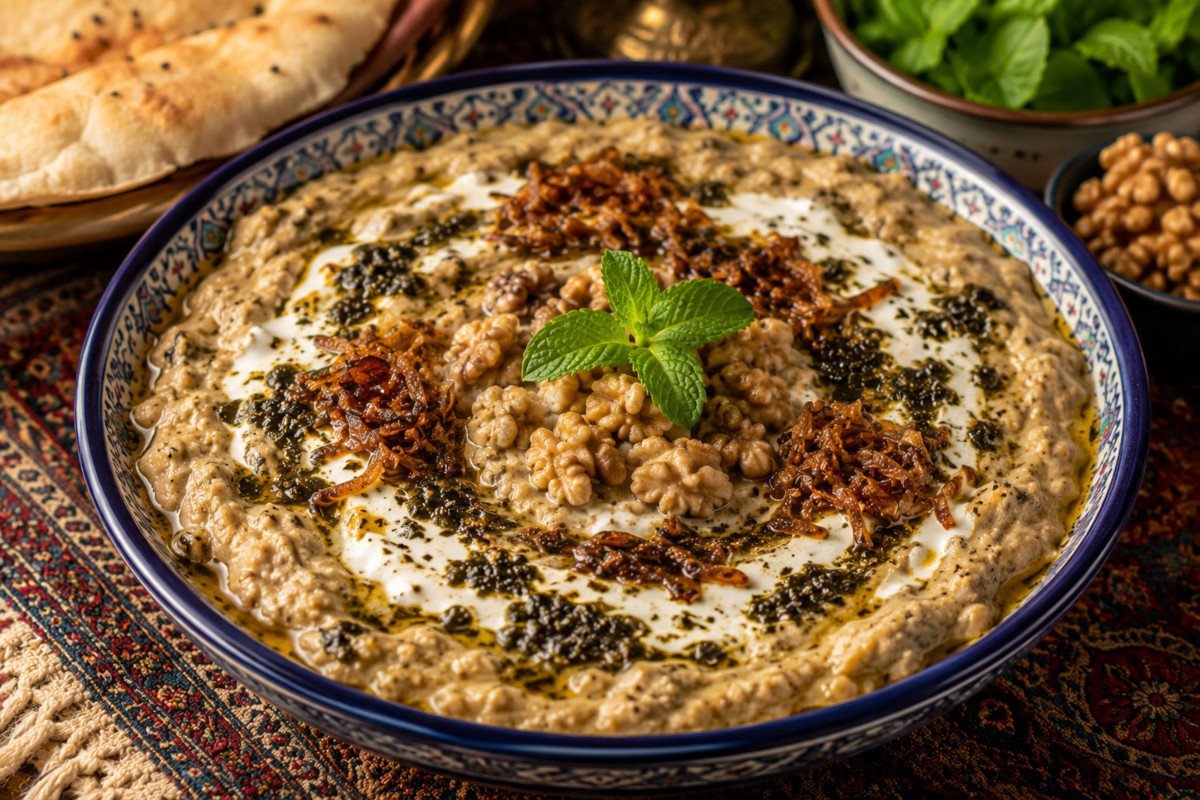
This time the pick is kashk-e bademjan — a rich, smoky Persian eggplant dip, mashed and topped with kashk (the tangy fermented whey also featured in ash-e reshteh, discussed elsewhere on this blog), fried onions, and mint-infused oil. It’s one of the most popular appetizers in Persian cuisine, served at nearly every gathering, and it makes a strong case for kashk as one of Iran’s most distinctive and versatile pantry ingredients.
An Everyday Appetizer With Deep Household Roots
Kashk-e bademjan doesn’t come with the kind of specific, documented founding story attached to dishes like İskender kebab or Turkish delight — instead, it belongs to the broader category of deeply embedded, generations-old Persian home cooking, the kind of dish nearly every Iranian household has its own well-practiced version of, passed down through direct repetition rather than any single written or claimed origin. Eggplant itself has a long history of cultivation and use across Persian and the wider Middle Eastern cooking tradition, and its combination with kashk reflects a broader Persian culinary instinct toward pairing rich, fried vegetables with the sharp, sour tang of fermented dairy, a pattern that shows up elsewhere in Persian cooking as well.
The dish holds a firm place as a starter or appetizer at Persian gatherings, typically served alongside flatbread for scooping, and it’s common enough that it appears on the menu of nearly every Persian restaurant outside Iran, functioning as something close to an ambassador dish for people encountering Persian cuisine for the first time.
Kashk Again, in a Completely Different Role
Kashk’s appearance here is worth noting alongside its role in ash-e reshteh, since it demonstrates just how differently the same distinctive ingredient can function depending on the dish. In ash-e reshteh, kashk is drizzled thinly over a brothy, herb-heavy soup, adding a sharp contrast against a dish with a lot of other components competing for attention. In kashk-e bademjan, kashk plays a much more central role, mixed directly into the mashed eggplant itself rather than just drizzled on top, so its tangy, fermented flavor becomes an integral part of the dip’s base rather than a finishing accent. This shift from garnish to core ingredient is a meaningful difference, and it’s part of why kashk-e bademjan tastes noticeably more assertive and dairy-forward than the more herb-and-broth-dominant flavor of ash-e reshteh.
Why Frying (Not Roasting) the Eggplant Matters
While roasting eggplant is a common technique across many Middle Eastern eggplant dishes, including baba ganoush, kashk-e bademjan traditionally calls specifically for frying the eggplant in oil rather than roasting it. This technique produces a noticeably richer, more deeply savory result, since the eggplant absorbs oil as it fries, contributing directly to the dip’s characteristic richness in a way that roasting, which tends to dry the eggplant out somewhat as moisture evaporates, doesn’t replicate quite as well. This is a meaningful technical distinction worth understanding if you’re used to other regional eggplant dips that lean on roasting instead.
The Recipe
Serves 4–6
Ingredients
- 2 large eggplants, peeled in alternating strips and sliced into rounds
- Salt, for drawing out moisture
- Vegetable oil, for frying
- 2 large onions, thinly sliced, divided
- 4 cloves garlic, minced
- ½ teaspoon turmeric
- ½ cup kashk (or a mixture of Greek yogurt and a little lemon juice as a substitute)
- 2 tablespoons dried mint
- 2 tablespoons butter or oil, for the mint garnish
- Salt and black pepper, to taste
- Walnuts, chopped, for garnish (optional)
Instructions
- Salt the eggplant. Lay the sliced eggplant on a rack or paper towels, salt generously, and let sit for 20–30 minutes to draw out excess moisture and bitterness. Pat dry thoroughly.
- Fry the eggplant. Heat a generous amount of vegetable oil in a wide pan over medium-high heat. Fry the eggplant slices in batches until deeply golden and fully softened, about 4–5 minutes per side. Drain on paper towels.
- Fry the onions. In the same pan, fry half of the sliced onions until deeply golden and slightly crisp, about 10 minutes. Set aside for garnish. Fry the remaining onion until just soft, about 6–8 minutes, and set aside separately for mixing into the base.
- Cook the garlic. Add the minced garlic and turmeric to the pan with the softer onions, cooking briefly until fragrant.
- Mash the base. In a bowl, mash the fried eggplant together with the softer cooked onion and garlic mixture until you get a coarse, well-combined paste — some texture is fine and traditional, so avoid over-pureeing it completely smooth.
- Mix in the kashk. Stir about two-thirds of the kashk directly into the mashed eggplant mixture, reserving the rest for topping. Season with salt and pepper to taste.
- Make the mint oil. In a small pan, melt the butter or heat the oil over medium heat, add the dried mint, and cook for about 30 seconds until fragrant, then remove from heat immediately.
- Assemble and serve. Spread the eggplant mixture onto a serving plate. Drizzle with the remaining kashk, top with the crispy fried onions, drizzle with the mint oil, and scatter with chopped walnuts if using.
A Note on Kashk Consistency
If using dried kashk, it needs to be reconstituted with a bit of warm water and whisked until smooth before using, since it’s typically sold in a hard, crumbly form rather than ready to pour.
Serving Suggestions
Kashk-e bademjan is traditionally served as a warm appetizer with fresh flatbread for scooping, and works well alongside other Persian starters as part of a shared spread before a main course.
Kashk-e bademjan shows how far a single distinctive ingredient like kashk can stretch across a cuisine — the same tangy, fermented whey that finishes a brothy soup here becomes the very backbone of a rich, savory dip.