
Balaleet: The Gulf’s Sweet Noodles for Breakfast

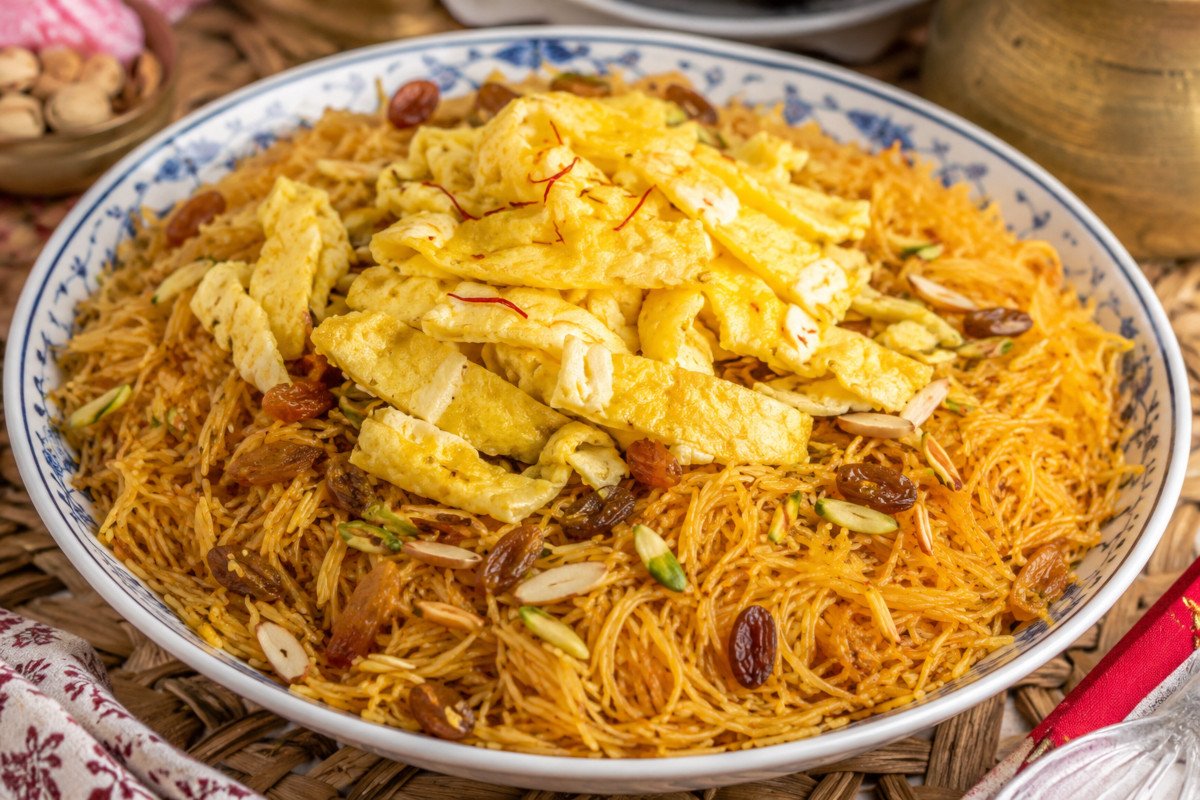
Country of origin: Gulf region (UAE, Bahrain, Qatar, Kuwait)
Balaleet is Sweet, saffron-and-cardamom-spiced vermicelli noodles, traditionally topped with a thin layer of savory fried egg. It’s a dish that tends to surprise people encountering it for the first time, since it openly combines sugar-sweetened noodles with a savory egg topping in a single plate, an unusual pairing that makes more sense once you understand its place in Gulf breakfast tradition.
A Dish Built for the Start of the Day
Balaleet holds a firm place as a traditional Emirati and wider Gulf breakfast dish, historically eaten especially on special occasions and celebratory mornings, including Eid, though it’s also enjoyed as an everyday breakfast in many households. Vermicelli noodles themselves reflect the historical trade connections between the Arabian Peninsula and South Asia, since thin wheat noodles like vermicelli have long been part of South Asian cooking and likely made their way into Gulf cuisine through centuries of maritime trade across the Indian Ocean, a connection that also shows up in other Gulf dishes with South Asian culinary influence layered into otherwise distinctly Arab preparations.
The dish’s sweetness comes primarily from sugar, along with the warm, fragrant notes of cardamom, rosewater, and saffron — the same warming spice combination that shows up across much of Gulf cooking, tying balaleet to a broader regional flavor identity shared with dishes like harees and luqaimat.
Why Sweet and Savory Sit on the Same Plate
The combination of sweet noodles and a savory fried egg layer might seem like an unusual pairing at first, but it reflects a broader, well-established pattern in the region’s cooking of combining sweet and savory elements within a single dish rather than keeping them strictly separated by course, a theme also seen in Moroccan pastilla, discussed elsewhere on this blog. In balaleet specifically, the savory egg is typically prepared and served as a separate, thin layer either underneath or alongside the sweet noodles rather than mixed directly into them, allowing each bite to combine a bit of both rather than blending the flavors into one uniform taste. This structural choice — keeping the two elements distinct but adjacent — lets people adjust the ratio of sweet to savory somewhat to their own preference as they eat, taking more or less of either component with each bite.
The Recipe
Serves 4
Ingredients
For the noodles:
- 8 oz vermicelli noodles, broken into shorter pieces
- 3 tablespoons butter or ghee
- ⅓ cup sugar, adjusted to taste
- ¼ teaspoon ground cardamom
- Pinch of saffron threads, soaked in 2 tablespoons warm water
- 1 teaspoon rosewater
- 1 ½ cups water
- ¼ cup slivered almonds or pistachios, for garnish (optional)
For the egg layer:
- 4 eggs
- ¼ teaspoon ground turmeric
- Salt and black pepper, to taste
- 1 tablespoon butter or oil, for frying
Instructions
- Toast the noodles. In a pot, melt the butter or ghee over medium heat. Add the broken vermicelli and toast, stirring frequently, for 2–3 minutes until lightly golden and fragrant — this step deepens the noodles’ flavor before they’re cooked in liquid.
- Cook the noodles. Add the sugar, cardamom, saffron with its soaking water, rosewater, and water to the pot. Bring to a gentle boil, then reduce heat and simmer, stirring occasionally, for about 5–7 minutes, until the noodles are tender and the liquid has been mostly absorbed.
- Make the egg layer. In a bowl, whisk the eggs with turmeric, salt, and pepper. Heat butter or oil in a wide, flat pan over medium heat, pour in the eggs, and cook like a thin omelet, without stirring, until fully set on both sides. Remove and let cool slightly, then cut into thin strips or small pieces.
- Assemble. Spread the sweet noodles onto a serving plate. Arrange the savory egg strips over the top, or serve them alongside on the same plate.
- Garnish. Sprinkle with slivered almonds or pistachios if using.
A Note on Sweetness Level
Sugar levels in balaleet vary quite a bit by household, with some families preferring it noticeably sweet and others keeping it more moderate specifically to balance better against the savory egg. Starting with a smaller amount of sugar and adjusting to taste is a reasonable approach if you’re making it for the first time and aren’t sure of your own preference yet.
Serving Suggestions
Balaleet is traditionally eaten for breakfast, often alongside Arabic coffee or karak tea, and works well served warm shortly after cooking, while the noodles are still soft and fragrant.
Balaleet’s unapologetic mix of sweet and savory on a single breakfast plate is a good entry point into a broader pattern across Gulf and Middle Eastern cooking — one where dessert and dinner don’t always stay as separate as Western food culture assumes they should.