
Pide: The Boat-Shaped Bread Built for Toppings That Actually Fit

Country of origin: Turkey
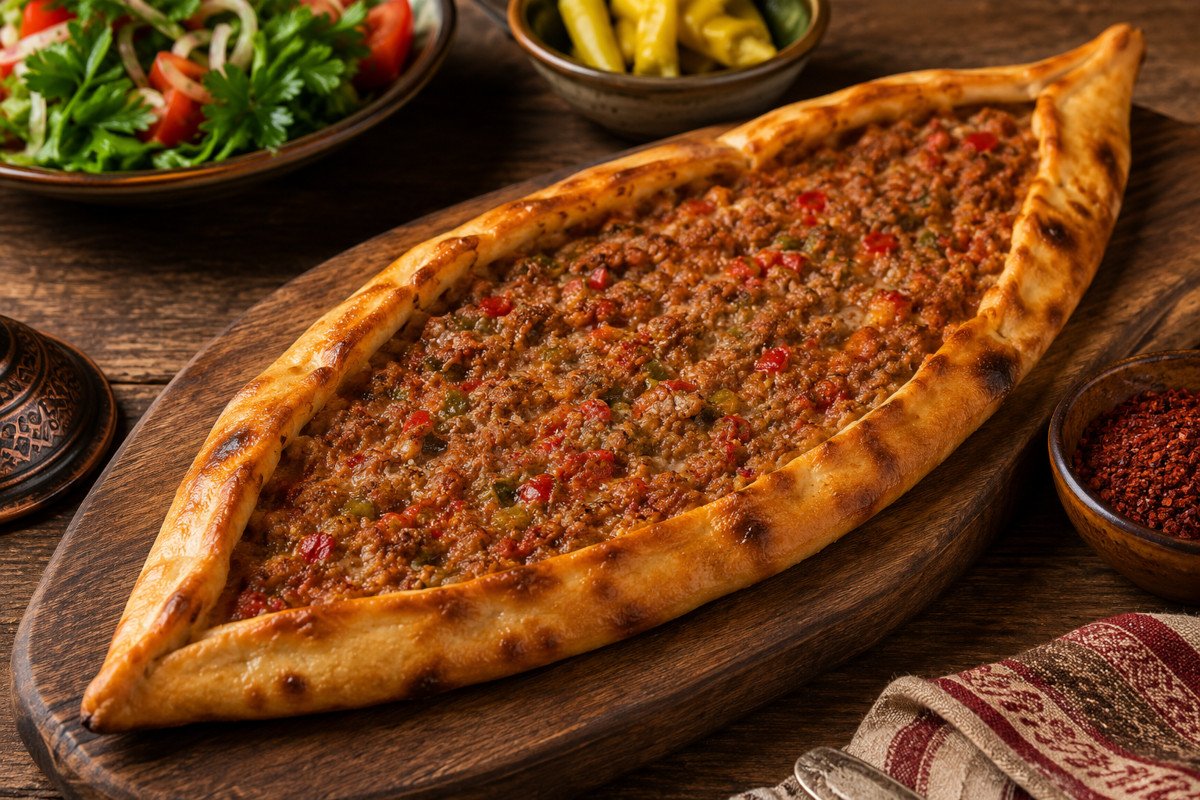
A boat-shaped Turkish flatbread with pinched, raised edges, filled with combinations like spiced ground meat, cheese, spinach, or egg, and baked until the crust turns deeply golden and the edges char slightly. Often grouped alongside lahmacun as another example of Turkish flatbread, pide is actually a structurally distinct dish, and that structural difference is really the whole point of it.
A Shape Designed Around What It’s Meant to Hold
Where lahmacun is defined by being rolled paper-thin with an almost translucent layer of topping, pide takes the opposite approach: a thicker, more bread-like dough, shaped into a long oval or boat form with the edges pinched up and folded over to create a raised border around the filling. This shape isn’t a stylistic flourish — it’s a direct structural response to the kind of toppings pide is meant to carry. Fillings like melted cheese, cracked eggs, or a generous mound of spiced ground meat need something to contain them as the dough bakes; a completely flat base, like lahmacun’s, would let runny or heavy fillings spill off the edges before the dough finishes cooking. The raised, boat-like border solves that problem directly, allowing pide to support far richer, wetter, and more substantial toppings than a flat flatbread ever could.
This is a useful contrast to keep in mind alongside lahmacun and sfiha, both covered elsewhere on this blog: all three are Turkish or Levantine flatbreads with toppings, but each has arrived at a genuinely different dough-to-topping relationship based on what that specific topping needs structurally to work.
Regional Variation Across Turkey
Pide varies meaningfully by region within Turkey itself, with different areas developing their own preferred fillings and styles. Kayseri, the same city closely associated with manti elsewhere on this blog, is also known for a distinctive style of pide topped with spiced ground meat, often mixed with a thin layer of fat that renders during baking and keeps the filling moist. Karadeniz (Black Sea region) pide is well known for a cheese-and-egg combination, frequently featuring a soft, stretchy local cheese cracked with a raw egg on top just before the final minutes of baking, so the egg sets into a soft, just-cooked topping rather than becoming fully hard. These regional differences reflect the same broader pattern seen throughout Turkish and Middle Eastern cooking, where a shared base technique gets meaningfully reinterpreted from one city or region to the next.
The Egg-Timing Trick
For cheese-and-egg pide specifically, timing the egg’s addition correctly is a small but important technical detail. Adding a raw egg to the pide too early in the baking process risks fully hardening the yolk and overcooking the white by the time the crust finishes browning. The more common approach is to bake the pide most of the way through first, then crack the egg on top and return it to the oven for just the final few minutes, long enough for the white to set while the yolk stays soft — a similar timing logic to the raw egg used in Tunisian brik, though achieved through a completely different cooking method.
The Recipe: Kaşarlı Yumurtalı Pide (Cheese and Egg Pide)
Makes 4 pide
Ingredients
For the dough:
- 3 ½ cups all-purpose flour
- 1 teaspoon instant yeast
- 1 teaspoon sugar
- 1 ½ teaspoons salt
- 2 tablespoons olive oil
- 1 ¼ cups warm water (approximate, as needed)
For the filling:
- 2 cups shredded kaşar cheese, or a mix of mozzarella and a sharp white cheese as a substitute
- 4 eggs
- 2 tablespoons melted butter, for brushing
- Black sesame or nigella seeds, for garnish (optional)
Instructions
- Make the dough. Combine flour, yeast, sugar, and salt in a large bowl. Add olive oil and gradually mix in warm water, kneading for 8–10 minutes until smooth and elastic. Cover and let rise in a warm place for about 1 hour, until roughly doubled.
- Divide and shape. Punch down the dough and divide into 4 equal pieces. Roll each piece into a long oval shape, about 12 inches long and 5–6 inches wide at its widest point.
- Pinch the edges. Fold the long edges of each oval up and over slightly, pinching the ends together firmly to create a raised border on both sides, forming the characteristic boat shape with an open middle.
- Add the cheese. Fill the center of each pide with a generous layer of shredded cheese, leaving a small gap in the center where the egg will go later.
- Pre-bake. Brush the pinched edges with melted butter. Bake at 475°F (245°C) for about 8–10 minutes, until the cheese is melted and the edges are just beginning to turn golden.
- Add the egg. Carefully crack one egg into the center of each pide. Return to the oven for another 3–5 minutes, just until the egg white is set but the yolk is still soft.
- Finish and serve. Sprinkle with sesame or nigella seeds if using, and serve immediately while hot.
A Note on Shaping
If the dough resists holding its pinched shape, a light egg wash brushed along the fold before pinching can help it stick together better and hold its form through baking.
Serving Suggestions
Pide is traditionally eaten in slices cut on the diagonal, often shared as part of a larger meal, and pairs well with a simple side salad to balance the richness of the melted cheese and egg.
Pide’s raised, boat-like shape isn’t decorative — it’s a structural solution built specifically around the rich, wet fillings that a flatter dough like lahmacun’s simply couldn’t hold.