
Manti: The Tiny Dumplings That Traveled an Empire

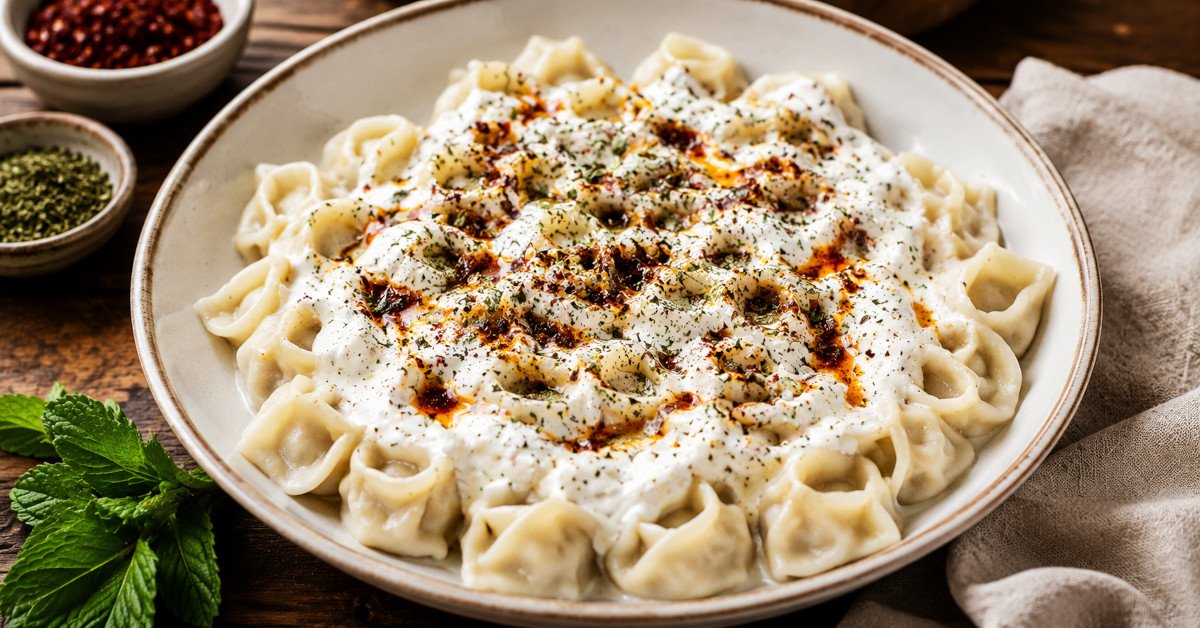
Manti — Turkey’s beloved tiny dumplings, usually stuffed with spiced ground meat and served swimming in garlicky yogurt and a drizzle of sizzling butter with sumac or chili. They’re often described as “Turkish ravioli,” but that comparison undersells them: manti are smaller, denser, and built around a completely different flavor logic, one rooted in the nomadic Turkic peoples of Central Asia rather than the Mediterranean.
From the Steppe to the Ottoman Court
Manti’s story starts far from Turkey, with roots most food historians trace back to Central Asia, among Turkic and Mongol nomadic groups, where similar dumplings — filled with meat and boiled or steamed — were practical, portable food. As Turkic peoples migrated westward over centuries, eventually settling in Anatolia, the dish traveled with them, evolving along the way. Versions of manti-like dumplings exist today across a huge swath of Central and West Asia — from Uyghur mantı in western China, to Uzbek and Kazakh manti (often steamed rather than boiled), to Afghan mantu, to Armenian and Turkish manti.
By the time manti became firmly established in Anatolian and Ottoman cooking, it had taken on a distinctly regional identity, especially in Kayseri, a city in central Turkey that’s still considered the dumpling’s spiritual home. Kayseri-style manti are famously tiny — some cooks pride themselves on fitting 40 dumplings on a single spoon, a point of local culinary pride and competitive bragging rights.
Why the Size Matters
Unlike Italian ravioli, which can be large and hearty, Turkish manti are intentionally miniature — often no bigger than a fingernail. That size isn’t just for show. Because they’re so small, the ratio of dough to filling changes completely; each bite is mostly about the yogurt sauce, garlic, and browned butter rather than the dumpling itself. The manti become more of a textural element within a bowl that’s really about the sauce. This is a meaningful difference from Italian dumplings, where the filling and pasta are usually the star and the sauce plays a supporting role.
The Recipe
Serves 4
Ingredients
For the dough:
- 2 cups all-purpose flour, plus more for dusting
- 1 large egg
- ½ teaspoon salt
- ½ cup water (approximate, as needed)
For the filling:
- ½ lb ground lamb or beef
- 1 small onion, finely grated
- 1 clove garlic, minced
- ½ teaspoon salt
- ¼ teaspoon black pepper
- ¼ teaspoon ground cumin
For the yogurt sauce:
- 2 cups plain full-fat yogurt
- 2 cloves garlic, minced
- Pinch of salt
For the topping:
- 4 tablespoons butter
- 1 tablespoon olive oil
- 1–2 teaspoons Aleppo pepper or paprika
- Dried mint or sumac, for garnish
Instructions
- Make the dough. Combine flour, egg, and salt in a bowl. Gradually add water, mixing until a firm, smooth dough forms. Knead for about 8 minutes until elastic. Cover and let rest for 30 minutes.
- Make the filling. Mix the ground meat with grated onion, garlic, salt, pepper, and cumin until well combined.
- Roll and fill. On a floured surface, roll the dough out very thin — as thin as you can manage without tearing. Cut into small squares, roughly 1 to 1.5 inches. Place a tiny amount of filling (about ¼ teaspoon) in the center of each square. Bring the four corners up and pinch together tightly to seal, forming a small bundle. This is the fiddly part — don’t worry about perfect uniformity on your first batch.
- Boil the dumplings. Bring a large pot of salted water or broth to a boil. Add the manti in batches and cook for about 8–10 minutes, until they float and the dough is cooked through.
- Make the yogurt sauce. While the manti cook, whisk together yogurt, garlic, and a pinch of salt. For a milder garlic flavor, let it sit for 10 minutes before serving; for sharper flavor, use it right away.
- Make the butter topping. In a small pan, melt the butter with olive oil over medium heat. Add the Aleppo pepper and cook for 30 seconds to a minute, until fragrant and the butter turns a light red-gold color. Remove from heat immediately to avoid burning the spice.
- Assemble. Spread the garlicky yogurt in the base of each bowl. Drain the manti and place them on top. Drizzle generously with the spiced butter and finish with a sprinkle of dried mint or sumac.
A Note on Technique
The dough needs to be rolled very thin — much thinner than you’d think — since the dumplings are meant to be delicate, not doughy. If the dough feels too thick when cut, it’s worth rolling it out further before filling.
Serving Suggestions
Manti is a complete meal in itself, but a simple side of pickled vegetables or a light salad with lemon is a nice contrast to the richness of the yogurt and butter.
A dish that crossed continents and centuries to land in a Kayseri kitchen, manti is proof that the most enduring recipes are often the smallest and most portable ones.