
Sheikh el Mahshi: The Stuffed Eggplant That Skips the Rice Entirely

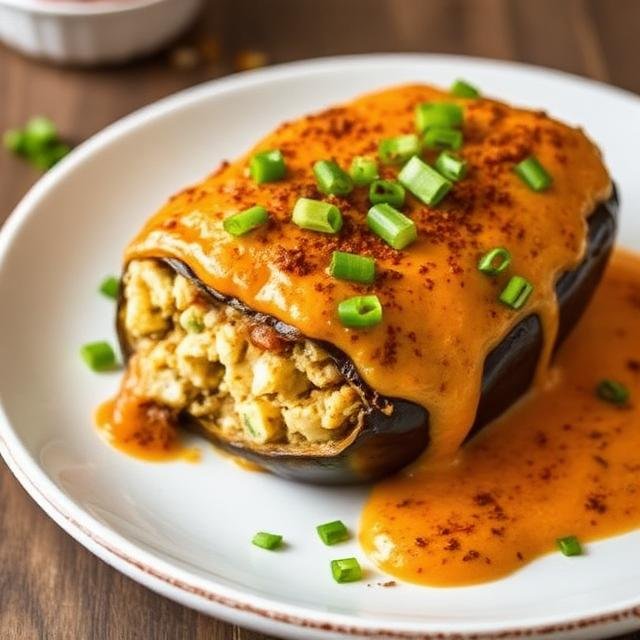
Country of origin: Levant (Lebanon, Syria, Jordan, Palestine)
This round’s pick is sheikh el mahshi — eggplant halves hollowed out and filled with a rich, spiced ground meat mixture, then simmered in a tomato-based sauce until tender. While it belongs to the same broad stuffed-vegetable family covered under mahshi elsewhere on this blog, sheikh el mahshi makes one specific, deliberate departure from the more typical mahshi formula that’s worth understanding on its own: there’s no rice in the filling at all.
A Meat-Only Filling Sets It Apart From the Rest of the Mahshi Family
Where most dishes in the broader mahshi category — stuffed zucchini, peppers, and cabbage leaves among them — rely on a rice-based filling, often combined with a smaller portion of meat, sheikh el mahshi flips that ratio entirely, using a filling built almost exclusively from seasoned ground meat, onions, and pine nuts, with no rice included at all. This isn’t a minor recipe variation; it fundamentally changes both the texture and the overall character of the dish, producing something denser, richer, and more meat-forward than the lighter, rice-bulked fillings typical of most other mahshi varieties. The name itself, sheikh el mahshi, loosely translating to something like “the sheikh of stuffed dishes” or “the chief of mahshi,” is generally understood as a fairly playful title suggesting the dish’s especially rich, indulgent quality relative to its lighter, rice-based relatives, a name earned specifically because of that meat-heavy filling.
Why Removing the Rice Changes the Cooking Approach Too
Because rice needs room to expand as it cooks and absorbs liquid, dishes like mahshi kousa or warak enab, both discussed elsewhere on this blog, require specific attention to not overfilling the vegetable or wrapper, leaving space for that expansion. Sheikh el mahshi sidesteps this particular technical concern almost entirely, since a meat-only filling doesn’t expand nearly as dramatically during cooking, meaning the eggplant halves can be filled more generously and don’t carry the same risk of splitting open from internal pressure the way a rice-stuffed vegetable might if packed too tightly. This makes sheikh el mahshi, in some respects, a slightly more forgiving dish to prepare than its rice-filled relatives, even though the overall preparation, particularly properly hollowing and pre-cooking the eggplant, still requires real care.
Frying the Eggplant First Remains Essential
As with mahshi more broadly, and consistent with maqluba’s approach to eggplant discussed elsewhere on this blog, sheikh el mahshi calls for frying the halved, hollowed eggplant before stuffing and simmering it in sauce, rather than using it raw. This step develops a deeper flavor in the eggplant itself and firms its structure somewhat, helping the shells hold their shape through the subsequent simmering process in tomato sauce, rather than collapsing into mush by the time the meat filling has fully cooked through and the flavors have melded together.
The Recipe
Serves 4–6
Ingredients
For the eggplant:
- 6 small to medium eggplants, halved lengthwise
- Salt, for drawing out moisture
- Vegetable oil, for frying
For the filling:
- 1 tablespoon olive oil
- 1 onion, finely chopped
- 1 lb ground lamb or beef
- ¼ cup pine nuts
- ½ teaspoon ground allspice
- ¼ teaspoon cinnamon
- Salt and black pepper, to taste
For the sauce:
- 2 tablespoons olive oil
- 3 cloves garlic, minced
- 1 can (28 oz) crushed tomatoes
- 1 cup water or broth
- 1 teaspoon sugar
- Salt and black pepper, to taste
Instructions
- Prepare the eggplant. Using a spoon, carefully hollow out the center of each eggplant half, leaving the shell about ¼ to ½ inch thick, being careful not to puncture through the skin. Salt the hollowed halves and let sit for 20–30 minutes to draw out excess moisture, then pat dry.
- Fry the eggplant. Heat vegetable oil in a wide pan and fry the eggplant halves, cut-side down first, until golden on both sides and slightly softened, about 4–5 minutes per side. Drain on paper towels.
- Make the filling. Heat olive oil in a pan, cook the onion until soft, then add the ground meat, breaking it apart as it browns. Stir in pine nuts, allspice, cinnamon, salt, and pepper, and cook until the meat is fully browned.
- Stuff the eggplant. Fill each fried eggplant half generously with the meat mixture, mounding it slightly since there’s no concern about rice expansion here.
- Make the sauce. In a separate pot, heat olive oil and sauté the garlic briefly. Add crushed tomatoes, water or broth, sugar, salt, and pepper, and bring to a simmer.
- Combine and simmer. Arrange the stuffed eggplant halves in a wide pot or baking dish, filling-side up. Pour the tomato sauce around and partially over the eggplant, being careful not to wash the filling off the top. Cover and simmer gently on the stovetop, or bake at 375°F (190°C), for about 30–35 minutes, until the eggplant is fully tender and the flavors have melded.
- Serve. Serve warm, spooning extra sauce over the top of each portion.
A Note on Filling Generously
Since there’s no rice to worry about expanding, feel free to mound the filling somewhat above the level of the eggplant shell — this is one of the few stuffed-vegetable dishes on this blog where you don’t need to hold back for structural reasons.
Serving Suggestions
Sheikh el mahshi is traditionally served with rice on the side, along with a simple yogurt-based sauce or salad to balance the richness of the meat-heavy filling.
Sheikh el mahshi’s decision to leave rice out entirely shows how even a small formula change within a well-established dish family can shift both the cooking technique and the entire character of the finished dish.