
Riz bi Haleeb: The Rice Pudding That Keeps Its Grains Intact

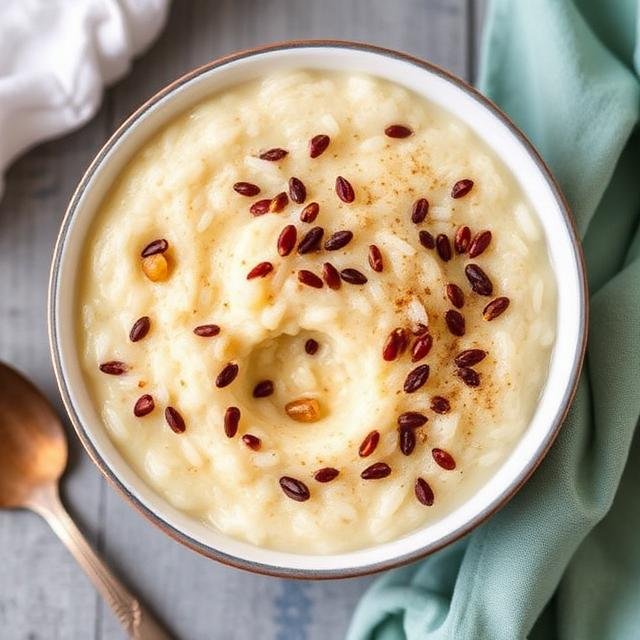
Country of origin: Widely shared across the Levant, Egypt, and the wider Arab world
This round’s pick is riz bi haleeb — a simple, comforting rice pudding made by slowly cooking rice in milk and sugar until soft and creamy, typically flavored with rosewater or orange blossom water and topped with a dusting of cinnamon or crushed nuts. It sits in an interesting relationship to mahalabia, discussed elsewhere on this blog: both are milk-based Arabic puddings with similar flavorings, but they diverge on one fundamental textural choice that changes the entire eating experience.
A Textural Cousin to Mahalabia, With One Key Difference
Riz bi haleeb and mahalabia share a lot of surface-level similarities — both are milk-based, lightly sweetened, commonly flavored with rosewater or orange blossom water, and served chilled with a similar range of toppings. The defining difference between them comes down to how each dish is thickened and what that does to the final texture: mahalabia relies on cornstarch to create a completely smooth, custard-like consistency with no discernible solid pieces, while riz bi haleeb uses the rice itself, cooked until soft, as both the thickening agent and a retained textural element, meaning the finished pudding has distinct, visible grains of rice suspended throughout a creamy base rather than being fully smooth. This single choice — whether the starch source disappears into the mixture or stays visibly present — creates two genuinely different eating experiences from what might otherwise look like very similar desserts on paper.
An Old, Widely Shared Dish Without a Single Claimed Origin
Unlike mahalabia, which comes with a fairly specific, if debated, naming story tied to a historical figure, riz bi haleeb doesn’t carry the same kind of documented origin narrative — it belongs instead to the broader, shared category of milk-and-grain puddings found in various forms across an enormous geographic range, well beyond just the Middle East, given that rice pudding in some form appears in cuisines from South Asia through Europe. Within the Arab world specifically, riz bi haleeb has simply become one of the most consistently prepared, everyday household desserts, requiring minimal specialized technique or ingredients, likely a significant factor in why it’s remained such a persistent, widely made dish across so many countries and generations without needing a specific inventor or founding story attached to explain its popularity.
Rice Choice and Cooking Time Determine the Final Texture
Getting riz bi haleeb’s texture right depends significantly on the type of rice used and how long it’s allowed to cook. Short-grain rice, which releases more starch as it cooks compared to long-grain varieties like basmati, is generally preferred for this dish, since that extra released starch is what helps thicken the milk into a properly creamy consistency around the rice grains. The rice needs to cook long enough, generally 30 to 40 minutes of gentle simmering, for it to fully soften and release sufficient starch into the milk, and rushing this step with a shorter cooking time typically results in a thinner, less cohesive pudding with rice that hasn’t quite broken down enough to properly thicken the base.
The Recipe
Serves 4–6
Ingredients
- ½ cup short-grain rice, rinsed
- 4 cups whole milk, divided
- ½ cup sugar
- 2 tablespoons cornstarch (optional, for extra thickening insurance)
- 1 tablespoon rosewater or orange blossom water
- Ground cinnamon, for garnish
- Crushed pistachios or almonds, for garnish
Instructions
- Cook the rice. In a saucepan, combine the rinsed rice with 3 cups of the milk. Bring to a gentle simmer over medium-low heat, stirring occasionally to prevent sticking, and cook for about 30–35 minutes, until the rice is very soft and the mixture has thickened noticeably.
- Add sugar. Stir in the sugar and continue cooking for another 5 minutes, until fully dissolved.
- Thicken further if needed. If the mixture still seems thin, whisk the cornstarch into the remaining 1 cup of milk until smooth, then stir this into the pot and cook for another 3–5 minutes, until it thickens to a pudding-like consistency that coats the back of a spoon.
- Add flavoring. Remove from heat and stir in the rosewater or orange blossom water.
- Cool and set. Pour into individual serving bowls or a larger dish. Let cool at room temperature, then refrigerate for at least 2 hours, until fully chilled. The pudding will continue to thicken further as it cools.
- Garnish and serve. Sprinkle with ground cinnamon and crushed pistachios or almonds just before serving.
A Note on Rice Choice
Resist the temptation to substitute long-grain rice like basmati for the short-grain rice called for here — the lower starch content in long-grain rice will noticeably affect the pudding’s ability to thicken and achieve the right creamy consistency around the grains.
Serving Suggestions
Riz bi haleeb is traditionally served chilled as a light dessert or snack, and it’s simple enough that it’s often one of the first desserts a young cook in the region learns to make at home, similar in spirit to how basic rice pudding often functions as an entry-level baking or cooking project in many other culinary traditions worldwide.
Riz bi haleeb’s choice to let the rice grains remain rather than dissolving into a smooth base is a small but meaningful decision — proof that two desserts built from nearly identical ingredients can still end up feeling like genuinely different dishes.