
Pastilla: Morocco’s Sweet-and-Savory Andalusian Pie

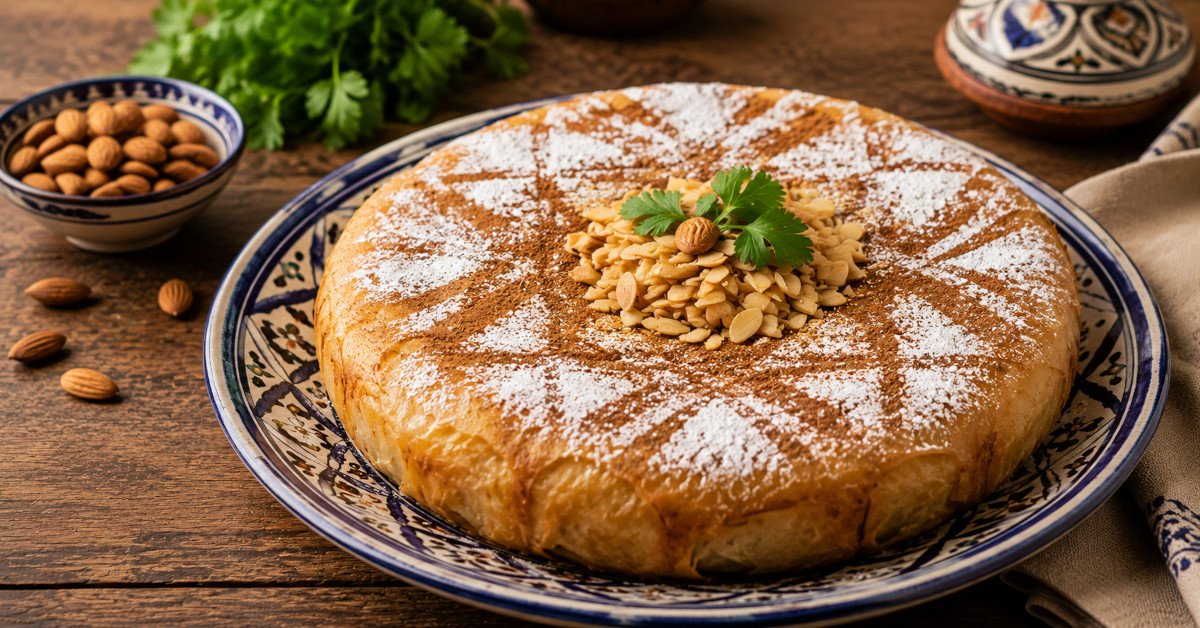
This round covers Moroccan cuisine again, but a very different dish from tagine — pastilla (also spelled bastilla or b’stilla), a striking meat pie wrapped in paper-thin pastry that manages to be sweet, savory, and spiced all at once. It’s one of the clearest examples in Moroccan cooking of a dish shaped directly by history — specifically, the Andalusian Muslims and Jews who brought their culinary traditions to Morocco after being expelled from Spain in the late 15th century.
A Dish Born From Andalusian Exile
Pastilla’s roots trace back to Al-Andalus, the Muslim-ruled territories of the Iberian Peninsula, where Moorish cooking already blended savory meats with sugar, cinnamon, and other warm spices — a combination that seems unusual by many modern culinary standards but was fairly common across medieval Islamic and Mediterranean cooking. When Muslims and Jews were expelled from Spain following the Reconquista, many resettled in Morocco, particularly in cities like Fez, bringing these Andalusian techniques and flavor combinations with them.
Fez, in particular, is often credited as the birthplace of Moroccan pastilla as it’s known today, and the dish remains closely associated with the city’s refined, historically wealthy culinary tradition. It became a dish reserved for special occasions and celebrations — weddings, religious holidays, and honored guests — a status it largely retains today, given how labor-intensive it is to prepare properly.
Why Sweet and Savory Together
The combination that defines pastilla — spiced meat filling wrapped in delicate pastry, dusted with powdered sugar and cinnamon on top — can seem jarring to people encountering it for the first time. But the logic follows a broader tradition in medieval Arab and Andalusian cooking, where sugar was treated more like a spice than strictly a dessert ingredient, used to round out and balance heavily spiced savory dishes rather than sitting only in sweets. In pastilla, the sugar and cinnamon dusted on top isn’t an afterthought — it’s meant to contrast directly against the rich, warmly spiced meat filling underneath, creating a dish where each bite moves between savory depth and a light, sweet finish.
Traditionally, pastilla was made with pigeon, which was considered a delicacy suited to festive dishes. Chicken has become the far more common filling today, both because pigeon is less accessible and because chicken achieves a similar effect with much less effort.
The Pastry Matters As Much As the Filling
Traditional pastilla uses warqa, an extremely thin, delicate Moroccan pastry made by dabbing dough onto a hot, inverted pan in overlapping circles until it forms a translucent sheet — a technique that takes real skill and practice to get right. Because warqa is difficult to find and make outside of Morocco, most cooks abroad substitute with phyllo dough, which isn’t a perfect match in texture but achieves a similar flaky, crackling exterior once baked.
The Recipe
Serves 6–8
Ingredients
For the filling:
- 3 lbs bone-in chicken thighs
- 2 large onions, finely chopped
- 3 cloves garlic, minced
- 1 teaspoon ground ginger
- 1 teaspoon ground cinnamon
- ½ teaspoon turmeric
- Pinch of saffron threads
- 2 cups chicken broth
- Salt and black pepper, to taste
- 4 eggs, beaten
- ¼ cup chopped fresh parsley and cilantro
For the almond layer:
- 1 ½ cups blanched almonds, toasted
- ¼ cup powdered sugar
- 1 teaspoon ground cinnamon
- 2 tablespoons melted butter
For assembly:
- 12–14 sheets phyllo dough
- ½ cup melted butter, for brushing
- Powdered sugar and ground cinnamon, for dusting on top
Instructions
- Cook the chicken. In a large pot, combine chicken, onions, garlic, ginger, cinnamon, turmeric, saffron, broth, salt, and pepper. Simmer, covered, for 40–45 minutes until the chicken is very tender. Remove the chicken, shred the meat, and discard the bones and skin.
- Reduce the sauce. Continue simmering the remaining broth uncovered until it reduces significantly and thickens slightly, about 15–20 minutes.
- Add the eggs. Slowly stir the beaten eggs into the reduced, simmering sauce, stirring continuously until they form soft, creamy curds — similar to a very loose scramble. Remove from heat and stir in the shredded chicken and fresh herbs. Set aside to cool.
- Make the almond layer. Pulse the toasted almonds in a food processor until coarsely ground (not a fine powder). Mix with powdered sugar, cinnamon, and melted butter until it forms a coarse, slightly clumpy mixture.
- Assemble the pie. Brush a large round baking pan or pie dish with melted butter. Layer sheets of phyllo across the base, overlapping and letting the edges hang over the sides, brushing butter between each layer, until the base is well covered.
- Layer the fillings. Spread the chicken-egg mixture evenly over the phyllo base, then sprinkle the almond mixture over that.
- Seal the pie. Fold the overhanging phyllo edges up and over the filling. Add a few more buttered phyllo sheets on top to fully enclose the pie, tucking the edges underneath for a neat, sealed round shape.
- Bake. Bake at 375°F (190°C) for 30–35 minutes, until deeply golden and crisp all over. If the top browns too quickly, loosely tent with foil for the remaining bake time.
- Finish and serve. Once out of the oven, dust generously with powdered sugar, then use a fork or the tip of a knife to create a crosshatch pattern with ground cinnamon over the sugar.
A Note on Assembly
Working with phyllo requires speed, since the sheets dry out and crack quickly once exposed to air. Keep unused sheets covered with a damp towel while you work, and don’t worry if a few pieces tear — the layered structure is forgiving, and small tears won’t be noticeable once baked.
Serving Suggestions
Pastilla is typically served as a starter or centerpiece at celebratory meals, cut into wedges like a pie. A simple mint tea afterward is the traditional way to close out the meal.
Pastilla carries the flavor of a specific historical moment — Andalusian exiles rebuilding their culinary traditions in Fez — proof that a single dish can hold centuries of migration inside a few layers of pastry.