
Mamoul: The Stuffed Cookie Shared by Two Different Religious Calendars

Country of origin: Levant (Lebanon, Syria, Jordan, Palestine)
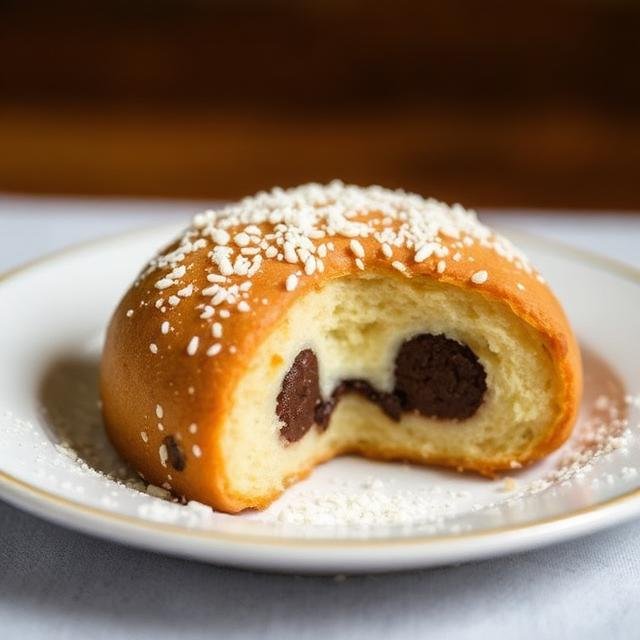
This round’s pick is mamoul — a semolina-based shortbread cookie, filled most traditionally with date paste, walnuts, or pistachios, and shaped using a carved wooden mold that presses a decorative pattern onto the finished cookie. Related to kleicha, discussed elsewhere on this blog in the context of Iraqi Eid tradition, mamoul follows a similar general concept of a filled, molded cookie, but it holds a genuinely distinctive place of its own, notably because it’s prepared and eaten across two different religious calendars rather than being tied to just one.
A Cookie Shared Across Muslim and Christian Communities
Mamoul is prepared and eaten by both Muslim and Christian communities across the Levant, though tied to different specific occasions within each tradition: for Muslim families, mamoul is closely associated with Eid al-Fitr, prepared in the days leading up to the holiday similar to how kleicha functions in Iraqi households. For Christian communities across Lebanon, Syria, Jordan, and Palestine, mamoul is instead closely tied to Easter, prepared in the lead-up to the holiday as part of Holy Week and Easter celebration traditions. This dual religious association, spanning two entirely different holidays rooted in two different religious calendars, makes mamoul a fairly unusual case among the dishes covered on this blog — most holiday-specific foods discussed so far, including qatayef and kleicha, are tied to a single specific religious or cultural occasion, whereas mamoul genuinely bridges both traditions within the same broader region.
Semolina Dough, Not Yeasted Dough, Defines the Texture
A key technical distinction between mamoul and kleicha, despite their surface-level similarity as filled, molded cookies, comes down to the dough itself. Kleicha relies on a yeasted dough, giving it a softer, more bread-like quality once baked. Mamoul, by contrast, uses a semolina-based shortbread dough, generally without yeast, that produces a noticeably different result: a dense, tender, slightly crumbly cookie closer in texture to a rich shortbread than to a soft pastry. This dough is often enriched with ghee or clarified butter and sometimes a bit of milk or yogurt, and it typically needs to rest for an extended period, sometimes overnight, allowing the semolina to fully hydrate and soften before the dough is worked and shaped, a resting step that meaningfully affects the final texture if skipped or rushed.
The Mold Isn’t Just for Decoration
Mamoul is traditionally shaped using a carved wooden mold, called a tabi or mamoul mold, into which the filled dough is pressed before being released and baked. Beyond its clear decorative function — the mold imprints a distinctive geometric pattern onto the surface of each cookie — the mold also traditionally serves a practical purpose tied to identification: different filling types are often shaped using differently patterned molds, allowing bakers and guests to visually distinguish a date-filled mamoul from a walnut-filled or pistachio-filled one without needing to cut into or taste each cookie individually, a genuinely useful bit of built-in labeling within a tradition of preparing several different filling varieties in large batches at once.
The Recipe
Makes about 24 cookies
Ingredients
For the dough:
- 3 cups fine semolina
- 1 cup all-purpose flour
- ½ cup ghee or clarified butter, melted
- ¼ cup vegetable oil
- ¼ cup sugar
- 1 teaspoon instant yeast (optional, for a slightly softer texture)
- ½ cup warm milk (approximate, as needed)
- 1 tablespoon rosewater or orange blossom water
For the date filling:
- 1 ½ cups pitted dates
- 2 tablespoons butter
- ¼ teaspoon ground cinnamon
For finishing:
- Powdered sugar, for dusting
Instructions
- Start the dough the night before. Combine semolina, flour, melted ghee, vegetable oil, and sugar in a large bowl, mixing until the fat is well incorporated. Cover and let rest at room temperature overnight, or for at least several hours, which allows the semolina to soften properly.
- Finish the dough. The next day, mix in the yeast if using, along with warm milk and rosewater or orange blossom water, kneading gently until you get a soft, cohesive dough that holds together without being sticky.
- Make the date filling. In a saucepan, cook the pitted dates with butter and cinnamon over low heat, mashing frequently, until the dates break down into a smooth, spreadable paste. Let cool.
- Shape the cookies. Take a portion of dough, flatten it slightly, and place a small amount of date filling in the center. Fold the dough around the filling, sealing it completely, then press the filled ball into a mamoul mold, pressing firmly to imprint the pattern, and tap the mold to release the shaped cookie.
- Bake. Arrange the shaped mamoul on a baking sheet and bake at 350°F (175°C) for about 20 minutes, until just set and very lightly golden on the bottom — mamoul is traditionally not browned heavily on top, staying pale rather than deeply golden.
- Cool and dust. Let cool completely before dusting generously with powdered sugar.
A Note on Dough Resting Time
Don’t skip the overnight resting period for the dough if at all possible — this step genuinely affects the final texture, allowing the semolina to soften properly so the baked cookie turns out tender rather than gritty.
Serving Suggestions
Mamoul is traditionally served alongside Arabic coffee or tea, and it keeps well at room temperature in an airtight container for well over a week, making it practical for the large batches typically prepared ahead of either Eid or Easter celebrations.
Mamoul’s place on both Eid and Easter tables is a good reminder that food traditions in this region don’t always divide neatly along religious lines — sometimes the same cookie, the same mold, and the same date filling belong to more than one community’s celebration at once.