
Kofta: One Word, a Dozen Completely Different Meatballs

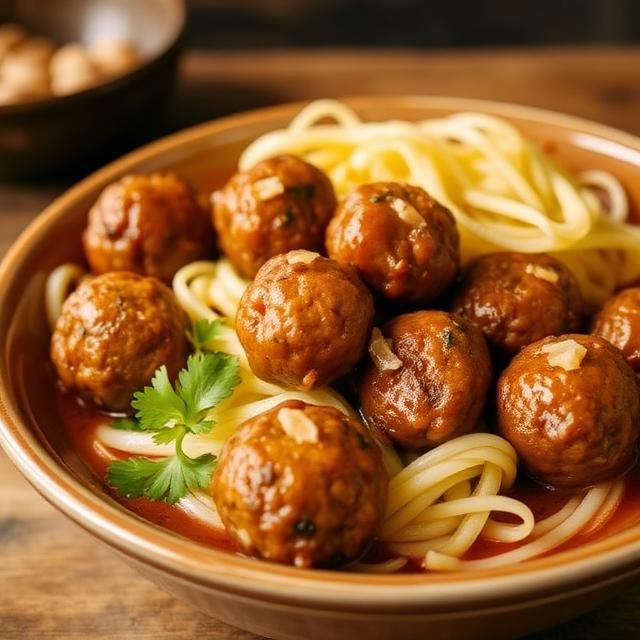
Country of origin: Persia (etymological root), with distinct regional versions across nearly the entire Middle East
This round’s pick is kofta — or köfte, koofteh, kufta, depending on which country you’re in — a term that, much like “dolma” or “halva” covered elsewhere on this blog, doesn’t refer to one specific dish at all, but to an entire, sprawling family of ground meat preparations found across an enormous geographic range, from the Balkans through Turkey, the Levant, Iraq, and deep into Persia and South Asia. Understanding kofta means understanding it as a shared concept rather than a fixed recipe, since the differences between regional versions can be genuinely dramatic.
A Word That Means “To Pound”
The word kofta traces back to Persian, derived from “koofteh,” related to a verb meaning to grind, pound, or beat — a fairly literal reference to the technique at the heart of every version of the dish: meat that’s been ground or finely minced, then worked and shaped by hand, typically into balls, ovals, or patties. This Persian linguistic root spread outward alongside Persian cultural and culinary influence across a huge stretch of territory over many centuries, which is part of why so many countries with otherwise quite different culinary traditions all use some close variation of the same word for what can end up being a genuinely different dish in each place.
Wildly Different Forms Under the Same Name
The range of what qualifies as kofta across the region is considerably wider than most single-named dishes covered on this blog. Turkish köfte typically refers to grilled or pan-fried meat patties, often seasoned simply and served alongside rice or bread, similar in spirit to a well-seasoned burger patty in terms of format. Egyptian and Levantine kofta commonly takes the form of skewered, grilled logs of spiced ground meat, not unlike Persian kabab koobideh, discussed elsewhere on this blog, sometimes cooked directly with vegetables in a tray (kofta bil sanieh) rather than grilled on skewers at all. Persian koofteh, particularly koofteh tabrizi, takes an entirely different direction: very large, stuffed meatballs — sometimes the size of a grapefruit — filled with a mixture of rice, herbs, dried fruit, and sometimes a whole hard-boiled egg tucked into the center, then gently simmered rather than grilled, producing a dish that looks and eats almost nothing like the smaller, grilled versions found further west.
This breadth means that telling someone you’re serving “kofta” without further detail leaves an enormous amount of ambiguity about what’s actually about to arrive at the table, a genuinely unusual situation compared to most other named dishes in the region’s cooking, where the name typically narrows things down considerably more.
Why the Technique, Not the Shape, Is the Real Common Thread
Given how differently kofta can look and be cooked across various countries, it’s worth understanding what actually ties the whole category together: it’s the base technique of working ground or finely minced meat into a cohesive, shapeable mixture, generally bound and flavored with a combination of onion, spices, and sometimes egg or breadcrumbs, rather than any specific shape, cooking method, or size. This is a meaningful distinction from most dishes covered on this blog, which tend to be defined by a specific combination of ingredients and technique together — kofta, by contrast, keeps only the technique constant while leaving nearly everything else, including shape, size, cooking method, and specific seasoning, open to considerable regional reinterpretation.
The Recipe: Egyptian-Style Grilled Kofta
Serves 4 (makes about 8 skewers)
Ingredients
- 1 ½ lbs ground beef or lamb (or a mix)
- 1 small onion, grated
- 3 cloves garlic, minced
- ¼ cup fresh parsley, finely chopped
- 1 teaspoon ground cumin
- 1 teaspoon ground coriander
- ½ teaspoon ground allspice
- ¼ teaspoon cinnamon
- ¼ teaspoon cayenne pepper (optional)
- Salt and black pepper, to taste
- Flat metal skewers
Instructions
- Combine the ingredients. In a large bowl, combine the ground meat with grated onion, garlic, parsley, cumin, coriander, allspice, cinnamon, cayenne if using, salt, and pepper.
- Knead the mixture. Knead thoroughly by hand for several minutes, until the mixture becomes smooth, well combined, and slightly sticky — this helps the kofta hold together properly on the skewer.
- Rest. Cover and refrigerate for at least 30 minutes, which makes the mixture considerably easier to shape.
- Shape onto skewers. With wet hands, mold portions of the mixture firmly around flat skewers, shaping into long, evenly formed logs.
- Grill. Grill over medium-high heat for about 10–12 minutes, turning occasionally, until well-charred on the outside and cooked through.
- Serve. Serve hot, with rice, flatbread, or a simple salad.
A Note on Regional Adaptation
If you’re curious to explore kofta’s range beyond this grilled version, the same base mixture, without skewering, can be shaped into large stuffed balls and gently poached in broth for something closer to the Persian koofteh tradition — a good way to see firsthand just how differently the same basic technique can turn out.
Serving Suggestions
Egyptian-style kofta pairs well with rice, tahini sauce, and a simple tomato and cucumber salad, though pairing suggestions vary considerably depending on which regional version of kofta you’re making.
Kofta’s status as a single word covering wildly different dishes is a good reminder that not every shared name in this region’s cooking points to a shared recipe — sometimes it points only to a shared technique, left free to develop in its own direction in every kitchen it reaches.