
Shorbat Adas: The Lentil Soup With a Cameo in Genesis

Country of origin: Widely shared across the Levant, Egypt, and the wider Middle East
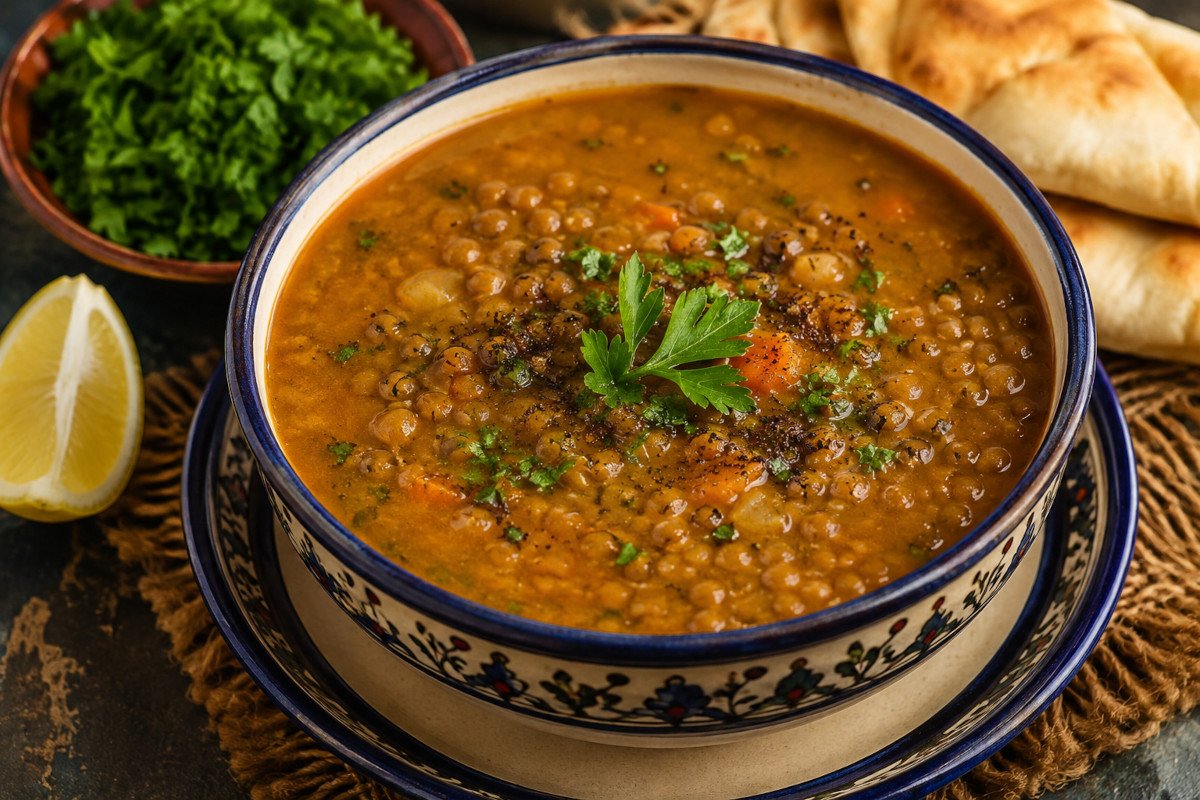
This round’s pick is shorbat adas — a simple, warming lentil soup, usually pureed smooth and finished with cumin, lemon, and a drizzle of olive oil. It’s one of the most humble dishes covered on this blog so far, but also one with a genuinely striking claim to historical fame: a lentil stew closely related to it is generally understood to be the very dish referenced in the biblical story of Esau selling his birthright.
A Dish With a Claim to One of the Oldest Food References in Text
The Book of Genesis describes Esau, hungry after returning from the field, trading his birthright to his brother Jacob for “a mess of pottage” made from red lentils — a passage widely interpreted by biblical scholars and food historians as a reference to a red lentil stew or soup broadly similar to what’s still cooked and eaten across the Levant and wider Middle East today. While it would be an overreach to claim any exact, unbroken recipe connects directly from that ancient text to a modern bowl of shorbat adas, the reference is still notable: it places a red lentil-based dish among some of the oldest specifically named foods in widely read historical and religious text, underscoring just how long lentils have served as a dietary staple across this region.
Lentils themselves have been cultivated in the Fertile Crescent — the region spanning much of modern-day Iraq, Syria, Lebanon, Jordan, Israel, and Palestine — since some of the earliest periods of settled agriculture in human history, making dishes built around them, including shorbat adas, strong candidates for genuinely ancient food traditions that have simply never gone out of everyday use.
A Dish Shared Widely, With Small but Real Regional Differences
Like bamia, shorbat adas doesn’t come with a single national claim attached to it — it’s cooked with only minor variation across Lebanon, Syria, Jordan, Palestine, Egypt, and further into the Gulf and North Africa, reflecting how deeply and evenly lentils are embedded across the region’s everyday cooking rather than being closely tied to any one country’s specific culinary identity. That said, small regional differences do show up: some versions lean more heavily on cumin, others favor a bit of garlic fried in olive oil as a finishing touch, and Egyptian versions sometimes incorporate rice directly into the soup for added body, a variation less common further into the Levant.
Why Pureeing Changes the Dish
While lentils appear whole and intact in dishes like mujaddara, discussed elsewhere on this blog, shorbat adas takes a different textural approach, generally blended until smooth after cooking. This transforms the dish from something with distinct, separate grain-like pieces into a genuinely creamy, cohesive soup, relying on the lentils’ natural starchiness to thicken the base without needing any added flour or cream. This textural choice is part of what makes shorbat adas function so well as a simple, comforting, easily digestible dish, often the first thing served to break the fast during Ramadan across many households, precisely because a smooth, warm soup is gentle to eat after a full day without food or water.
The Recipe
Serves 4–6
Ingredients
- 1 ½ cups red lentils, rinsed
- 2 tablespoons olive oil
- 1 onion, chopped
- 2 cloves garlic, minced
- 1 carrot, chopped
- 1 teaspoon ground cumin
- ½ teaspoon ground coriander
- 6 cups vegetable or chicken broth
- Salt and black pepper, to taste
- Juice of 1 lemon
- Fried onions or garlic, for garnish (optional)
- Fresh parsley, chopped, for garnish
Instructions
- Build the base. In a large pot, heat olive oil over medium heat. Add the onion and cook until soft, about 6–8 minutes. Add garlic and carrot, cooking for another 2–3 minutes.
- Add spices. Stir in the cumin and coriander, cooking briefly until fragrant.
- Simmer the lentils. Add the rinsed red lentils and broth. Bring to a boil, then reduce heat and simmer, partially covered, for about 25–30 minutes, until the lentils and carrot are completely soft and beginning to break down.
- Blend. Using an immersion blender, or working in batches in a countertop blender, puree the soup until smooth. Adjust the consistency with a bit more broth or water if it seems too thick.
- Season and finish. Stir in salt, pepper, and lemon juice to taste. Reheat gently if needed.
- Serve. Ladle into bowls and garnish with fried onions or garlic if using, along with fresh parsley.
A Note on Consistency
Red lentils break down and thicken more than other lentil varieties, so the soup will naturally continue thickening as it sits — if reheating leftovers, you’ll likely need to thin it with a splash of extra broth or water to bring it back to the right consistency.
Serving Suggestions
Shorbat adas is traditionally served with warm flatbread and a wedge of lemon on the side, and it’s a common first course at Ramadan iftar meals across much of the Arab world, valued for being both nourishing and easy on the stomach after a full day of fasting.
Shorbat adas is a rare case of a dish plausibly connected to one of the oldest named meals in widely read historical text — proof that some of the simplest recipes have simply never needed reinventing.