
Sambousek: The Middle East’s Answer to the Samosa, and Maybe Its Ancestor

Country of origin: Widely shared across the Levant, Gulf, and Iraq, with roots connecting to a much older, broader trade network
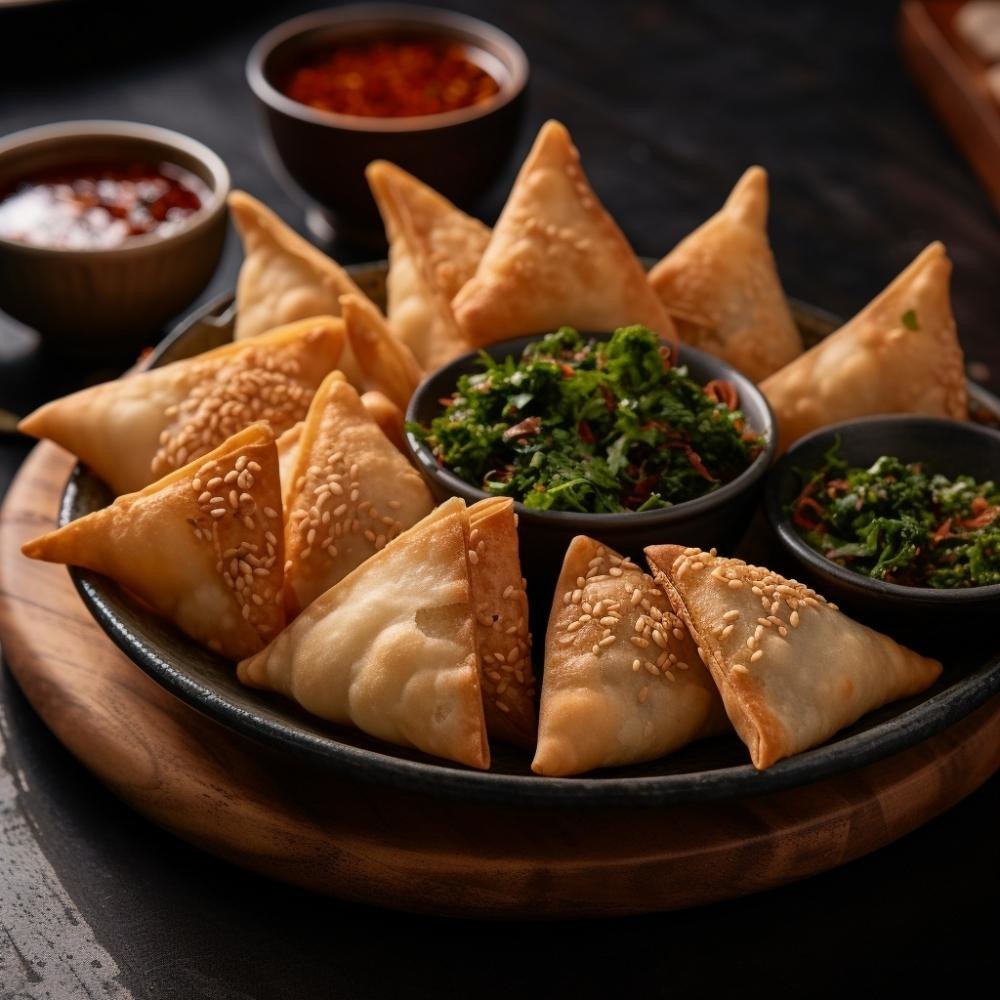
This round’s pick is sambousek — small, crescent-shaped pastries filled with spiced meat, cheese, or spinach, then fried or baked until golden and crisp. If the shape and filling style sound familiar, that’s not a coincidence: sambousek and the South Asian samosa share a genuinely direct historical relationship, tracing back to a shared ancestor dish that moved across trade routes centuries before either modern version existed.
A Shared Ancestor Older Than Both Modern Versions
Food historians generally trace both sambousek and samosa back to a common ancestor dish called sanbosag, documented in Persian and medieval Arabic culinary texts as early as the 10th century, described as a filled pastry carried by traders and travelers precisely because it stored and transported well. As trade routes carried this dish both east toward South Asia and further west and south through the Arab world, it evolved differently in each direction — developing into the samosa most commonly associated with South Asian cuisine today, and into sambousek across the Levant, Iraq, and the Gulf, where it took on the specific fillings, spicing, and pastry style now considered traditional in each region.
This shared lineage is a useful reminder that food history in this part of the world rarely moves in one direction only — dishes traveled along trade routes that connected Persia, the Arab world, and South Asia for centuries, meaning many foods now considered distinctly regional actually share deep, tangled roots with dishes from what might otherwise seem like an entirely separate culinary tradition.
Middle Eastern Sambousek Diverged in Specific Ways
While the samosa most people know internationally today typically features a spiced potato or vegetable filling and a thicker, often deep-fried pastry shell, Middle Eastern sambousek generally took a different path, more commonly filled with spiced ground meat, a soft cheese like akkawi, or sautéed spinach with onion and sumac, reflecting the region’s own culinary staples rather than the potato-forward fillings that became dominant in South Asian versions. The pastry itself also tends to differ, often made with a slightly different dough than the wheat-and-oil-based samosa pastry, and sambousek’s characteristic crescent shape, formed by folding a circular piece of dough in half over the filling and crimping the curved edge, has become one of its most visually distinctive and recognizable traits across the region.
Ramadan and Everyday Appetizer Status
Sambousek holds a particular place at Ramadan iftar tables across much of the Arab world, similar to brik’s role in Tunisia, discussed elsewhere on this blog, since small, filling, easy-to-eat fried or baked pastries suit the practical needs of a meal meant to be enjoyed after a full day of fasting. Beyond Ramadan specifically, sambousek also functions as a year-round appetizer and mezze item, commonly prepared in large batches and frozen ahead of time, since the filled, uncooked pastries freeze and fry up well from frozen, making them a practical make-ahead option for entertaining.
The Recipe
Makes about 24 pieces
Ingredients
For the dough:
- 3 cups all-purpose flour
- 1 teaspoon baking powder
- ½ teaspoon salt
- ⅓ cup vegetable oil
- ¾ cup warm water (approximate, as needed)
For the meat filling:
- 1 tablespoon olive oil
- 1 small onion, finely chopped
- ½ lb ground beef or lamb
- ½ teaspoon ground allspice
- ¼ teaspoon cinnamon
- 2 tablespoons pine nuts
- Salt and black pepper, to taste
For frying:
- Vegetable oil, for shallow or deep frying
Instructions
- Make the dough. Combine flour, baking powder, and salt in a bowl. Add the vegetable oil and rub it into the flour until the mixture looks sandy. Gradually add warm water, mixing until a smooth, firm dough forms. Cover and let rest for 30 minutes.
- Make the filling. Heat olive oil in a pan over medium heat, add the onion, and cook until soft. Add the ground meat, breaking it apart as it browns, then stir in allspice, cinnamon, pine nuts, salt, and pepper. Cook until the meat is fully browned and any liquid has evaporated. Let cool before filling.
- Roll and cut. Roll the dough out thin on a floured surface and cut into circles about 3–4 inches wide, re-rolling scraps as needed.
- Fill and seal. Place a spoonful of filling in the center of each circle. Fold the dough over into a half-moon shape, pressing the edges together firmly. Crimp the curved edge with your fingers or a fork to seal tightly, which helps prevent the filling from leaking out during frying.
- Fry. Heat oil in a pan to 350°F (175°C) and fry the sambousek in batches for 3–4 minutes per side, until deeply golden and crisp. Alternatively, brush with oil and bake at 375°F (190°C) for about 20–25 minutes, flipping halfway, for a lighter version.
- Drain and serve. Drain on paper towels and serve warm.
A Note on Freezing
Uncooked, filled sambousek freeze very well — arrange them in a single layer on a tray to freeze individually before transferring to a bag or container, which lets you fry a small batch straight from frozen whenever needed, adding a couple of extra minutes to the frying time.
Serving Suggestions
Sambousek is typically served as an appetizer or part of a mezze spread, often alongside a simple yogurt or tahini-based dipping sauce.
Sambousek’s shared lineage with the samosa is a reminder that many dishes now claimed tightly by a single region actually carry the fingerprints of trade routes that connected Persia, the Arab world, and South Asia long before national borders existed to divide them.