
Halloumi: The Cheese That Refuses to Melt

Country of origin: Cyprus (with a long shared history across the Eastern Mediterranean and Levant)
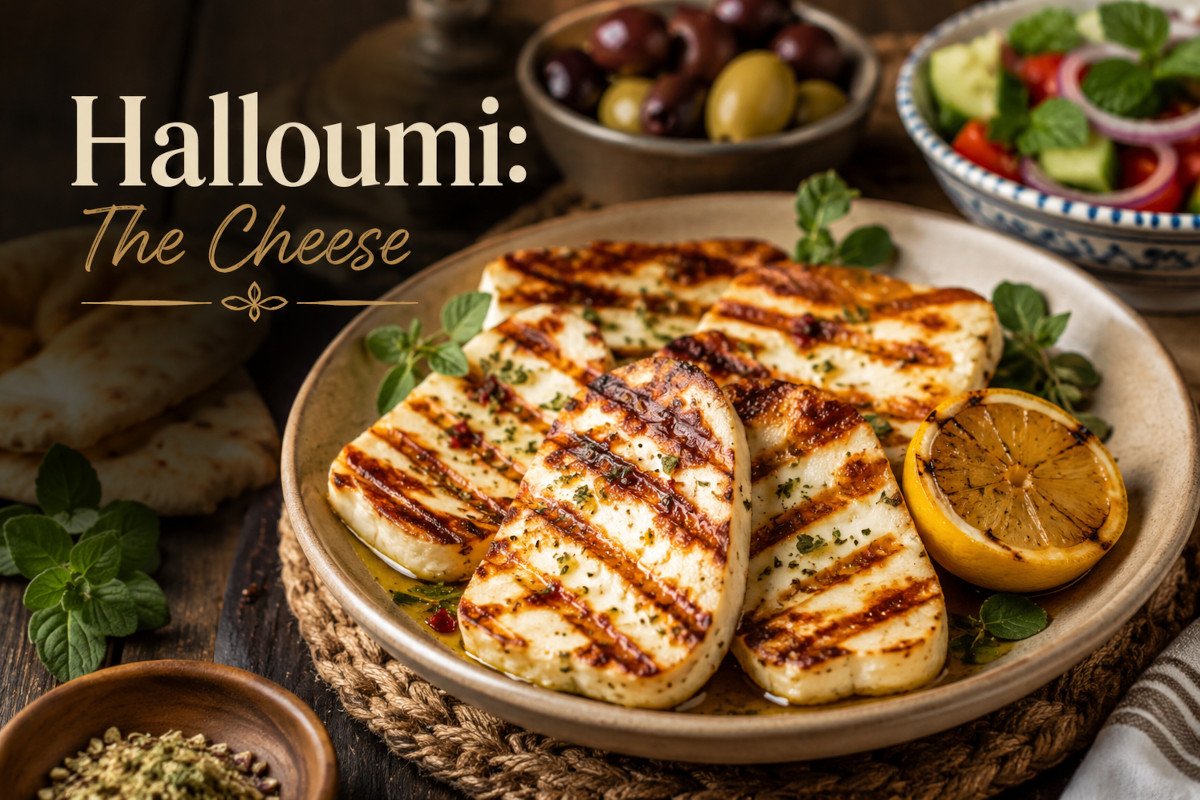
A firm, salty, semi-hard cheese famous for one unusual trait that sets it apart from nearly every other cheese in the world: it doesn’t melt when heated. Instead, it softens and develops a deeply golden, crisp exterior when grilled or pan-fried, making it one of the only cheeses that can be cooked directly over high heat and still hold its shape. That single property has made halloumi one of the most distinctive ingredients in Eastern Mediterranean cooking.
A Cheese Tied to Cyprus, With Roots Reaching Further Back
Halloumi is most closely and officially associated with Cyprus today, where it holds Protected Designation of Origin (PDO) status within the European Union, meaning that, legally, only cheese produced in Cyprus using traditional methods and a specific minimum proportion of Cypriot sheep’s and goat’s milk can be labeled and sold as halloumi within the EU. That status, granted in 2021, followed years of negotiation and was notably significant because it also became one of the rare instances of official cooperation between Greek Cypriot and Turkish Cypriot communities, given Cyprus’s long-standing political division, since halloumi (known as hellim in Turkish) is produced and deeply valued on both sides of the island.
That said, the cheese’s history likely reaches back further than modern Cyprus’s borders, with some food historians tracing halloumi-style cheesemaking to the medieval Byzantine period, and similar salty, high-melting-point cheeses have long been part of the wider Levantine dairy tradition as well, reflecting the close historical and culinary ties between Cyprus and the nearby mainland.
The Science Behind Why It Doesn’t Melt
Most cheeses melt because heat breaks down the protein structure that holds the cheese together, allowing fats and proteins to separate and flow. Halloumi behaves differently because of how it’s made: the curds are heated to a relatively high temperature during production, a step that denatures and firms up the proteins in a way that raises the cheese’s melting point significantly above the temperature it’s typically cooked at. This is part of why halloumi can go straight onto a hot grill or into a hot pan without collapsing into a puddle, instead forming a crisp, browned crust on the outside while staying soft, warm, and slightly squeaky on the inside.
Why the Salt Matters, and What to Do About It
Traditional halloumi is preserved in a salty brine, which gives it a noticeably assertive, salty flavor right out of the package, more pronounced than most other fresh or semi-hard cheeses. Many cooks briefly soak halloumi in plain water for 10–15 minutes before cooking, which pulls out some of that excess surface salt without meaningfully affecting the texture, resulting in a more balanced final flavor, particularly important if you’re planning to pair it with other already-salty ingredients like olives or a briny dressing.
The Recipe: Simple Grilled Halloumi
Serves 4 as a side or appetizer
Ingredients
- 1 block (about 8–9 oz) halloumi cheese
- 1 tablespoon olive oil
- 1 tablespoon lemon juice
- ½ teaspoon dried oregano or fresh thyme leaves
- Pinch of black pepper
- Fresh mint or parsley, chopped, for garnish
- Honey, for drizzling (optional)
Instructions
- Soak if desired. If you prefer a milder flavor, soak the halloumi block in plain water for 10–15 minutes, then pat thoroughly dry with paper towels. This step is optional but recommended if the cheese tastes very salty straight from the package.
- Slice. Cut the halloumi into slices about ½ inch thick — thick enough to hold together well on the grill or in the pan without falling apart.
- Heat the pan or grill. Heat a grill pan, cast-iron skillet, or outdoor grill over medium-high heat. No oil is strictly necessary in the pan itself, since halloumi releases some of its own fat as it cooks, though a light brush of olive oil helps prevent sticking.
- Cook. Grill or pan-fry the halloumi slices for about 2–3 minutes per side, until deep golden-brown grill marks or a crisp golden crust forms. Avoid moving the slices too early, which can tear the developing crust.
- Dress. Transfer the cooked halloumi to a serving plate. Drizzle with olive oil, lemon juice, and a sprinkle of oregano or thyme and black pepper.
- Serve immediately. Halloumi is best eaten hot, right off the pan or grill — as it cools, it firms up and becomes notably more rubbery and less enjoyable.
A Note on Timing
Unlike many dishes that can sit and wait before serving, halloumi genuinely needs to be eaten shortly after cooking. Its ideal texture — soft, warm, and slightly squeaky inside a crisp crust — doesn’t hold for long once it starts to cool.
Serving Suggestions
Grilled halloumi works well as a simple appetizer with a drizzle of honey for a sweet-salty contrast, tucked into a warm pita with tomato and cucumber, or added on top of a salad with watermelon and mint, a combination especially popular in the eastern Mediterranean during the summer.
Halloumi’s refusal to melt makes it something of a scientific outlier among cheeses — proof that sometimes an ingredient’s most useful trait is simply not behaving the way you’d expect.