
Umm Ali: The Egyptian Dessert With a Legend Baked Into Its Name

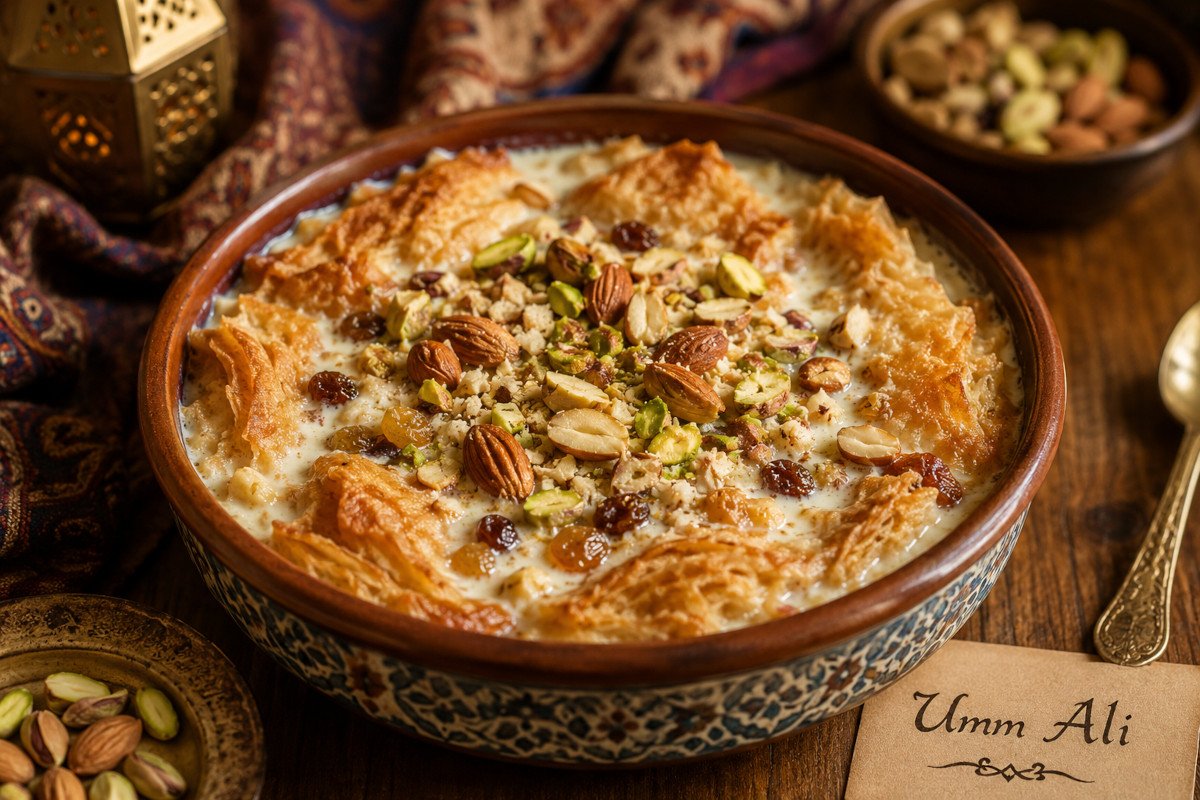
A warm, rich Egyptian bread pudding made from flaky pastry soaked in sweetened milk, studded with nuts and raisins, and finished under the broiler until golden on top. Unlike many regional desserts that developed gradually over generations, umm ali comes with an actual origin story attached to a specific historical figure, whether or not every detail of that story holds up to scrutiny.
A Dessert Named After a Woman From the Mamluk Era
The most commonly told story behind umm ali — literally meaning “Ali’s mother” — traces back to 13th-century Egypt during the Mamluk Sultanate. According to this popular legend, Umm Ali was the wife of a Mamluk sultan, Izz al-Din Aybak, and a rival to Shajar al-Durr, a formidable historical figure who briefly ruled Egypt herself and is one of the few women to have held such power in the medieval Islamic world. The story holds that after Shajar al-Durr was killed, possibly on Umm Ali’s orders or with her involvement amid the fierce political rivalry between the two, Umm Ali celebrated by having a rich, celebratory dessert distributed to the people of Cairo, and that dessert became known by her name.
It’s worth being honest that this story functions more as popular legend than confirmed historical record, and details vary across different tellings, with some versions of the story differing on exactly who did what to whom. What’s clear is that umm ali has been part of Egyptian dessert tradition for a very long time, regardless of exactly how the name came to be attached to it, and the dish remains deeply embedded in Egyptian home cooking and restaurant menus today, often served warm as a comforting, everyday treat rather than reserved only for special occasions.
A Dessert Built From Warm Milk, Not Syrup
Unlike many Middle Eastern sweets that rely on sugar syrup poured over baked pastry (as in baklava or knafeh), umm ali takes a different approach entirely, closer in spirit to bread pudding or a milk-based dessert. Baked or store-bought pastry — traditionally puff pastry or croissant-style dough, torn into pieces — is soaked directly in sweetened, often lightly spiced milk or cream, along with nuts and dried fruit, then finished briefly under a broiler so the top turns golden while the inside stays soft, custardy, and warm. This gives umm ali a much softer, more comforting texture than the crisp, syrup-soaked pastries more commonly associated with the region, closer to what you’d expect from a warm bread pudding than a classic Middle Eastern pastry.
The Recipe
Serves 6
Ingredients
- 1 sheet puff pastry, or 4–5 day-old croissants, torn into bite-sized pieces
- 4 cups whole milk
- 1 cup heavy cream
- ½ cup sugar, adjusted to taste
- ½ teaspoon vanilla extract
- ¼ teaspoon ground cardamom (optional)
- ½ cup mixed nuts (pistachios, almonds, walnuts), roughly chopped
- ¼ cup raisins
- 2 tablespoons shredded coconut (optional, but common in many versions)
- Extra nuts and a few tablespoons of cream, for topping
Instructions
- Bake the pastry. If using puff pastry, bake according to package instructions until golden and fully puffed, then tear into rough, bite-sized pieces. If using croissants, no baking is needed — just tear them up directly, as slightly stale croissants actually work well here since they absorb the milk without turning to mush too quickly.
- Toast the nuts. Lightly toast the chopped nuts in a dry pan for a few minutes until fragrant, being careful not to burn them.
- Warm the milk mixture. In a saucepan, combine the milk, heavy cream, sugar, vanilla, and cardamom if using. Heat gently over medium heat, stirring occasionally, until the sugar dissolves and the mixture is warm but not boiling.
- Assemble. Spread the torn pastry pieces evenly across the bottom of a baking dish. Scatter over the toasted nuts, raisins, and coconut if using, reserving a small amount of each for topping.
- Soak. Pour the warm milk mixture evenly over the pastry, pressing down gently so everything is submerged and well soaked. Let sit for about 10 minutes so the pastry absorbs the liquid.
- Top and broil. Drizzle a little extra cream over the top, then scatter with the reserved nuts. Place under a broiler for 3–5 minutes, watching closely, until the top turns golden brown in spots.
- Serve. Serve warm, directly from the baking dish, ideally within 10–15 minutes of coming out from under the broiler while the top is still crisp and the inside is soft and custardy.
A Note on Pastry Choice
Using slightly stale croissants rather than freshly baked ones is actually a practical advantage here, since fresher, softer pastry can turn overly mushy once soaked, while a bit of staleness helps it hold some texture even after absorbing the milk.
Serving Suggestions
Umm ali is meant to be eaten warm, often straight from the baking dish it was broiled in, making it a popular comfort dessert during colder months, though it’s enjoyed year-round across Egypt.
Whether or not every detail of its origin story is historically accurate, umm ali carries its legend proudly in its name — a dessert built as much from storytelling as from milk, pastry, and nuts.