
Jachnun: The Overnight Bread That Yemenite Jews Brought to Israel

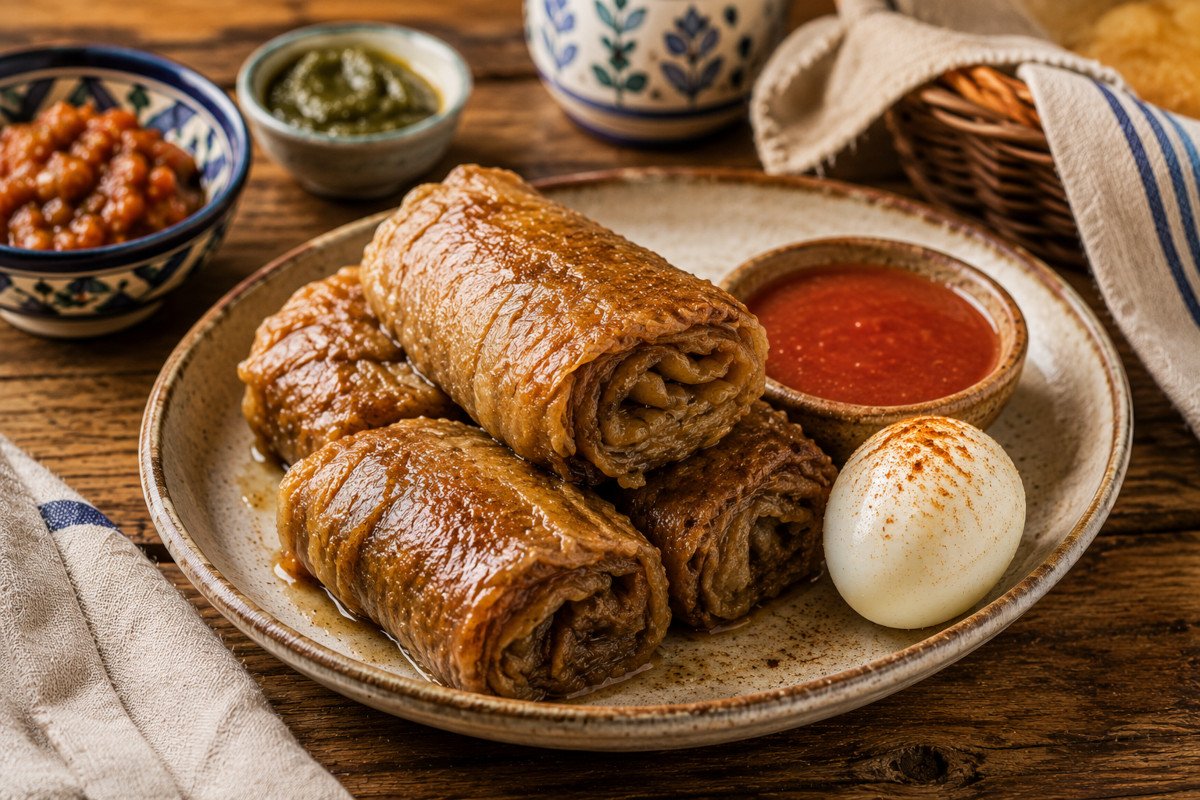
This round returns to Israeli cuisine with jachnun (also spelled jahnun) — a dense, rolled pastry baked low and slow overnight, traditionally served on Saturday mornings with grated tomato, a hard-boiled egg, and a fiery green chili paste called skhug. Like sabich, jachnun’s story isn’t really an Israeli origin story at all — it’s a Yemenite Jewish tradition that became part of Israel’s food culture through immigration, and it remains one of the clearest surviving examples of Yemenite cooking in the country today.
Built Around the Same Sabbath Constraint
Jachnun shares its core logic with sabich and other Sabbath dishes found across Jewish communities worldwide: because cooking is traditionally avoided on Shabbat itself, the dish is prepared before sundown on Friday and left to cook extremely slowly overnight, so it’s ready to eat by Saturday morning without anyone needing to actively cook during the Sabbath. In jachnun’s case, that means rolling the dough into tight coils, packing them into a pot, and baking them at a very low temperature for 10 to 12 hours or more — often left in the oven overnight while the household sleeps.
This method comes from Yemenite Jewish communities, who brought the tradition with them during the large-scale immigration to Israel following the state’s founding in 1948, particularly through Operation Magic Carpet, which airlifted the vast majority of Yemen’s Jewish population to Israel between 1949 and 1950. Jachnun, along with other Yemenite dishes like malawach and kubaneh, became one of the most visible culinary contributions of that community to broader Israeli food culture, now sold in bakeries and eaten well beyond Yemenite Jewish households specifically.
Why the Long, Slow Bake Matters
The extended overnight baking time isn’t just about Sabbath observance — it fundamentally transforms the dough. What starts as a simple, thin, oil-brushed dough rolled into a tight spiral becomes, after all those hours in low heat, deeply caramelized on the outside and dense, chewy, and almost bread-pudding-like inside, with a rich, toasted flavor that a quick bake simply can’t produce. The sugar in the dough slowly caramelizes over the many hours, giving jachnun its characteristic deep brown color and faintly sweet, toasted undertone, which then gets balanced by the bright, sharp toppings served alongside it.
The Recipe
Serves 6–8
Ingredients
For the dough:
- 4 cups all-purpose flour
- 1 teaspoon salt
- 1 tablespoon sugar
- 1 ¼ cups warm water (approximate, as needed)
- 1 cup vegetable oil or margarine, softened, for rolling
To serve:
- 6–8 eggs (cooked in the shell alongside the jachnun, if desired, for slow-cooked eggs)
- 2 large tomatoes, grated into a coarse sauce with salt and a little olive oil
- Skhug (Yemenite green or red chili paste), store-bought or homemade
Instructions
- Make the dough. Combine flour, salt, and sugar in a large bowl. Gradually add warm water, mixing and then kneading for about 8–10 minutes until you get a smooth, elastic dough. Cover and let rest for 30 minutes.
- Divide and roll. Divide the dough into 6–8 equal balls. Working with one at a time on a well-oiled surface, roll and stretch each ball out as thin as possible — the thinner the dough, the better the final layered texture.
- Oil and roll into coils. Brush the stretched dough generously with the softened oil or margarine, then roll it up tightly into a long rope, and coil that rope into a tight spiral, like a cinnamon roll. Repeat with the remaining dough balls.
- Pack the pot. Arrange the coiled dough pieces snugly in a heavy, oven-safe pot, packing them close together. Drizzle a little more oil over the top. If cooking eggs alongside, nestle whole eggs (in their shells) into the gaps between the dough coils.
- Bake low and slow. Cover tightly (a layer of foil under the lid helps seal in moisture) and bake at a very low temperature, around 225°F (107°C), for 10–12 hours, or overnight. The result should be deeply golden brown, dense, and caramelized on the outside.
- Serve. Let cool slightly before handling. Serve warm with the slow-cooked eggs (peeled and halved), fresh grated tomato sauce, and a generous amount of skhug on the side for everyone to add according to their own heat tolerance.
A Note on Timing
Because jachnun bakes for so many hours, it’s genuinely a set-it-and-forget-it dish — most home cooks in Israel start it Friday evening and let it bake through the night, so it’s ready without any hands-on effort come Saturday morning. If you’re making it on a weekday, a lower-and-slower daytime bake of 8–10 hours can work as well, though the flavor benefits from the longer traditional timing.
Serving Suggestions
Jachnun is almost always served with all three accompaniments together — the grated tomato adds freshness, the egg adds richness, and the skhug adds sharp heat — since the bread itself, while flavorful, is fairly plain on its own and relies on those toppings to complete the dish.
Jachnun is a dish built entirely around patience — a reminder that some of the most distinctive textures in cooking come not from a technique, but from simply letting time do the work.