
Harees: The Ancient Porridge Behind the Gulf’s Ramadan Table

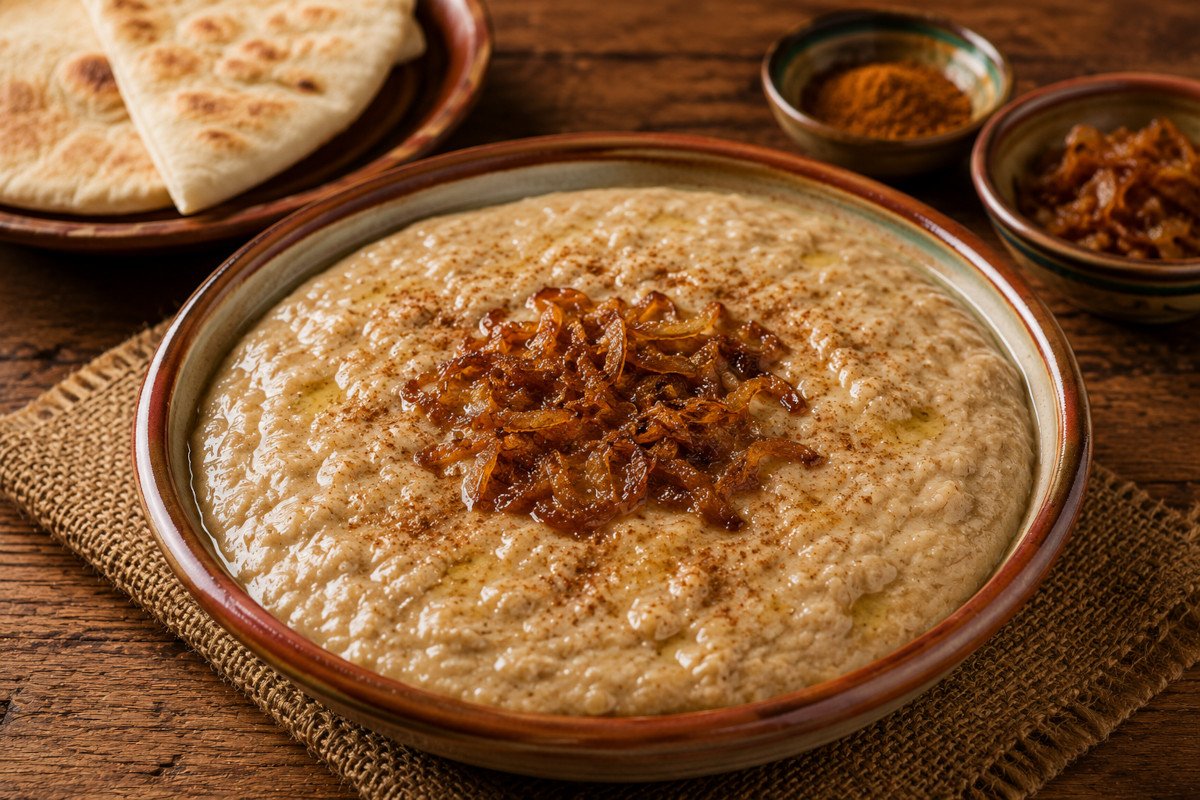
This round returns to Gulf and Arabian cuisine with harees (also spelled hareesa or, in some North African contexts, harissa — though it’s a completely different dish from the North African chili paste of the same name) — a slow-cooked porridge of wheat and meat, beaten down over hours into a smooth, almost creamy consistency. It’s one of the oldest dishes still regularly eaten across the Arabian Peninsula, and one of the most closely tied to Ramadan tradition in the Gulf states today.
A Dish Old Enough to Predate Modern Borders
Harees has a history that stretches back well over a thousand years, with references to similar wheat-and-meat porridges appearing in early Arabic culinary texts. Some food historians trace its lineage even further, connecting it to ancient wheat-and-meat porridge traditions found across the wider Middle East and Persia, since the basic technique — pounding cooked grain and meat together into a smooth paste — appears in various forms throughout the region under different names (harees in the Gulf, keşkek in Turkey, halim in Iran and South Asia). This kind of dish likely predates the modern national identities of the countries that claim it today, making it a genuinely shared regional heritage rather than any single country’s exclusive invention.
In the Gulf specifically — Saudi Arabia, the UAE, Bahrain, Qatar, Oman, and Kuwait — harees holds a particularly important place at the Ramadan table, traditionally served to break the fast at iftar. Its nutritional density (a hearty combination of protein-rich meat and slow-digesting whole wheat) made it a practical, sustaining choice after a full day of fasting, long before anyone framed it in those exact nutritional terms.
The Technique Is What Makes It Harees
What separates harees from a simple stew or soup is the labor-intensive finishing process. After the wheat and meat are slow-cooked together for hours until completely tender, the mixture is beaten vigorously — traditionally with a heavy wooden implement, though many home cooks today use an electric mixer or immersion blender — until the wheat breaks down and blends with the shredded meat into a smooth, thick, almost porridge-like paste with no distinct pieces remaining. This beating process can take a genuinely long time by hand, which is part of why harees was historically often prepared communally, with the labor shared among several people, particularly ahead of large Ramadan gatherings or celebrations.
The resulting texture is unlike almost anything else in Gulf cuisine — dense, smooth, and comforting, closer in consistency to a thick savory oatmeal than a traditional Arabic stew.
The Recipe
Serves 6–8
Ingredients
- 2 cups whole wheat berries (or cracked wheat/jareesh, which speeds up cooking), soaked overnight
- 2 lbs bone-in chicken or lamb, cut into large pieces
- 1 onion, quartered
- 1 cinnamon stick
- 3 green cardamom pods
- 1 teaspoon ground turmeric
- 8 cups water, plus more as needed
- Salt, to taste
- 3–4 tablespoons ghee or butter, for finishing
- Ground cinnamon and sugar, for serving (in the sweeter Gulf-style version), or fried onions and ghee for a savory finish
Instructions
- Soak the wheat. If using whole wheat berries rather than pre-cracked jareesh, soak them in water overnight to soften and reduce cooking time. Drain before using.
- Combine and simmer. In a large, heavy pot, combine the soaked wheat, chicken or lamb, onion, cinnamon stick, cardamom, turmeric, and water. Bring to a boil, then reduce heat to low, cover, and simmer gently for 3 to 4 hours, stirring occasionally and adding more water as needed to keep everything well submerged, until the wheat is completely soft and the meat is falling-apart tender.
- Remove bones and solids. Take out the cinnamon stick, cardamom pods, and any bones, shredding the meat back into the pot if it hasn’t already fallen apart.
- Beat until smooth. Using a heavy wooden spoon, potato masher, or hand mixer, beat the mixture vigorously and continuously for 15–20 minutes, until the wheat and meat break down completely into a smooth, thick, porridge-like consistency with no distinct pieces remaining. This is the most labor-intensive step and genuinely takes patience.
- Season and finish. Stir in salt to taste and a generous amount of ghee or butter, which adds richness and helps smooth out the final texture.
- Serve. Depending on the regional and family tradition, harees can be served savory — topped with more ghee and crispy fried onions — or slightly sweet, dusted with cinnamon and sugar, which is common in some Gulf households, particularly for Ramadan.
A Note on the Beating Step
Don’t rush or skip the beating process — it’s genuinely what transforms this from “wheat and meat stew” into true harees. If the texture still has distinct grains or chunks of meat after mashing, keep going; the final consistency should be smooth enough to eat with a spoon without any real resistance.
Serving Suggestions
Harees is traditionally served as part of a larger Ramadan iftar spread, alongside dates, soup, and other dishes, though it’s substantial enough to serve as a meal on its own with just some warm flatbread on the side.
Harees is a dish shaped almost entirely by patience and effort — proof that some of the Gulf’s most cherished foods reward slow cooking and hard work over any complicated ingredient list.