
Brik: Tunisia’s Crispy Pastry Built Around a Single Egg

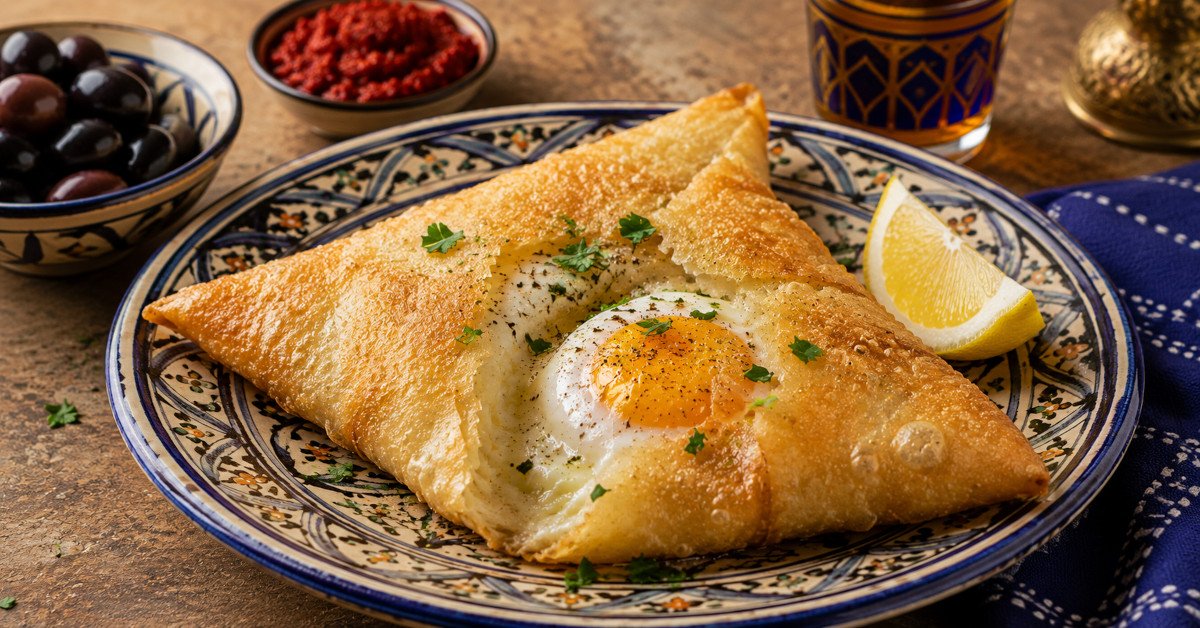
This round covers Tunisian cuisine with brik (also spelled brick) — a thin, crackling pastry parcel fried until deeply golden, traditionally filled with a whole raw egg that stays soft and runny inside, along with tuna, capers, and parsley. It’s one of Tunisia’s most iconic street foods and a dish where the entire eating experience depends on a single, very specific technical challenge: getting a runny yolk sealed inside crisp pastry without it breaking during cooking.
A Dish Shaped by Ottoman and Mediterranean Trade
Brik’s pastry itself, called warka or malsouka in Tunisia, is closely related to the Moroccan warqa used in pastilla, and both trace back to a broader North African and Andalusian pastry-making tradition. Some food historians connect the dish’s name to the Turkish word “börek,” a term used across the former Ottoman Empire for stuffed pastries, reflecting centuries of Ottoman presence and culinary exchange across North Africa and the eastern Mediterranean. Others point to Tunisia’s own coastal trading history, given the dish’s strong association with tuna and capers, both closely tied to Mediterranean fishing traditions along the Tunisian coast.
Regardless of the exact lineage, brik has become deeply woven into modern Tunisian identity. It’s especially associated with Ramadan, where it’s traditionally one of the first dishes served to break the fast at iftar, though it’s eaten year-round as a popular street food and appetizer.
The Egg Is the Whole Point
What makes brik technically distinctive — and genuinely tricky to master — is the raw egg. Unlike most fried pastries where the filling is fully cooked before being wrapped, brik is assembled with a raw egg cracked directly onto the filling, then folded and fried quickly at high heat so the pastry turns crisp while the egg inside barely sets, ideally staying soft and just-runny at the center. The filling around the egg — usually a mixture of flaked tuna, capers, parsley, and sometimes a little harissa or potato — acts almost like a nest, holding the egg in place and absorbing any yolk that breaks during folding.
Because the pastry is fried for only a short time, there’s very little margin for error: the egg has to set just enough to hold together when the brik is picked up, without turning fully hard, and the pastry has to crisp fully in that same short window. This is why brik is considered a dish that rewards technique and speed, more than most other North African pastries.
The Recipe
Serves 4
Ingredients
- 4 sheets malsouka or warka pastry (or spring roll wrappers as a substitute)
- 4 large eggs
- 1 can (5 oz) tuna, drained and flaked
- 2 tablespoons capers, roughly chopped
- 2 tablespoons fresh parsley, chopped
- 1 small potato, boiled and mashed (optional, for extra body)
- 1 teaspoon harissa paste (optional, for heat)
- Salt and black pepper, to taste
- Vegetable oil, for frying
- Lemon wedges, for serving
Instructions
- Prepare the filling base. In a bowl, mix the flaked tuna, capers, parsley, mashed potato if using, harissa if using, salt, and pepper. This filling should be fairly dry, since a wet filling makes the pastry harder to seal and more likely to leak.
- Set up your station. Have your pastry sheets, filling, and a cracked egg (or eggs cracked one at a time, right before folding) ready to go, along with hot oil in a wide, shallow pan. Speed matters once you start assembling, so prep everything first.
- Fill the pastry. Lay one sheet of pastry flat. Spoon a portion of the tuna filling onto one half, leaving a well in the center. Crack a raw egg directly into that well, on top of the filling.
- Fold quickly. Fold the pastry over into a half-moon or triangle shape, sealing the edges as best you can without pressing directly on the egg. Work quickly so the egg doesn’t have time to run out before frying.
- Fry immediately. Carefully slide the filled brik into hot oil (350°F/175°C) and fry for about 1 ½ to 2 minutes per side, until golden and crisp. The short fry time is intentional — this is what keeps the yolk soft inside.
- Drain and serve immediately. Remove with a slotted spatula, drain briefly on paper towels, and serve right away with lemon wedges. Brik is meant to be eaten hot, ideally within a minute or two of coming out of the oil, before the pastry loses its crispness.
A Note on Technique
If you’re new to making brik, don’t be discouraged if the first one or two break — it takes some practice to fold quickly enough while keeping the egg intact. Using a slightly thicker substitute like spring roll wrappers, rather than delicate warka, can make the process more forgiving while you build confidence with the technique.
Serving Suggestions
Brik is traditionally eaten with the hands, often as a starter or part of a larger spread, and pairs well with a simple Tunisian salad (salata mechouia or a chopped tomato-cucumber salad) to balance the richness of the fried pastry and egg.
Brik is a dish that lives or dies on timing — a reminder that in Tunisian cooking, technique can matter just as much as any ingredient list.