
Ka’ak al-Quds: The Sesame Bread Ring That Doubles as a Symbol of Jerusalem

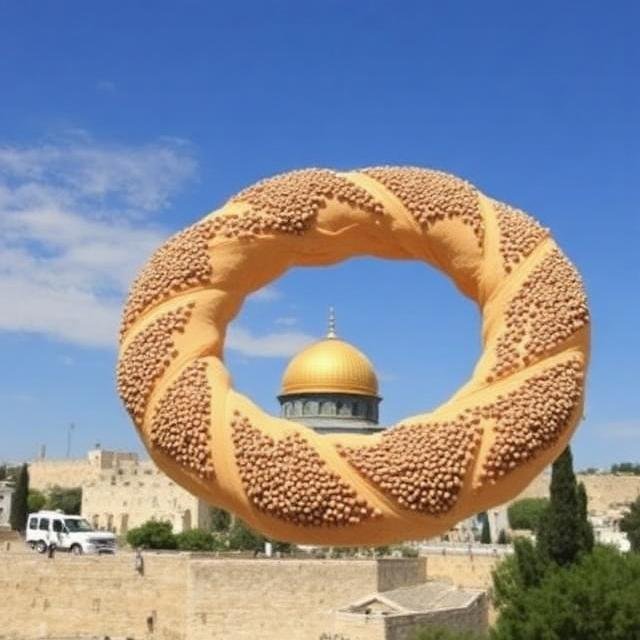
Country of origin: Palestine (Jerusalem specifically)
This round’s pick is ka’ak al-Quds, meaning “Jerusalem bread ring” — an oval-shaped, sesame-crusted bread with a distinctive crisp exterior and a soft, slightly chewy interior, traditionally sold by street vendors carrying it on carts or trays, often balanced on their heads, through the streets and alleys of Jerusalem’s Old City. Beyond being a well-loved everyday food, ka’ak al-Quds has taken on a level of cultural and symbolic significance in Palestinian identity that goes considerably further than most bread products typically carry.
More Than Bread: A Recognized Symbol of the City
Ka’ak al-Quds has become closely associated with Jerusalem’s identity specifically, to the point where images of vendors selling it near the Old City’s gates, particularly around Damascus Gate, are among the most recognizable and frequently photographed everyday scenes associated with the city, appearing regularly in photography, art, and media depicting Jerusalem’s street life and Palestinian culture. This level of symbolic weight attached to a specific bread product is relatively unusual even within a region where food and identity are often closely intertwined, and it reflects how deeply ka’ak al-Quds has become woven into the visual and cultural fabric of daily life in Jerusalem specifically, distinct from bread traditions in other Palestinian cities.
The bread’s specific association with Jerusalem, reflected directly in its name, also distinguishes it from other, related sesame bread traditions found in nearby cities and countries, even though the broader category of sesame-crusted bread rings appears in various forms across the Levant and Turkey.
A Distinctive Two-Step Baking Process
Ka’ak al-Quds gets its notably crisp yet chewy texture from a baking process that involves briefly boiling the shaped dough before baking it, a technique shared with a small number of other bread traditions around the world, most famously bagels, though the two developed independently within entirely different culinary contexts. This brief boiling step, done after the dough is shaped into its characteristic oval ring but before the final bake, sets the outer surface of the dough in a way that contributes directly to the finished bread’s particular texture — a firmer, slightly glossy crust that bakes up crisp, contrasted against a soft, air-pocketed interior. After boiling, the dough is coated generously in sesame seeds before going into a hot oven, giving ka’ak al-Quds its instantly recognizable, densely seeded exterior.
Traditionally Eaten With Za’atar, Continuing a Pattern
Ka’ak al-Quds is very commonly sold and eaten with a small packet or side portion of za’atar, the herb-and-spice blend discussed in more depth in relation to manakish elsewhere on this blog, typically mixed with a bit of olive oil for dipping. This pairing reinforces just how central za’atar is across multiple, otherwise quite different Palestinian and Levantine breads and street foods, functioning as a kind of connective flavor thread that ties together dishes as different in format as a flat, baked manakish and a boiled-then-baked bread ring like ka’ak al-Quds.
The Recipe
Makes about 8 pieces
Ingredients
For the dough:
- 4 cups all-purpose flour
- 1 tablespoon instant yeast
- 1 tablespoon sugar
- 1 ½ teaspoons salt
- 3 tablespoons olive oil
- 1 ¼ cups warm water (approximate, as needed)
For boiling and coating:
- 4 cups water
- 3 tablespoons honey or sugar (for the boiling water)
- 1 cup sesame seeds
For serving:
- Za’atar mixed with olive oil, for dipping
Instructions
- Make the dough. Combine flour, yeast, sugar, and salt in a large bowl. Add olive oil and gradually mix in warm water, kneading for 8–10 minutes until smooth and elastic. Cover and let rise in a warm place for about 1 hour, until roughly doubled.
- Shape the rings. Punch down the dough and divide into 8 equal pieces. Roll each piece into a long rope, about 20 inches long, then join the ends together to form an oval or ring shape, pinching firmly to seal.
- Let rise again. Place the shaped rings on a floured tray, cover, and let rest for another 20–30 minutes.
- Boil the dough. Bring water and honey or sugar to a boil in a wide pot. Working in batches, gently lower each ring into the boiling water for about 30–45 seconds per side, then remove with a slotted spoon or spider and drain briefly.
- Coat in sesame seeds. While still slightly damp from boiling, press each ring into a plate of sesame seeds, coating the surface thoroughly on all sides.
- Bake. Arrange the coated rings on a baking sheet and bake at 425°F (220°C) for 20–25 minutes, until deeply golden brown and crisp on the outside.
- Serve. Serve warm or at room temperature with za’atar mixed with olive oil for dipping.
A Note on the Boiling Step
Don’t skip the boiling step, even though it might seem like an unusual extra effort for a bread recipe — it’s genuinely responsible for the specific crisp-yet-chewy texture that distinguishes ka’ak al-Quds from a standard sesame roll baked without this step.
Serving Suggestions
Ka’ak al-Quds is traditionally eaten as a snack any time of day, most commonly torn apart and dipped into a small pile of za’atar mixed with olive oil, and it’s especially popular as an on-the-go breakfast item in Jerusalem’s Old City.
Ka’ak al-Quds shows how a specific, humble food can come to carry the identity of an entire city on its back — a bread ring that’s become as recognizable a piece of Jerusalem’s streets as any landmark.