
Warbat: Znoud el Sit’s Square, Layered Sibling

Country of origin: Levant
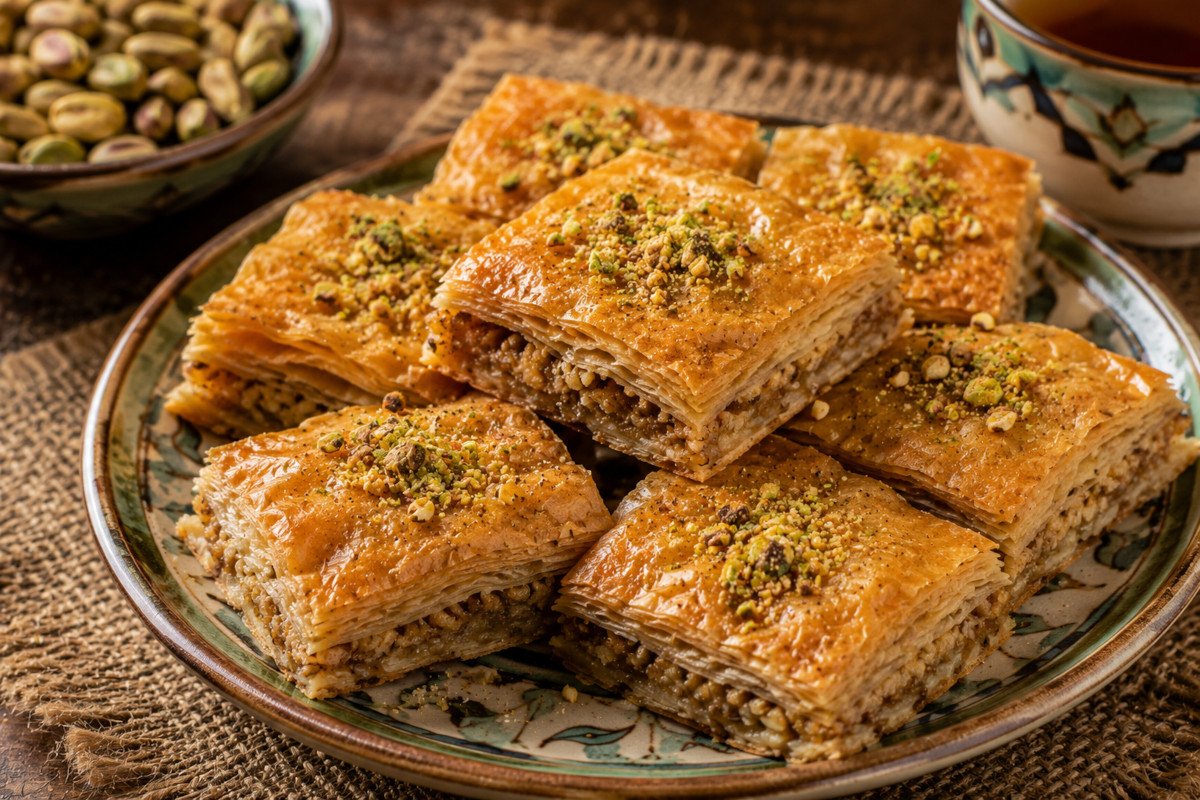
This round’s pick is warbat — crisp, layered squares of phyllo pastry filled with the same ashta cream featured in znoud el sit, discussed elsewhere on this blog, but assembled in a completely different format: flat, stacked layers rather than a rolled cylinder, finished with syrup and crushed pistachios. Comparing warbat directly to znoud el sit offers a useful, concrete example of how the same core filling and pastry can be shaped into genuinely different desserts depending purely on assembly technique.
Same Cream, Completely Different Shape
Warbat and znoud el sit share their most essential components: thin phyllo pastry and ashta, the thick, lightly sweetened milk cream discussed in more detail elsewhere on this blog. Where the two desserts diverge entirely is in how that shared filling and pastry get assembled and cooked. Znoud el sit rolls the filling inside a tight phyllo cylinder and deep-fries it, producing a dessert eaten essentially as an individual, handheld piece. Warbat instead layers stacked sheets of phyllo, baked rather than fried, with the ashta cream sandwiched between the layers after baking, then cut into neat squares or rectangles for serving. This difference in both shape and cooking method — rolled and fried versus layered and baked — produces two desserts that, despite sharing a filling, deliver genuinely different textures and eating experiences, similar in spirit to how baba ganoush and moutabal, discussed elsewhere on this blog, diverge specifically through preparation technique despite sharing core ingredients.
Why Baking Rather Than Frying Changes the Texture Balance
Because warbat’s phyllo layers are baked rather than fried, the finished pastry achieves a lighter, flakier crispness throughout compared to znoud el sit’s deep-fried shell, which develops a denser, more substantially crisp exterior from direct contact with hot oil. This distinction matters for how each dessert eats: warbat’s baked layers shatter into thin, flaky shards with each bite, allowing the cool, soft ashta cream sandwiched between them to stand out as a clear textural contrast, while znoud el sit’s fried shell provides a heartier, more substantial crunch that similarly contrasts against its cream filling, but through a noticeably different mechanism and mouthfeel.
Assembling After Baking, Not Before
A meaningful technical distinction in warbat’s preparation, compared to znoud el sit’s approach, is that the pastry layers are baked first, entirely separate from the filling, and only combined with the chilled ashta cream afterward, right before serving. This after-baking assembly avoids any risk of the delicate cream filling being exposed to oven heat, which could compromise its smooth, set texture, and it also means warbat needs to be assembled relatively close to serving time to prevent the baked phyllo layers from softening prematurely once they come into contact with the cool, moist cream, a timing consideration similar in principle to several other layered or bread-based dishes discussed elsewhere on this blog, including fattet hummus.
The Recipe
Makes about 12 pieces
Ingredients
For the ashta filling:
- 2 cups whole milk
- 3 tablespoons cornstarch
- 2 tablespoons sugar
- 1 teaspoon rosewater or orange blossom water
For the pastry:
- 8 sheets phyllo dough
- ½ cup melted butter, for brushing
For the syrup:
- 1 cup sugar
- ½ cup water
- 1 tablespoon lemon juice
- 1 teaspoon rosewater or orange blossom water
For garnish:
- ¼ cup crushed pistachios
Instructions
- Make the syrup first. Combine sugar, water, and lemon juice in a saucepan and bring to a boil. Simmer for about 8 minutes until slightly thickened, then stir in rosewater or orange blossom water. Let cool completely.
- Make the ashta filling. Whisk together milk, cornstarch, and sugar in a saucepan. Cook over medium heat, stirring constantly, until thickened, about 8–10 minutes. Remove from heat and stir in rosewater or orange blossom water. Let cool completely, then refrigerate until fully chilled and firm, at least 2 hours.
- Layer and bake the phyllo. Brush a baking sheet with melted butter. Layer the phyllo sheets, brushing each one individually with melted butter, stacking them directly on top of each other into one even layered stack. Bake at 375°F (190°C) for 15–18 minutes, until deeply golden and crisp throughout.
- Cut into pieces. Once baked and slightly cooled, use a sharp knife to cut the baked phyllo stack into even squares or rectangles, then carefully split each piece horizontally into two thinner layers.
- Assemble. Spread a layer of the chilled ashta cream onto the bottom half of each split piece, then top with the remaining phyllo layer.
- Finish. Drizzle each piece with the cooled syrup and sprinkle with crushed pistachios.
- Serve. Serve promptly, ideally within an hour or two of assembly, while the phyllo still retains its crisp, flaky texture.
A Note on Splitting the Baked Phyllo
Splitting the baked, layered phyllo stack horizontally into two thinner pieces takes a careful hand, since it can crack or crumble if handled too roughly — a sharp, thin knife and a gentle sawing motion works better than pressing straight down.
Serving Suggestions
Warbat is often served alongside znoud el sit and other Levantine pastries as part of a dessert platter, giving guests the chance to compare the two closely related but texturally distinct desserts side by side.
Warbat and znoud el sit, built from nearly identical core components but assembled in entirely different ways, make a strong case for how much a dessert’s final character depends on shape and cooking method rather than ingredients alone.