
Sfouf: The Yellow Cake That Skips the Syrup Entirely

Country of origin: Levant (particularly Lebanon)
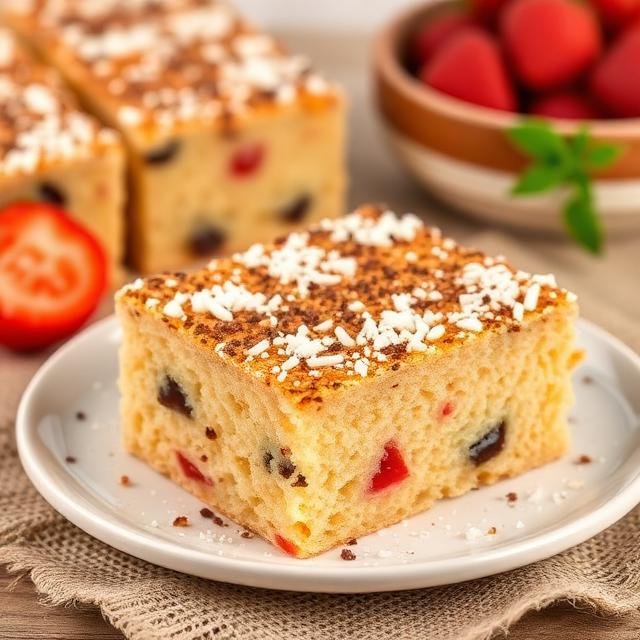
This round’s pick is sfouf — a bright yellow, semolina-based cake, colored and flavored with turmeric and often anise, that stands apart from most other Levantine sweets covered on this blog by deliberately skipping the syrup soak that defines so many of the region’s cakes and pastries. Where basbousa, discussed elsewhere on this blog, relies heavily on being drenched in syrup after baking, sfouf takes a completely different path, staying dry, lightly sweetened, and closer in spirit to a simple spiced tea cake than to the syrup-heavy desserts more commonly associated with the region.
Turmeric as a Baking Spice, Not Just a Savory One
Turmeric shows up throughout Middle Eastern cooking primarily in savory contexts, lending its earthy flavor and vivid yellow color to dishes like rice pilafs and stews. Sfouf represents one of the more distinctive uses of turmeric specifically within a sweet, baked context, where it functions primarily as a natural coloring agent, giving the cake its recognizable bright yellow hue, while also contributing a subtle earthy background note that sits underneath the cake’s sweetness rather than dominating the flavor the way turmeric typically does in savory dishes. This crossover use of a primarily savory spice into a specifically sweet application is a genuinely distinctive choice within the broader landscape of the region’s baking tradition, most of which relies on more conventionally sweet-associated spices like cinnamon or cardamom rather than turmeric specifically.
Why No Syrup Changes Everything About How It’s Eaten
The decision to leave sfouf unsoaked in syrup, in contrast to so many of the region’s other semolina-based cakes, fundamentally changes both its texture and its role at the table. Without a syrup soak, sfouf stays notably drier and less dense, with a texture closer to a crumbly, not-too-sweet tea cake or a simple pound cake rather than the moist, syrup-saturated richness of basbousa or baklava, both discussed elsewhere on this blog. This drier texture also changes how sfouf tends to be eaten and served — it holds up well alongside coffee or tea as an everyday snack cake rather than functioning as a rich, occasion-specific dessert, occupying a more casual, everyday role within Lebanese baking tradition compared to some of the more elaborate, syrup-heavy sweets discussed elsewhere on this blog.
A Simple, Forgiving Bake by Regional Standards
Compared to many of the more technically demanding desserts covered on this blog — baklava’s delicate phyllo work, basbousa’s syrup-timing requirements, or halva’s precise sugar crystallization — sfouf is notably simple and forgiving to make, following a fairly standard cake-mixing method without any of the more finicky technical steps that define several other regional sweets. This relative simplicity likely contributes to sfouf’s everyday, casual status within Lebanese home baking, since it doesn’t require the specialized skill or extended preparation time that several of the region’s more elaborate, celebration-oriented desserts demand.
The Recipe
Makes about 16 pieces
Ingredients
- 2 cups fine semolina
- 1 cup all-purpose flour
- 1 cup sugar
- 2 tablespoons ground turmeric
- 1 tablespoon baking powder
- 1 teaspoon ground anise seed (optional)
- ½ teaspoon salt
- 1 cup vegetable oil
- 1 cup whole milk
- 1 tablespoon tahini, for greasing the pan
- ¼ cup pine nuts or blanched almonds, for topping
Instructions
- Combine the dry ingredients. In a large bowl, whisk together semolina, flour, sugar, turmeric, baking powder, anise seed if using, and salt.
- Add the wet ingredients. Stir in the vegetable oil and milk, mixing until you get a smooth, pourable batter.
- Prepare the pan. Grease a baking pan generously with tahini, spreading it evenly across the bottom and sides — this step is fairly traditional for sfouf specifically and adds a subtle, pleasant flavor along the edges of the finished cake.
- Pour and top. Pour the batter into the prepared pan, smoothing the top. Scatter pine nuts or almonds evenly across the surface.
- Bake. Bake at 350°F (175°C) for 30–35 minutes, until a toothpick inserted in the center comes out clean and the top is lightly golden.
- Cool and cut. Let cool in the pan for at least 15–20 minutes before cutting into squares or diamonds.
A Note on Turmeric Quantity
Fresh, good-quality ground turmeric matters here, since it’s responsible for both the cake’s signature color and a meaningful part of its flavor — older, less potent turmeric will result in a paler cake with a flatter flavor, so it’s worth checking that your turmeric is reasonably fresh before baking.
Serving Suggestions
Sfouf is traditionally served alongside coffee or tea as a casual, everyday snack cake, and it keeps well at room temperature for several days, making it a practical make-ahead option compared to some of the more delicate, syrup-soaked sweets covered elsewhere on this blog.
Sfouf’s decision to skip the syrup that defines so many of its regional cousins shows that not every Levantine sweet needs to lean into richness — sometimes a simple, dry, turmeric-yellow cake earns its place at the table through everyday practicality rather than occasion-worthy indulgence.