
Basterma: The Cured Beef With a Legend About Horsemen and Saddles

Country of origin: Widely shared across Armenia, Turkey, and the Levant, with roots connecting to Central Asian nomadic tradition
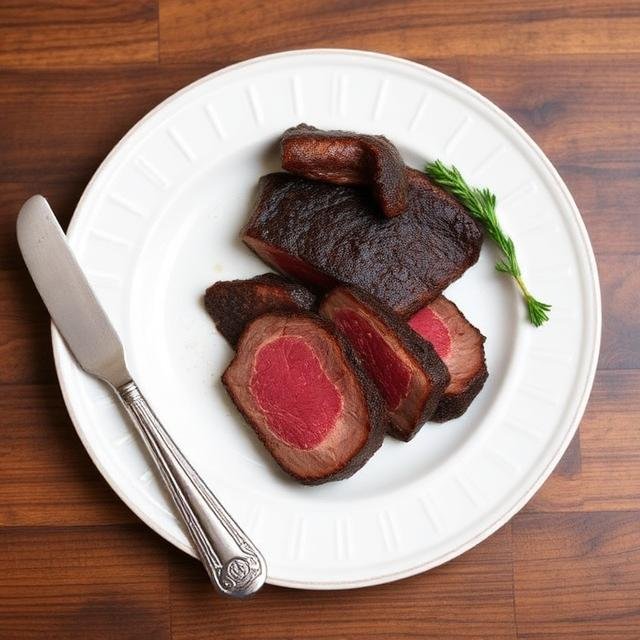
This round’s pick is basterma (also spelled pastirma or basturma, depending on the country) — air-dried, salt-cured beef coated in a thick, intensely flavored paste made primarily from fenugreek, garlic, and paprika, called çemen. Alongside awarma, discussed elsewhere on this blog, it represents another distinct meat preservation tradition from the region, but one built around an entirely different technique — dry-curing and air-drying rather than storage in rendered fat — and one that comes with one of the more colorful, if historically debated, origin legends covered on this blog so far.
A Legend Involving Horsemen and Saddles
One of the most widely repeated, if historically unverified, origin stories for basterma connects the technique to Central Asian nomadic horsemen, who are said to have placed raw meat under their saddles while riding, allowing the pressure and motion of riding to compress the meat and the horse’s body heat to begin a preservation process, inadvertently discovering an early form of cured, dried meat through this practical, if somewhat unusual, method born of necessity while traveling long distances. While this story is popular and frequently repeated, it should be treated as a colorful piece of culinary folklore rather than confirmed historical fact, similar to several other origin stories discussed elsewhere on this blog, including the account behind umm ali’s name. What’s better established is that basterma’s technique likely traces back to Central Asian and Turkic nomadic traditions more broadly, where preserving meat for long journeys without refrigeration was a genuine practical necessity, and the dry-curing method eventually spread and became particularly refined within Armenian and later Ottoman culinary tradition.
Çemen: The Paste That Defines the Final Flavor
While the initial salt-curing and drying process is what actually preserves the meat, basterma’s most recognizable and defining characteristic comes from çemen, a thick paste made primarily from ground fenugreek, along with garlic, paprika, and sometimes cumin, generously coated over the entire surface of the cured meat before a final drying period. This paste serves multiple roles: it contributes an intense, distinctive flavor that’s become inseparable from basterma’s identity, with fenugreek’s slightly bitter, maple-like aromatic quality — the same defining note discussed in relation to ghormeh sabzi elsewhere on this blog — providing a genuinely unique flavor signature that most people associate directly with basterma specifically. The paste coating also provides an additional protective layer over the meat’s surface during the final stages of drying, similar in general concept, though different in specific mechanism, to how shanklish’s spice coating serves a partly protective role during that cheese’s aging process.
A Long, Multi-Stage Process That Doesn’t Rush
Properly made basterma involves several distinct stages spread over multiple weeks: an initial salt-curing period to draw out moisture and begin the preservation process, followed by a period of pressing (traditionally under weights, echoing a controlled, more deliberate version of the pressure described in the saddle legend), then air-drying, and finally the çemen paste coating followed by additional drying time to let the paste’s flavors fully penetrate and set. This multi-stage process, taking several weeks from start to finish, reflects the same kind of patience-rewarding technique discussed in relation to several other preserved and cured foods on this blog, where rushing any individual stage compromises the final texture, flavor, or shelf stability of the finished product.
Working With Basterma at Home
Given the multi-week curing process involved, this section focuses on how to use store-bought or deli-sourced basterma rather than curing it entirely from scratch, which is a genuinely advanced project requiring specific food safety knowledge around curing raw meat safely.
A Simple Preparation: Basterma and Eggs
Serves 2
Ingredients
- 6–8 thin slices basterma, purchased from a Middle Eastern or Armenian grocer
- 2 tablespoons olive oil
- 4 eggs
- Salt and black pepper, to taste (basterma is already well-salted, so go easy)
- Fresh bread, for serving
Instructions
- Fry the basterma. Heat olive oil in a pan over medium heat. Add the basterma slices and cook briefly, about 1 minute per side, just until the edges begin to crisp slightly and the fenugreek paste’s aroma becomes more pronounced.
- Add the eggs. Push the basterma slightly to one side of the pan and crack the eggs directly into the same pan, letting them cook alongside the basterma, absorbing some of its flavor and rendered fat as they set.
- Season lightly. Add a small amount of salt if needed, keeping in mind the basterma itself is already quite salty, and black pepper to taste.
- Serve. Serve hot, directly from the pan if possible, with fresh bread for scooping.
A Note on Sourcing Quality
Since basterma varies considerably in quality depending on how it was cured and how much çemen paste was properly applied, it’s worth seeking out a reputable Middle Eastern, Armenian, or Turkish grocer specifically for this ingredient, since a well-made basterma has a genuinely distinct, complex flavor that a lower-quality, mass-produced version often fails to replicate.
Serving Suggestions
Basterma is traditionally served thinly sliced, either on its own as part of a mezze spread, fried briefly with eggs as described above, or added to sandwiches, where its intense, fenugreek-forward flavor works well against milder ingredients like fresh cheese or tomato.
Basterma’s journey from a folk legend about horsemen and saddles to a carefully staged, weeks-long curing process shows how a food born from pure necessity can, over enough generations, become a genuinely refined culinary craft in its own right.