
Zereshk Polo: The Persian Rice Dish Built Around a Tiny Tart Berry

Country of origin: Iran
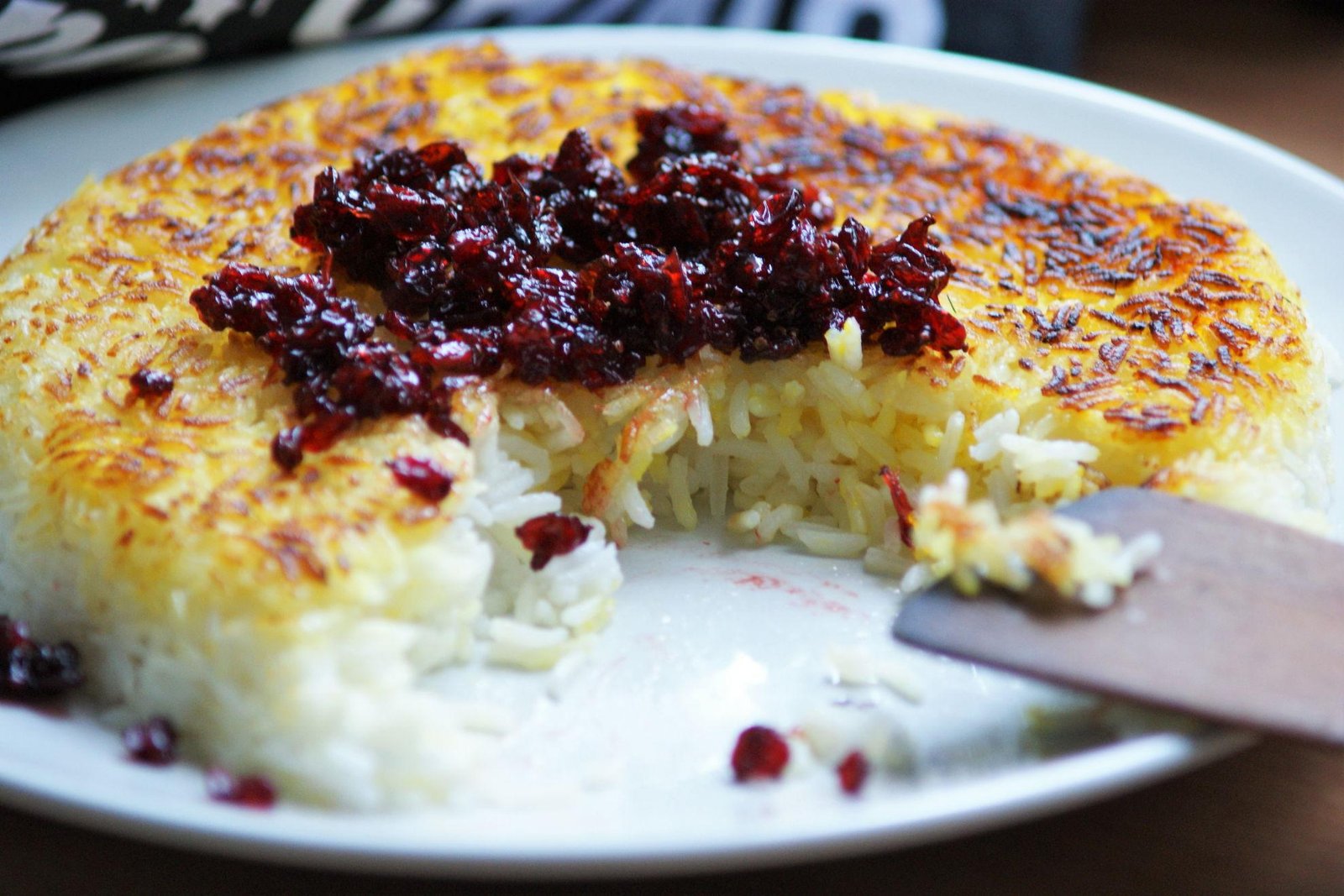
This round’s pick is zereshk polo — saffron-scented basmati rice studded with zereshk, tiny dried barberries with a sharp, tart flavor, most commonly served alongside roasted or braised chicken (zereshk polo ba morgh). It’s one of the most recognizable dishes at Persian celebratory meals, and its identity rests almost entirely on a single small, unusual ingredient that doesn’t have a widely known equivalent in most other regional cuisines.
Barberries: A Small Berry With an Outsized Role
Zereshk, or barberries, are small, tart red berries that grow on a shrub cultivated in various regions, with Iran, particularly the South Khorasan province, recognized as a major global producer, where the berries are traditionally sun-dried after harvest. Dried barberries have an intensely sour, almost cranberry-like tartness, but with a distinct flavor profile that’s genuinely hard to substitute convincingly with any other commonly available dried fruit, which is part of why zereshk polo has remained closely tied to this one specific ingredient rather than adapting to whatever tart dried fruit happens to be locally available, the way some regional dishes evolve when a key ingredient isn’t accessible elsewhere.
Their small size and concentrated tartness mean they’re used deliberately in small quantities relative to the rice, scattered through the dish and often used as a decorative topping rather than mixed thoroughly throughout, allowing bursts of sharp, fruity sourness to punctuate an otherwise mild, fragrant plate of saffron rice.
Why Rinsing the Barberries Matters
A specific and important preparation step for zereshk polo involves briefly rinsing and sometimes soaking the dried barberries before use, and lightly sautéing them in a small amount of butter with sugar. This step serves two purposes: it removes any small stems, sand, or grit that can be present in dried barberries depending on how they were processed, and it softens their intense tartness slightly with a touch of sweetness, rounding out the flavor rather than leaving it purely sour. Skipping this step, or rinsing and cooking the berries carelessly, is one of the more common ways home cooks end up with a version of the dish that tastes unpleasantly gritty or overly sharp rather than achieving the balanced sweet-tart quality the dish is meant to have.
A Dish for Celebrations, Not Everyday Meals
Alongside dishes like fesenjan and ghormeh sabzi, zereshk polo holds a place among Persian cuisine’s more celebratory dishes, commonly served at weddings, Nowruz gatherings, and other special occasions rather than as frequent everyday fare, partly due to the relative cost and specific sourcing barberries require compared to more commonly available pantry staples. Its bright red flecks scattered across golden saffron rice also give it a naturally festive, visually striking appearance that suits celebratory table settings, adding to its association with special meals rather than routine weeknight cooking.
The Recipe
Serves 4–6
Ingredients
For the chicken:
- 4 bone-in chicken thighs or a small whole chicken, cut into pieces
- 2 tablespoons olive oil
- 1 onion, sliced
- 1 teaspoon turmeric
- ½ teaspoon ground cinnamon
- Salt and black pepper, to taste
- 1 ½ cups water or chicken broth
For the rice:
- 2 cups basmati rice, soaked for at least 1 hour
- Water, for parboiling
- Salt, for parboiling water
- 3 tablespoons butter or ghee, divided
- Pinch of saffron threads, dissolved in 2 tablespoons hot water
For the barberries:
- ½ cup dried barberries (zereshk)
- 2 tablespoons butter
- 1 tablespoon sugar
- ¼ cup slivered almonds or pistachios (optional)
Instructions
- Cook the chicken. In a pot, heat olive oil over medium-high heat and brown the chicken pieces on all sides. Add the sliced onion, turmeric, cinnamon, salt, and pepper, along with water or broth. Cover and simmer for 35–40 minutes, until the chicken is tender.
- Parboil the rice. Bring a large pot of salted water to a boil. Add the soaked, drained rice and boil for 5–7 minutes, until about 70% cooked. Drain.
- Steam the rice. In the same pot, melt 2 tablespoons of butter or ghee. Layer the parboiled rice back into the pot, drizzling the dissolved saffron water over the top in a few places. Cover with a towel-wrapped lid and steam over low heat for 30–35 minutes, until fully tender and a crisp tahdig layer has formed on the bottom, if desired.
- Prepare the barberries. Rinse the dried barberries thoroughly in a strainer under cool water to remove any grit, picking out any stems. In a small pan, melt the remaining butter over low heat, add the barberries and sugar, and cook gently for 2–3 minutes, just until the berries soften slightly and turn glossy — be careful not to overcook them, as barberries can burn and turn bitter quickly.
- Combine. Gently fold about half of the sautéed barberries into the cooked rice, reserving the rest for topping.
- Serve. Plate the rice, top with the cooked chicken, scatter with the remaining barberries and almonds or pistachios if using.
A Note on Barberry Quantity
It’s easy to add too many barberries given their small size, but their tartness is concentrated enough that a little goes a long way — start with the amount specified and add more only if you specifically prefer a sharper, more pronounced sour note throughout the dish.
Serving Suggestions
Zereshk polo ba morgh is typically served as a complete meal, with the rice and barberries as the centerpiece and the chicken alongside, though the barberry rice on its own also pairs well with other Persian stews like fesenjan.
Zereshk polo shows how a single small, specific ingredient — one without a widely available substitute — can end up defining an entire dish’s identity and its place at the celebratory table.