
Kubba: Iraq’s Rice-Shelled Cousin of Kibbeh, Served in Soup

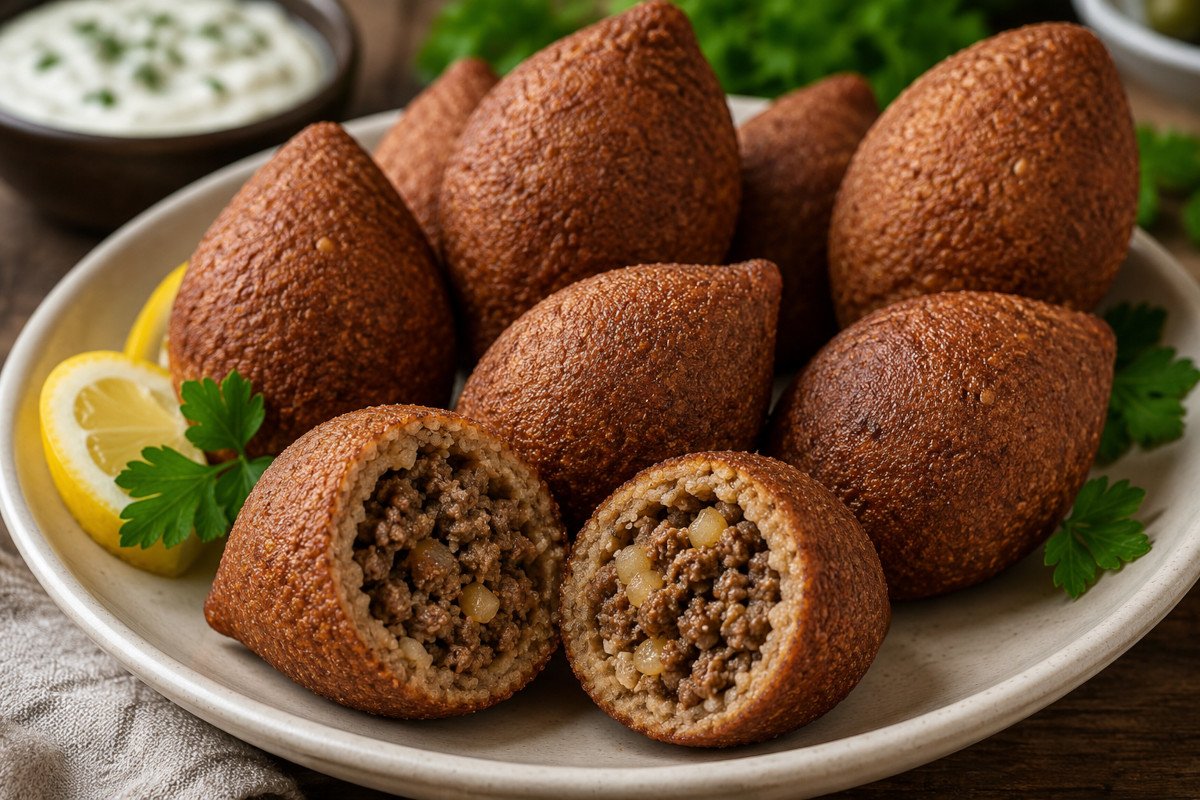
Country of origin: Iraq
This round’s pick is kubba (also spelled kubbeh) — Iraq’s take on the meat-and-grain dumpling family covered elsewhere on this blog in relation to Levantine kibbeh, but built and served in a genuinely different way. Rather than a bulgur-based shell fried and eaten on its own, Iraqi kubba is most often made with a rice or semolina-based shell and served submerged in a tangy, hearty soup, making it a completely different eating experience from its Levantine relative despite the shared name and basic concept.
A Regional Cousin, Not a Copy
Kubba belongs to the same broad family of stuffed meat-and-grain dumplings as Levantine kibbeh, sharing the underlying logic of an outer shell enclosing a spiced meat filling. But Iraqi kubba diverged significantly in execution, most notably in its base ingredient: while Levantine kibbeh relies on fine bulgur wheat for its shell, many Iraqi kubba varieties use rice flour, semolina, or a rice-based dough instead, giving the shell a noticeably different texture — often softer and slightly more delicate than bulgur’s characteristic chew. Iraq’s culinary history, shaped by its position at the crossroads of Mesopotamian, Persian, and Ottoman influence, likely contributed to this divergence, with rice playing a more prominent role in Iraqi cooking generally than it traditionally has in much of Levantine cuisine.
Kubba also comes in an unusually wide range of regional Iraqi varieties, each named after their specific shell ingredient or cooking style — kubbat halab (using a finer, smoother dough associated with the city of Aleppo’s culinary influence reaching into Iraqi tradition), kubbat mosul, and kubbat shorba among them — reflecting a level of internal regional variety that goes beyond what’s typically seen with Levantine kibbeh’s more standardized fried form.
Served in Soup, Not on a Platter
Perhaps the most significant difference between kubba and Levantine kibbeh is how it’s actually eaten. Where fried Levantine kibbeh is typically served as a standalone piece alongside other mezze items, Iraqi kubba is very commonly served submerged in a tangy, tomato-based soup, most famously kubba hamouth (“sour kubba”), where the dumplings simmer directly in a broth soured with tamarind, dried lime, or a combination of vegetables and lemon juice. This transforms kubba from a finger-food appetizer into a full, warming main course soup, closer in spirit and presentation to a hearty stew with dumplings than to the fried, mezze-style kibbeh found further west.
Why the Rice Shell Behaves Differently in Liquid
The choice of a rice or semolina-based shell isn’t incidental to kubba’s soup-based serving style — it’s functionally suited to it. A bulgur-based shell, if simmered directly in a soup for an extended period the way kubba typically is, would likely become mushy or start to disintegrate, since bulgur continues absorbing liquid and softening the longer it sits in a wet environment. Rice flour and semolina doughs generally hold their shape better under prolonged simmering, allowing the dumplings to stay intact through the cooking process without falling apart into the broth, a practical consideration that likely shaped why Iraqi kubba varieties developed toward soup-based serving in the first place, rather than the fried, standalone format more common in the Levant.
The Recipe: Kubbat Shorba (Kubba in Broth)
Serves 6
Ingredients
For the shell:
- 1 cup fine semolina
- ½ cup rice flour
- ½ cup all-purpose flour
- ½ teaspoon salt
- Warm water, as needed
For the filling:
- 1 tablespoon olive oil
- 1 small onion, finely chopped
- ½ lb ground beef or lamb
- ¼ cup pine nuts
- ½ teaspoon ground allspice
- ¼ teaspoon cinnamon
- Salt and black pepper, to taste
For the soup:
- 2 tablespoons vegetable oil
- 1 onion, chopped
- 2 carrots, diced
- 1 can (28 oz) crushed tomatoes
- 6 cups broth or water
- 2 tablespoons tamarind paste (or juice of 2 lemons)
- Salt and black pepper, to taste
- Fresh parsley or cilantro, chopped, for garnish
Instructions
- Make the filling first. Heat olive oil in a pan, cook the onion until soft, then add the ground meat, breaking it apart as it browns. Stir in pine nuts, allspice, cinnamon, salt, and pepper, and cook until browned through. Let cool.
- Make the shell dough. Combine semolina, rice flour, all-purpose flour, and salt in a bowl. Gradually add warm water, kneading until a smooth, pliable dough forms, similar in texture to a firm pasta dough. Cover and let rest for 20 minutes.
- Shape the kubba. Take a small portion of dough and flatten it into a thin disc in your palm. Place a small spoonful of filling in the center, then fold the dough around it and roll into a smooth ball or slightly oval shape, sealing it completely so no filling shows through.
- Make the soup base. In a large pot, heat vegetable oil and cook the onion and carrots until softened, about 8 minutes. Add crushed tomatoes, broth, tamarind paste or lemon juice, salt, and pepper. Bring to a simmer.
- Cook the kubba in the soup. Gently lower the shaped kubba dumplings into the simmering soup. Cook for about 20–25 minutes, until the dumplings are cooked through and firm, and the soup has developed a rich, tangy flavor.
- Serve. Ladle the soup and kubba into bowls and garnish with fresh parsley or cilantro.
A Note on Sealing
Getting a fully sealed shell matters more here than with fried kibbeh, since any gap will let filling leak directly into the simmering soup rather than staying contained — take a little extra time smoothing and pinching the dough closed completely around the filling before it goes into the pot.
Serving Suggestions
Kubbat shorba is a complete, warming meal on its own, traditionally served with rice on the side to soak up the tangy broth.
Kubba’s shift from bulgur to rice-based shells, and from a fried appetizer to a simmered soup dumpling, shows how the same basic dish concept can be reshaped almost entirely by a single region’s specific cooking habits and available ingredients.