
Fattoush: The Salad Built to Waste Nothing

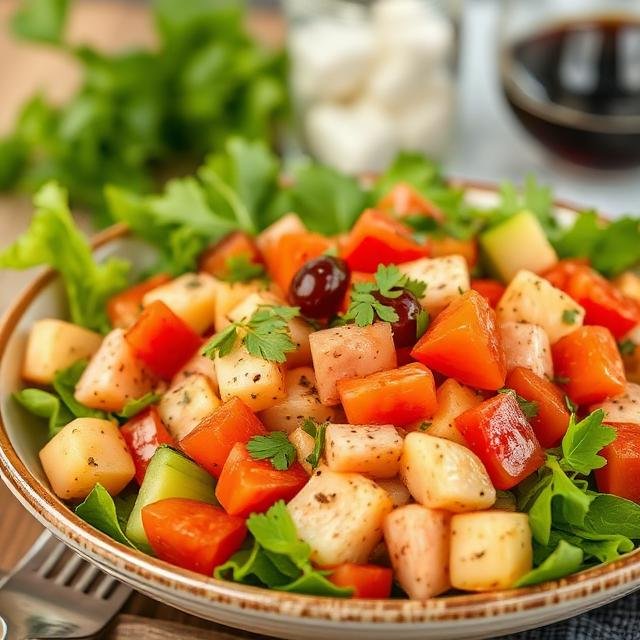
Country of origin: Levant (Lebanon, Syria, Jordan, Palestine)
Today’s random pick lands on fattoush — a bright, tangy salad of chopped vegetables, fresh herbs, and crisp fried or toasted pieces of flatbread, tossed with a sumac-spiked dressing. Alongside tabbouleh, it’s one of the two salads most associated with Levantine mezze spreads, but fattoush has a distinct identity rooted in a very practical culinary tradition: not letting stale bread go to waste.
A Dish Built Around Using Up Old Bread
Fattoush belongs to a broader category of Levantine dishes known as fattet dishes, all of which incorporate stale or day-old bread as a structural ingredient rather than throwing it away — a practical, waste-conscious tradition common across much of the region’s older home cooking, long before “zero waste” became a modern culinary talking point. The word “fattoush” itself is generally understood to derive from an Arabic root related to “fatt,” meaning to crumble or break into pieces, referring directly to the broken-up bread that’s tossed through the salad. Rather than centering on fresh bread as an accompaniment, the technique deliberately calls for bread that’s already gone a bit stale, since slightly dried-out bread crisps up better when toasted or fried and holds its texture longer once mixed into the salad, compared to fresh bread, which would turn soggy far more quickly.
This practical, resourceful approach to using leftover bread reflects a broader theme found throughout much of the region’s traditional home cooking, where dishes were often shaped as much by avoiding waste and making the most of available ingredients as by any specific pursuit of flavor for its own sake — though in fattoush’s case, the technique happens to produce a genuinely excellent textural contrast as a side effect.
Sumac: The Sour Note That Defines the Dressing
While the vegetables and bread give fattoush its body, the dressing is what gives it its distinct sour, tangy character, and sumac plays a central role in that. The tart, lemony spice — made from the dried, ground berries of the sumac shrub, the same ingredient central to musakhan — gets mixed into the dressing alongside olive oil and lemon juice, adding a fruity, slightly astringent sourness that’s genuinely different from lemon juice alone. Some traditional recipes also include a small amount of pomegranate molasses in the dressing, layering yet another dimension of tartness and a touch of sweetness on top of the sumac’s sharper, more one-dimensional sourness.
A Salad That Welcomes Regional Variation
Unlike tabbouleh, where the parsley-to-bulgur ratio is treated as something close to non-negotiable, fattoush is considerably more flexible in its exact vegetable lineup, with real variation from household to household and country to country. Common inclusions are romaine or another crisp lettuce, cucumber, tomato, radish, and green onion, though some versions add bell pepper, and purslane — a slightly tart, succulent green traditional in the region — appears in many older or more rural recipes, though it’s become less common in modern versions as it’s fallen out of everyday use in some households. This relative openness to variation is part of what distinguishes fattoush’s identity from tabbouleh’s much more tightly defined tradition, even though the two salads are often served side by side.
The Recipe
Serves 4–6
Ingredients
For the salad:
- 2–3 pieces pita bread, slightly stale if possible
- 2 tablespoons olive oil (for toasting or frying the bread)
- 4 cups romaine lettuce, chopped
- 2 medium tomatoes, diced
- 1 cucumber, diced
- 4 radishes, thinly sliced
- 3 green onions, sliced
- ½ cup fresh parsley, roughly chopped
- ¼ cup fresh mint, roughly chopped
For the dressing:
- ¼ cup olive oil
- 3 tablespoons lemon juice
- 1 tablespoon sumac, plus more for garnish
- 1 teaspoon pomegranate molasses (optional)
- 1 clove garlic, minced
- ½ teaspoon salt
Instructions
- Prepare the bread. Tear or cut the pita into bite-sized pieces. Toast in a dry pan or bake at 375°F (190°C) for about 8–10 minutes until crisp and golden, or lightly fry in olive oil for a richer, crunchier result. Set aside to cool, which helps it stay crisp when tossed into the salad later.
- Prepare the vegetables. Combine the chopped romaine, tomato, cucumber, radish, green onion, parsley, and mint in a large bowl.
- Make the dressing. Whisk together olive oil, lemon juice, sumac, pomegranate molasses if using, garlic, and salt.
- Toss. Just before serving, add the dressing to the vegetables and toss well. Add the toasted or fried bread pieces last, tossing gently just enough to distribute them without letting them sit too long and lose their crunch.
- Garnish and serve. Sprinkle with a little extra sumac just before serving.
A Note on Timing
Fattoush should be assembled and tossed close to serving time, particularly the bread addition — bread pieces added too early will soften and lose the textural contrast that makes the salad interesting, so it’s worth prepping all the components ahead and combining everything only right before you’re ready to eat.
Serving Suggestions
Fattoush is a staple of the mezze table, served alongside hummus, baba ganoush, and grilled meats, and its bright acidity makes it a particularly good counterpoint to richer, heavier dishes.
Fattoush turns a practical instinct not to waste stale bread into one of the region’s most recognizable salads — proof that resourcefulness and good flavor aren’t always at odds.