
Freekeh: The Grain That Was Invented By Accident

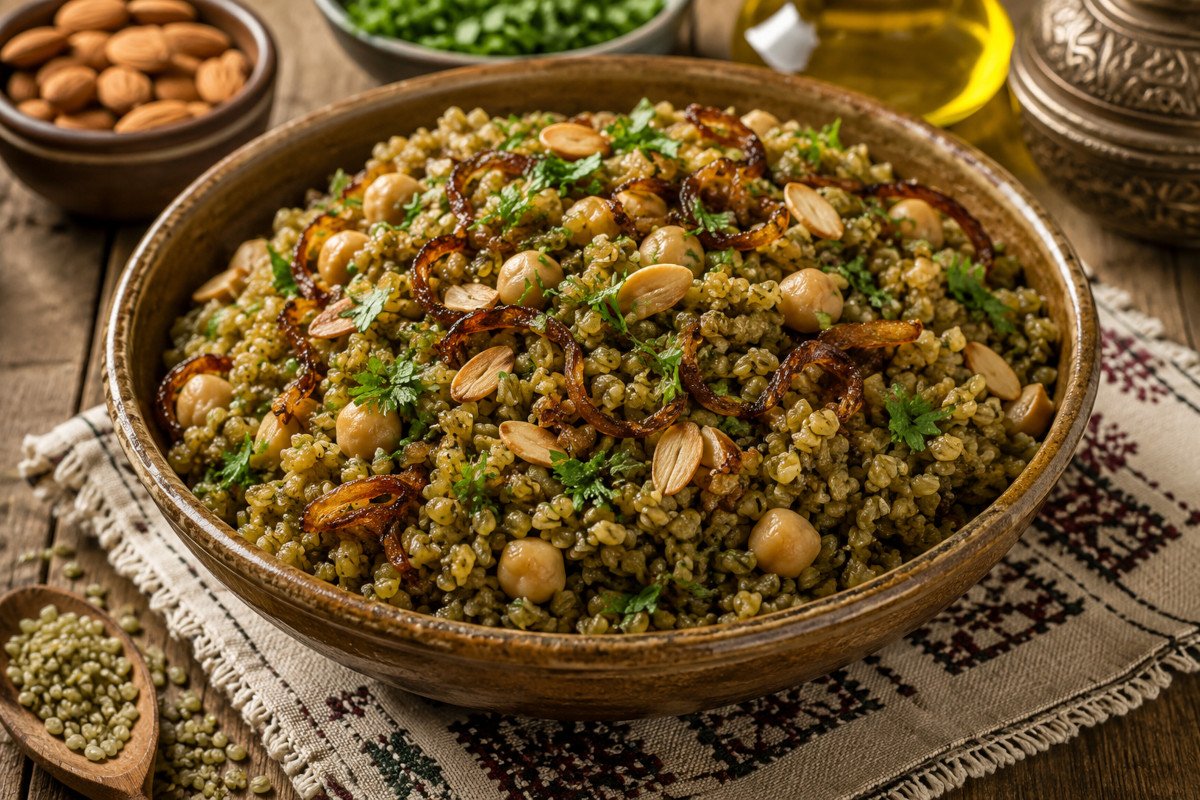
Country of origin: Levant (widely eaten across Jordan, Syria, Lebanon, and Palestine)
Today’s random pick lands on freekeh (also spelled farik or frikeh) — young green wheat that’s harvested early, roasted over open fire while still green, and then rubbed to remove the chaff, leaving behind a smoky, nutty grain that’s become a defining ingredient in Levantine cooking. What makes freekeh especially interesting is that, according to the most widely repeated account of its origin, it wasn’t developed deliberately at all.
A Grain Discovered By Accident, According to Legend
The most commonly told origin story for freekeh holds that it was discovered, rather than invented, when a Levantine village’s wheat fields caught fire — possibly during a raid or conflict — while the wheat was still young and green, before it had fully matured and dried. Rather than lose the entire crop, the story goes, people harvested the scorched grain anyway, discovering that the fire had actually roasted the wheat in an unexpectedly pleasant way, imparting a smoky flavor while the still-moist, immature kernels resisted burning all the way through, unlike fully dried mature wheat would have. Whether or not this specific story is historically precise in every detail, it’s a widely repeated explanation across the region for how the specific technique of deliberately harvesting and roasting young green wheat came to be established.
What’s better documented is that freekeh has been part of Levantine agricultural and culinary tradition for a very long time, with the deliberate practice of harvesting wheat early and roasting it becoming a standardized production method long before freekeh’s relatively recent rise in international popularity as a trendy “ancient grain,” a framing that, while accurate in terms of the grain’s age, sometimes obscures how deeply ordinary and everyday freekeh has long been within Levantine households.
Why Green, Immature Wheat Behaves Differently
The entire identity of freekeh depends on harvesting the wheat before it fully matures, while the kernels are still green and contain significantly more moisture than fully ripened, dried wheat. This immaturity is functionally important: when exposed to fire, the higher moisture content in young wheat helps protect the inner kernel from burning through completely, allowing the outer husk and chaff to char and roast away while the grain inside picks up a smoky flavor without turning to ash. Fully mature, dry wheat wouldn’t respond to the same fire treatment nearly as well, which is part of why freekeh has to be harvested at a very specific, relatively narrow point in the wheat’s growing cycle — too early and the kernels won’t have developed enough; too late and the grain is too dry for the roasting technique to work as intended.
A Grain With Real Nutritional Reputation
Beyond its flavor, freekeh has developed a strong reputation in recent years as a particularly nutritious whole grain, generally noted for higher fiber and protein content compared to more processed wheat products, since it retains the whole, roasted kernel rather than being refined. This nutritional profile, combined with its distinctive smoky flavor, is part of why freekeh has found a growing audience well beyond the Levant in recent years, even as it remains a long-standing household staple within the region itself.
The Recipe: Freekeh Pilaf With Chicken
Serves 4–6
Ingredients
- 1 ½ cups whole or cracked freekeh, rinsed
- 3 tablespoons olive oil or ghee
- 1 large onion, finely chopped
- 3 cloves garlic, minced
- 1 teaspoon ground cumin
- 1 teaspoon ground coriander
- ½ teaspoon cinnamon
- 3 cups chicken broth
- 4 bone-in chicken thighs
- Salt and black pepper, to taste
- ¼ cup toasted almonds or pine nuts, for garnish
- Fresh parsley, chopped, for garnish
Instructions
- Rinse the freekeh. Rinse the freekeh well under cold water to remove any remaining chaff or dust, then drain.
- Sear the chicken. In a large pot, heat the olive oil or ghee over medium-high heat. Season the chicken thighs with salt and pepper and sear on both sides until golden, about 6–8 minutes total. Remove and set aside.
- Build the base. In the same pot, add the onion and cook until soft, about 6–8 minutes. Add garlic, cumin, coriander, and cinnamon, cooking for another minute until fragrant.
- Add the freekeh and liquid. Stir in the rinsed freekeh, coating it in the spiced onion mixture. Pour in the chicken broth and return the seared chicken to the pot, nestling it into the liquid.
- Simmer. Bring to a boil, then reduce heat to low, cover, and simmer for 30–35 minutes, until the freekeh is tender and the chicken is fully cooked, with most of the liquid absorbed.
- Rest. Remove from heat and let sit, covered, for 5–10 minutes before fluffing gently with a fork.
- Garnish and serve. Top with toasted almonds or pine nuts and fresh parsley before serving.
A Note on Whole vs. Cracked Freekeh
Whole freekeh keeps more of its chewy bite and takes slightly longer to cook, while cracked freekeh cooks faster and produces a softer, more pilaf-like texture closer to bulgur. Either works well in this recipe; just adjust the simmering time slightly shorter if using cracked freekeh, checking for tenderness a bit earlier.
Serving Suggestions
Freekeh pilaf is a complete meal on its own, though it pairs well with a simple yogurt sauce or a bright, acidic salad like fattoush to balance its smoky, earthy flavor.
Freekeh’s possibly accidental origin is part of what makes it a good story — proof that some of the most distinctive ingredients in a cuisine came not from careful invention, but from someone deciding not to waste a damaged harvest.