
Shawarma: How a Turkish Cooking Method Became the Arab World’s Favorite Street Food

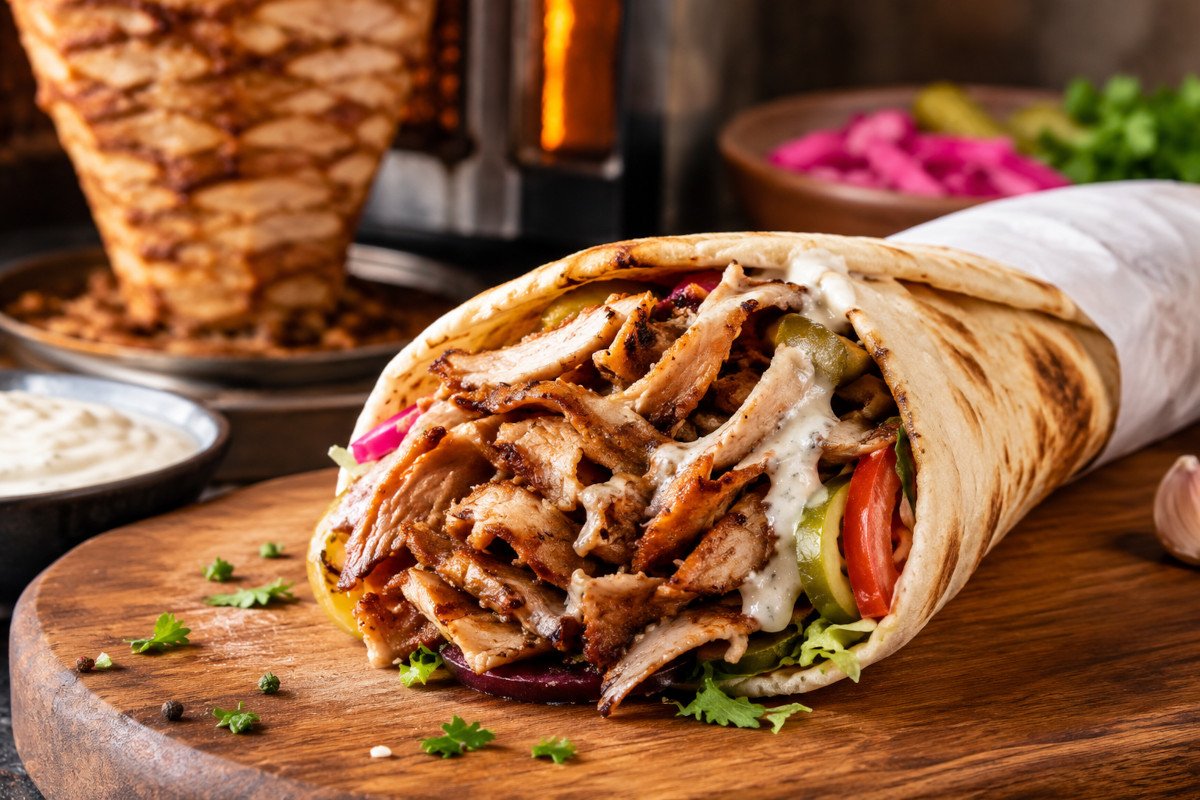
Shawarma – thin-sliced, marinated meat stacked on a vertical spit and slow-roasted as it turns, shaved off in crisp, smoky layers and wrapped in flatbread. It’s one of the most recognizable Middle Eastern foods worldwide today, but its story starts not in the Levant, where it’s now most closely associated, but in the Ottoman Empire, as a direct descendant of Turkish döner kebab.
From Döner to Shawarma: A Name That Traveled
Shawarma’s technique — thinly sliced meat stacked and cooked on a rotating vertical spit — originates from döner kebab, developed in the Ottoman Empire, with most food historians pointing to 19th-century Anatolia as the period when the vertical rotisserie method took the form recognizable today. The word “shawarma” itself is actually believed to derive from the Turkish word “çevirme,” meaning “turning” or “rotating,” a direct reference to the spit’s motion — which means the dish’s very name carries its Turkish origin embedded inside it, even in Arabic-speaking countries where the Turkish root isn’t necessarily obvious to most people ordering it.
As the technique spread south into the Levant during the late Ottoman period and after, it was adapted to local tastes, spice blends, and meats, evolving into what’s recognized today as Levantine shawarma — typically made with lamb, chicken, or a mix, and seasoned with a distinctly Arab spice profile featuring cumin, cardamom, turmeric, and other warm spices, quite different from the seasoning typically used in Turkish döner. From the Levant, later waves of migration carried shawarma even further, including to the Americas, where large Lebanese and Syrian immigrant communities helped establish it in cities across South America — Mexico’s al pastor, a marinated pork taco cooked on a vertical spit, is itself widely believed to be a direct descendant of shawarma technique brought by Lebanese immigrants to Mexico in the early 20th century, making shawarma’s influence on global street food even broader than most people realize.
Why the Vertical Spit Actually Matters
The rotating vertical spit isn’t just a visual signature — it’s functionally central to how shawarma achieves its texture. As the stacked meat slowly rotates in front of a heat source, the outer layer continuously crisps and browns while the meat’s own rendered fat drips down over the layers below, essentially self-basting the entire stack throughout the cooking process. This is very different from grilling or pan-searing a single cut of meat, where fat rendering and browning happen more or less all at once rather than continuously over hours. It’s also why shaving the meat off in thin layers as it cooks — rather than cooking a single batch and slicing afterward — produces such a distinct textural contrast between the crisp, caramelized outer edges and the more tender meat underneath.
Adapting the Technique at Home
Most home cooks don’t have a vertical rotisserie, so a reasonable adaptation involves stacking thinly sliced, well-marinated meat onto skewers, or even just cooking thin, well-seasoned meat pieces on a hot grill or pan in batches, aiming to replicate that same crisp-edged, well-charred quality even without the continuous rotation and self-basting of a true vertical spit.
The Recipe
Serves 4–6
Ingredients
For the meat and marinade:
- 2 lbs boneless chicken thighs or lamb, thinly sliced
- ¼ cup olive oil
- 3 cloves garlic, minced
- 2 tablespoons lemon juice
- 1 tablespoon white vinegar
- 1 teaspoon ground cumin
- 1 teaspoon ground coriander
- ½ teaspoon ground cardamom
- ½ teaspoon turmeric
- ½ teaspoon paprika
- Salt and black pepper, to taste
For serving:
- Flatbread or pita
- Toum (garlic sauce) or tahini sauce
- Pickled vegetables
- Sliced tomato, onion, and lettuce or cabbage
Instructions
- Marinate the meat. In a bowl, whisk together olive oil, garlic, lemon juice, vinegar, cumin, coriander, cardamom, turmeric, paprika, salt, and pepper. Add the thinly sliced meat, toss well to coat, cover, and marinate in the refrigerator for at least 2 hours, or ideally overnight for deeper flavor.
- Stack and skewer (optional home method). If replicating the spit method at home, thread the marinated meat slices tightly onto a few large skewers, pressing them together into a compact stack, similar in spirit to a mini vertical rotisserie. Alternatively, this step can be skipped in favor of simply cooking the meat in batches directly.
- Cook. Heat a grill, grill pan, or wide skillet over high heat. Cook the meat in batches, in a single layer, for 2–3 minutes per side, until well-charred at the edges and cooked through. If using stacked skewers, rotate and shave off cooked outer layers as they crisp, continuing to cook the remaining meat.
- Warm the flatbread. Briefly warm the pita or flatbread on the grill or in a dry pan.
- Assemble. Layer the cooked meat onto the warm flatbread along with your choice of toum or tahini sauce, pickled vegetables, tomato, onion, and lettuce or cabbage. Wrap tightly.
A Note on the Marinade Time
Because the meat is sliced thin, it absorbs marinade flavor relatively quickly, but a longer marination — several hours to overnight — still makes a noticeable difference in depth of flavor and helps tenderize the meat further, which matters more with lamb than with chicken.
Serving Suggestions
Shawarma is most commonly eaten wrapped in flatbread as a handheld sandwich, though it’s equally good served over rice or salad as a more substantial plated meal, with the same sauces and toppings.
Shawarma’s journey from an Ottoman rotisserie technique to a global street food staple — even reaching Mexico City by way of Lebanese immigrants — shows how far a good cooking method can travel once it leaves its original kitchen.