
Kibbeh: The Levant’s Most Technically Demanding Dish

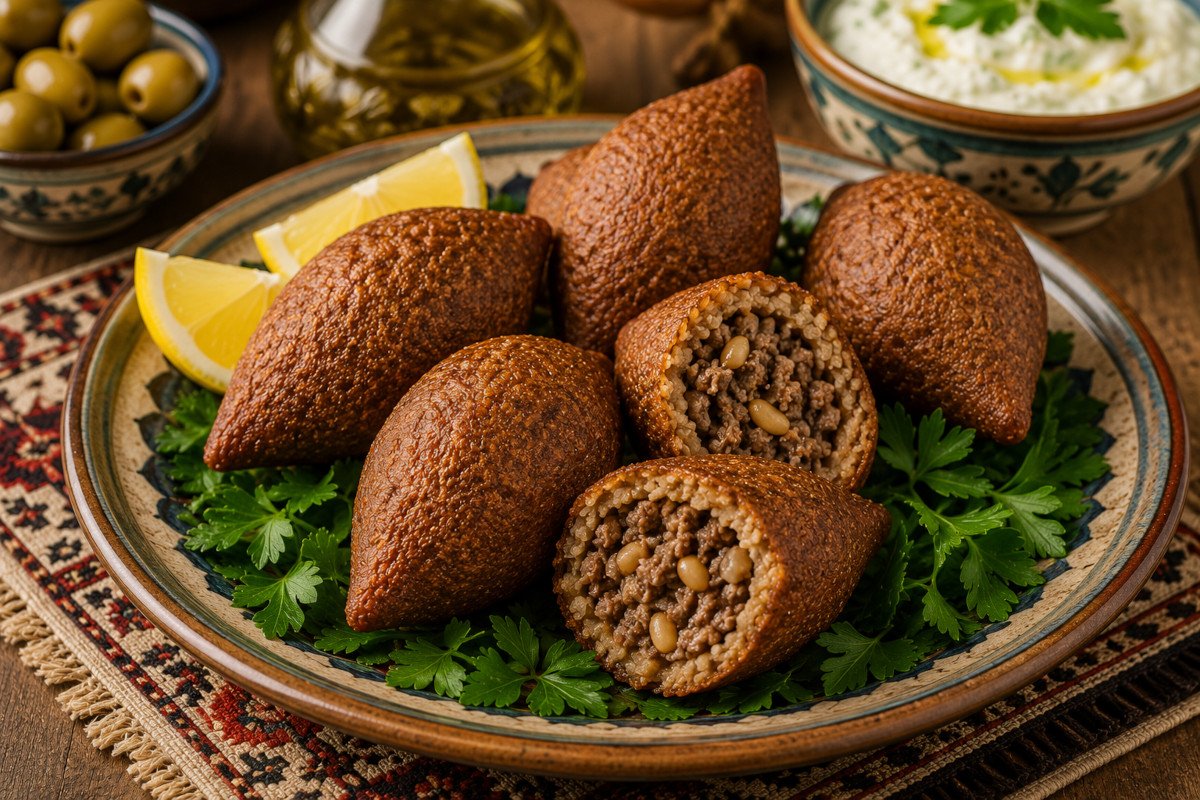
Kibbeh, also spelled kibbe or kubbeh, is a dish built from a fine paste of bulgur wheat and ground meat, most famously shaped into torpedo-like shells stuffed with a spiced meat filling and deep-fried until crisp. Widely considered a national dish across Lebanon, Syria, and much of the wider Levant, kibbeh is also one of the most technically demanding dishes in the region’s home cooking, with a reputation for separating confident cooks from true experts.
A Dish With Deep Historical Roots
Kibbeh’s history in the Levant stretches back centuries, with the technique of pounding meat and grain together into a smooth, moldable paste believed to predate the widespread use of food processors by a very long margin — traditionally, the mixture was pounded by hand in a large stone mortar, a laborious process that could take considerable time and effort to achieve the right silky texture. That traditional pounding method, while largely replaced by food processors in modern kitchens, is still practiced by some cooks and in some restaurants specifically because it produces a noticeably smoother, more cohesive paste than a machine can easily replicate.
Kibbeh appears in dozens of regional variations across the Levant and into Iraq (where it’s called kubbeh and is often served in a soup), each shaped differently and cooked differently — fried, baked in a tray, grilled, or eaten completely raw. This range of preparations, all built from the same base concept of meat and grain worked into a paste, makes kibbeh less a single dish than a whole category of related dishes united by technique.
The Torpedo Shape Isn’t Just Decorative
The most iconic version of kibbeh — fried kibbeh, sometimes called kibbeh mashwiyeh or kibbeh maqliyeh — is shaped into a hollow, football or torpedo-like shell made from the outer bulgur-meat paste, stuffed with a separately cooked filling of spiced ground meat, onions, and pine nuts, then sealed and fried. Getting that hollow shell thin, even, and crack-free while stuffing it is widely considered the single hardest technical skill in Levantine home cooking. A shell that’s too thick fries up dense and heavy; one that’s too thin or unevenly sealed will crack open in the hot oil, leaking the filling and ruining the texture contrast the dish depends on.
This is why kibbeh-making is often treated as a skill passed down and practiced over years within families, with grandmothers frequently regarded as the true experts, their hands trained through decades of repetition to shape a perfectly even shell almost without looking.
Beyond Fried: Other Major Forms
Not all kibbeh is fried. Kibbeh nayyeh is a raw version, similar in spirit to a Levantine steak tartare, made from very finely pounded raw lamb or beef mixed with bulgur and spices, traditionally eaten with olive oil and flatbread — a dish that carries real cultural weight in Lebanese and Syrian cuisine and is generally reserved for very fresh, high-quality meat. Kibbeh bil sanieh is a baked tray version, where the meat-and-bulgur mixture and the spiced filling are layered like a casserole rather than individually shaped and fried, making it a far more practical option for feeding a crowd without the labor of shaping dozens of individual shells.
The Recipe: Fried Kibbeh
Serves 6 (makes about 16–18 pieces)
Ingredients
For the shell:
- 2 cups fine bulgur wheat
- 1 lb lean ground beef or lamb
- 1 small onion, roughly chopped
- 1 teaspoon salt
- ½ teaspoon black pepper
- ½ teaspoon ground cinnamon
- ¼ teaspoon ground allspice
- Ice water, as needed
For the filling:
- 1 tablespoon olive oil
- 1 small onion, finely chopped
- ½ lb ground beef or lamb
- ¼ cup pine nuts
- ½ teaspoon ground cinnamon
- ¼ teaspoon ground allspice
- Salt and black pepper, to taste
For frying:
- Vegetable oil, for deep frying
Instructions
- Soak the bulgur. Cover the fine bulgur with cold water and let it soak for about 15–20 minutes until softened. Drain well and squeeze out excess moisture using a clean kitchen towel.
- Make the shell mixture. In a food processor, combine the soaked bulgur, ground meat, onion, salt, pepper, cinnamon, and allspice. Process until you get a smooth, sticky, well-combined paste, adding a small amount of ice water if needed to help it come together. The mixture should feel pliable, not crumbly.
- Make the filling. In a pan, heat olive oil over medium heat and cook the onion until soft. Add the ground meat and cook, breaking it apart, until browned. Stir in pine nuts, cinnamon, allspice, salt, and pepper, and cook for another 2–3 minutes. Set aside to cool.
- Shape the kibbeh. Wet your hands with cold water to prevent sticking. Take a portion of the shell mixture (about the size of a golf ball) and, working in your palm, hollow it out into a thin-walled shell using your fingers, keeping the walls as even as possible. Fill the cavity with a spoonful of the meat filling, then carefully pinch the opening closed and shape into a smooth oval or torpedo shape, tapering slightly at the ends.
- Chill before frying. Arrange the shaped kibbeh on a tray and refrigerate for at least 20–30 minutes, which helps them hold their shape better in the hot oil.
- Fry. Heat vegetable oil to 350°F (175°C) in a deep pot. Fry the kibbeh in small batches for 4–5 minutes, until deeply golden brown on all sides. Avoid overcrowding, which can cause the shells to crack from bumping into each other.
- Drain and serve. Remove with a slotted spoon and drain on paper towels. Serve hot.
A Note on Practice
If your first few kibbeh crack or don’t hold together perfectly, that’s genuinely normal — the shaping technique takes real practice, and even experienced cooks consider it one of the harder skills to master. A thicker shell is a reasonable trade-off for a beginner, prioritizing a shell that holds together over one that’s paper-thin but prone to cracking.
Serving Suggestions
Fried kibbeh is typically served as part of a mezze spread alongside hummus, tabbouleh, and pickled vegetables, with a side of plain yogurt or a squeeze of lemon to cut through the richness.
Kibbeh rewards patience and repetition more than almost any other Levantine dish — proof that some recipes are really about mastering a technique, not just following a list of ingredients.