
Chakhchoukha: Algeria’s Torn Bread and Slow-Cooked Stew

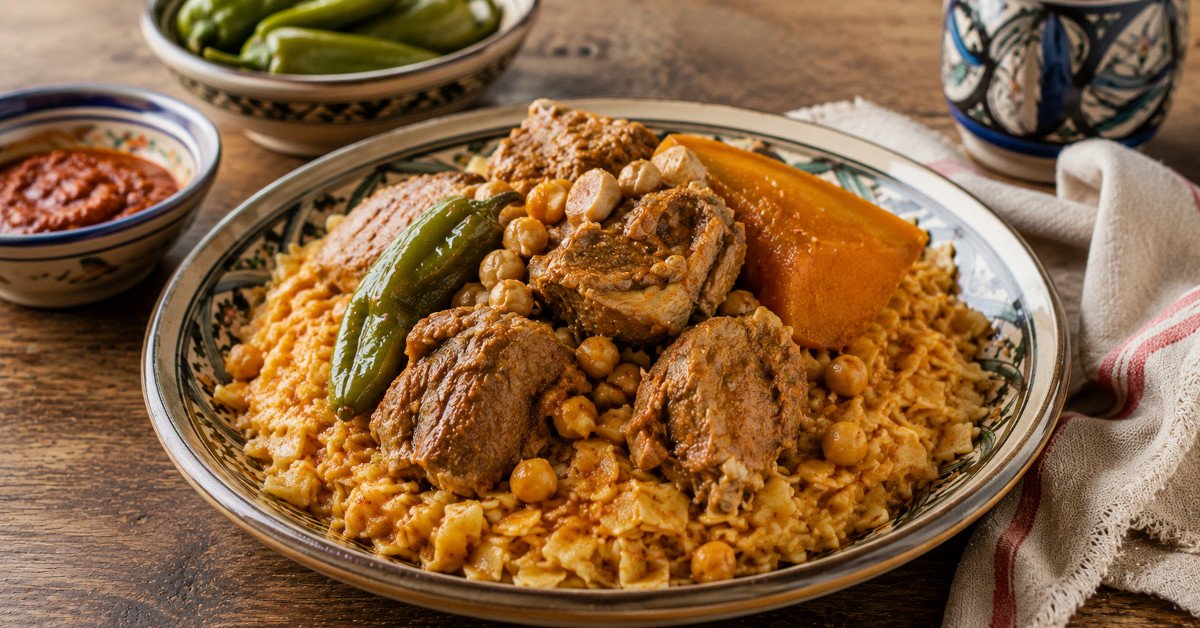
This round covers Algerian cuisine with chakhchoukha (also spelled chakchouka in some regions, though distinct from the Tunisian/Egyptian tomato-and-egg dish of a similar-sounding name) — a hearty dish built from torn pieces of thin, crepe-like bread called rougag, soaked in a rich, slow-cooked meat and tomato sauce called marqa. It’s one of Algeria’s most iconic comfort dishes, closely associated with the eastern regions of the country, particularly Biskra, and considered by many to be a strong contender for the country’s national dish.
A Name That Causes Regional Confusion
It’s worth clearing up early: chakhchoukha is completely different from shakshuka, the eggs-poached-in-tomato-sauce dish found across Tunisia, Israel, and the wider Middle East, despite the similar-sounding name. The Algerian dish shares no ingredients or technique with that one — the naming overlap is a coincidence of regional dialect rather than a shared culinary lineage, and it’s a common point of confusion for people encountering Algerian food for the first time.
Chakhchoukha’s actual identity centers on rougag, a thin, unleavened flatbread cooked briefly on a flat griddle, torn into small irregular pieces by hand, and then soaked in a deeply savory, long-simmered stew made with lamb or chicken, tomatoes, and a blend of warming spices. The dish is especially tied to the city of Biskra in eastern Algeria, where it’s considered a specialty, though variations are made across the country, particularly for celebrations, Friday family lunches, and religious holidays.
Bread as the Main Event, Not a Side
What sets chakhchoukha apart from many other regional stew-and-bread dishes is that the bread isn’t served alongside the stew — it’s fully integrated into it, torn into the sauce itself so that every piece becomes saturated with the meat drippings and spiced tomato broth. This is closer in spirit to dishes like Levantine fatteh or Tunisian lablabi, where bread functions as a structural part of the dish rather than a utensil for scooping. The torn texture of the rougag also matters: irregular pieces create more surface area to absorb the sauce and give the finished dish a varied, satisfying texture, rather than the uniform softness you’d get from a single intact piece of bread.
The Recipe
Serves 4–6
Ingredients
For the rougag (bread):
- 2 cups all-purpose flour
- ½ teaspoon salt
- ¾ cup warm water (approximate, as needed)
- Vegetable oil, for the pan
For the marqa (stew):
- 2 lbs bone-in lamb pieces (shoulder or neck), or bone-in chicken thighs
- 2 tablespoons vegetable oil or ghee
- 1 large onion, finely chopped
- 3 cloves garlic, minced
- 3 tablespoons tomato paste
- 2 large tomatoes, grated or finely chopped
- 1 teaspoon ground coriander
- 1 teaspoon paprika
- ½ teaspoon ground cinnamon
- ¼ teaspoon black pepper
- Pinch of saffron threads or a small amount of turmeric
- 4 cups water or broth
- Salt, to taste
- 1 can (15 oz) chickpeas, drained (optional, but traditional in many versions)
For garnish:
- Hard-boiled eggs, halved
- Toasted almonds
- Fresh parsley or cilantro, chopped
Instructions
- Make the rougag dough. Combine flour and salt in a bowl. Gradually add warm water, mixing until a soft, smooth, slightly sticky dough forms — similar to a thin crepe batter but firm enough to handle. Knead briefly, cover, and let rest for 20–30 minutes.
- Cook the rougag. Divide the dough into small balls and roll or stretch each one out very thin on a lightly oiled surface. Cook each piece on a hot, lightly oiled griddle or flat pan for about 1 minute per side, until just set with light golden spots — you’re not looking for heavy browning. Set aside to cool slightly, then tear into small, irregular pieces by hand.
- Brown the meat. In a large pot, heat the oil over medium-high heat. Season the lamb or chicken with salt and brown on all sides, about 8 minutes. Remove and set aside.
- Build the sauce base. In the same pot, add the onion and cook until soft, about 6–8 minutes. Add garlic and cook for another minute. Stir in the tomato paste and cook for 2 minutes to deepen its flavor, then add the grated tomatoes, coriander, paprika, cinnamon, pepper, and saffron or turmeric.
- Simmer. Return the meat to the pot, add water or broth, and bring to a simmer. Cover and cook on low heat for 1 to 1 ½ hours, until the meat is very tender. Add the chickpeas, if using, during the last 20 minutes.
- Combine with the bread. In a large serving dish, layer the torn rougag pieces, then ladle the hot marqa and meat generously over the top, making sure the bread is well soaked with sauce. Toss gently if needed so the bread absorbs the liquid evenly.
- Garnish and serve. Top with halved hard-boiled eggs, a scatter of toasted almonds, and fresh herbs.
A Note on the Bread
If making rougag from scratch feels daunting, a reasonable shortcut is using store-bought thin flatbread or even lightly torn, day-old pita, lightly toasted before tearing — it won’t be fully traditional, but it will absorb the sauce in a similar way.
Serving Suggestions
Chakhchoukha is a complete, hearty meal on its own, traditionally served in a large shared dish for the family or guests to eat from together, especially on Fridays or during celebrations.
Chakhchoukha shows how bread in North African cooking can be so much more than an accompaniment — here, it’s the foundation the entire dish is built on.